Busan Water Rescue Team Captured 452 Nomura's Jellyfish in June-July
Warning Issued Due to Rapid Increase in Population
Recently, jellyfish have been frequently appearing along the East Coast, and jellyfish sting incidents have sharply increased at beaches in the Busan area, which is now in the peak summer vacation season.
On the 26th, the Busan Fire and Disaster Headquarters Water Rescue Team announced that from June to July 24, there were a total of 127 emergency rescue activities due to jellyfish stings at seven beaches in the Busan area. This is nearly 25 times higher compared to 5 cases during the same period last year.
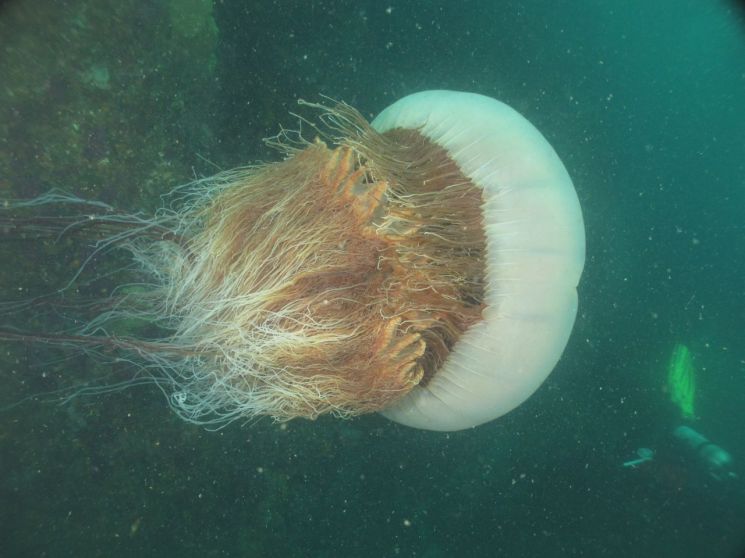
Looking at jellyfish sting cases by beach, Songjeong Beach had the highest number with 46 cases, followed by Gwangalli Beach with 35 cases, Songdo Beach with 29 cases, Haeundae Beach with 13 cases, and Imrang Beach with 1 case. The relatively low number of jellyfish sting incidents at Haeundae, which has the most vacationers, is due to the installation of jellyfish nets. During the same period, the fire department’s water rescue team captured a total of 452 jellyfish.
Separately from the fire department’s emergency rescue activities, each local government operates medical clinics for jellyfish sting incidents. Therefore, the actual number of sting incidents is estimated to be much higher when including local government data. At Haeundae Beach, a total of 96 people visited the clinic for jellyfish stings during the same period, and 50 people suffered jellyfish sting incidents at Songjeong Beach.
Since the 12th, a “caution” advisory for Nomura’s jellyfish has been issued in the Busan area. Nomura’s jellyfish originate from the Chinese coast and have been flowing into Korea since late June following ocean currents. They can reach sizes of 1 to 2 meters and have tentacles with strong venom, causing not only damage to fisheries but also sting incidents. Recently, the National Institute of Fisheries Science surveyed the number of these jellyfish along domestic coasts and found an average of 108 jellyfish per hectare. This is the highest number since the survey began in 2012 and more than 100 times higher than last year. The surge in jellyfish is believed to be due to rising water temperatures caused by climate change and improved feeding conditions along the Chinese coast, their place of origin.
When stung by this jellyfish, pain and whip-like wounds occur. In severe cases, breathing difficulties and neurological paralysis symptoms may also develop. To avoid jellyfish stings, it is recommended to wear swimsuits that cover more skin, such as rash guards. If a jellyfish sticks to the skin, do not touch it with bare hands; use gloves or tools to remove it. If stung by a jellyfish, the first priority is to clean the wound with seawater, not tap water or bottled water. Washing the wound with tap water can cause the venom to spread further, so it must be rinsed primarily with seawater. If jellyfish tentacles remain attached to the skin, scrape them off in the opposite direction of the tentacle penetration using a credit card or similar object.
© The Asia Business Daily(www.asiae.co.kr). All rights reserved.
![Clutching a Stolen Dior Bag, Saying "I Hate Being Poor but Real"... The Grotesque Con of a "Human Knockoff" [Slate]](https://cwcontent.asiae.co.kr/asiaresize/183/2026021902243444107_1771435474.jpg)
















