IMO, Carbon Neutrality in International Shipping by 2050
'Reducing Carbon Emissions and Improving Operational Efficiency'
Hanwha Ocean announced on the 26th that it has obtained the basic certification for the shipboard carbon dioxide capture system (OCCS).
The shipboard carbon dioxide capture system is a technology that absorbs some of the carbon dioxide contained in the exhaust gas generated during ship operation through an absorbent, sodium hydroxide (NaOH) aqueous solution, and converts it into a mineral form.
The absorbent is regenerated and reused in the carbon dioxide absorption process. This technology has the advantage of consuming very little energy compared to other carbon dioxide capture technologies, and the amount of carbon dioxide additionally generated by operating the equipment is also relatively very small.
In particular, the technology certified this time uses amine (an organic compound in which the hydrogen atom of ammonia is replaced by a hydrocarbon group). Following the existing OCCS using sodium hydroxide, the development of OCCS using amine has expanded the range of products available for customers to choose from, giving Hanwha Ocean a competitive edge in securing orders. Amine has a property of bonding with carbon, which is utilized to trap the carbon contained in the exhaust gas within the absorption device.
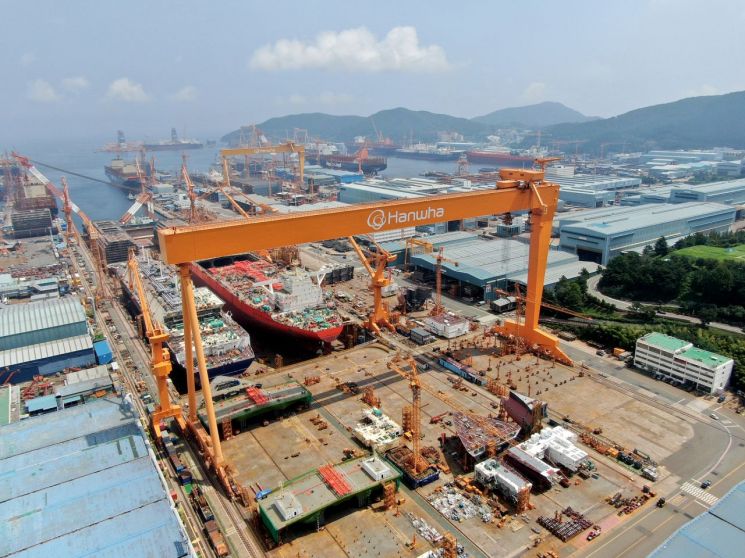
Hanwha Ocean is actively responding to demand by developing various eco-friendly products and technologies in line with the strengthening of global environmental regulations. The self-developed ship carbon intensity index monitoring smart ship technology measures the amount of carbon dioxide emitted during ship operation and provides eco-friendly navigation solutions. The Carbon Intensity Indicator (CII) is an environmental regulation implemented by the International Maritime Organization (IMO), which grades ships from A to E based on the amount of carbon dioxide they emit.
If a ship receives an E grade or a D grade for three consecutive years, its operation is restricted until an improvement plan is established and re-verification is completed. Hanwha Ocean’s monitoring technology automatically calculates the ship’s carbon intensity index in connection with its own smart ship platform HS4. It also provides optimal navigation methods such as speed and route that emit less carbon dioxide.
The shaft generator motor system (SGM) is a device that connects a motor to the engine shaft and uses its rotational force to generate the electricity needed for ship operation. It is a representative eco-friendly technology that lowers dependence on the generator’s operation, improves fuel efficiency, and reduces emissions of carbon dioxide and sulfur oxides. Hanwha Ocean has succeeded in domestic production of the induction-type shaft generator motor and is applying it to LNG carriers, LPG carriers, and very large crude carriers (VLCC).
The air lubrication system (ALS) technology, which injects air under the ship’s hull to create an air layer between the hull and seawater, reduces frictional resistance generated during navigation, thereby improving fuel efficiency. Combining the shaft generator motor system and the air lubrication system results in an annual fuel saving effect of about 5 to 7%.
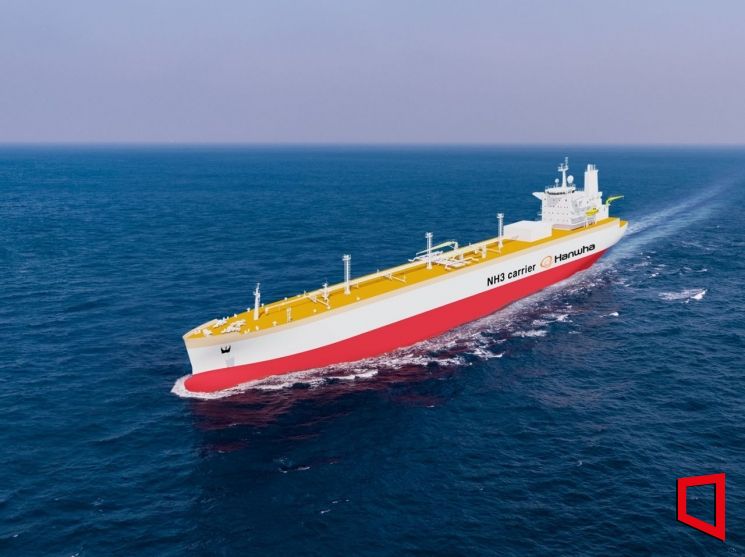
RotorSail, developed by Hanwha Ocean as the first in a domestic shipyard, is a device that installs cylindrical pillars (rotor sails) on the ship’s deck to utilize the Magnus effect (the rotational force of wind generated during navigation), converting wind power into auxiliary propulsion for the ship. It can achieve a fuel saving effect of more than 5% according to the Energy Efficiency Design Index (EEDI) standard presented by the IMO as an energy-saving evaluation metric.
Hanwha Ocean plans to provide more eco-friendly solutions to accelerate the decarbonization of the marine sector. Last year, the International Maritime Organization (IMO) decided to achieve carbon neutrality in international shipping by 2050. This significantly raised the previous target of reducing greenhouse gas emissions by 50% compared to total emissions in 2008 by 2050.
A Hanwha Ocean official said, "We possess eco-friendly technologies that can reduce marine carbon emissions while efficiently operating ships," adding, "We will devote ourselves to research and development of decarbonization technologies to launch more eco-friendly solutions on the sea."
© The Asia Business Daily(www.asiae.co.kr). All rights reserved.
![Clutching a Stolen Dior Bag, Saying "I Hate Being Poor but Real"... The Grotesque Con of a "Human Knockoff" [Slate]](https://cwcontent.asiae.co.kr/asiaresize/183/2026021902243444107_1771435474.jpg)

















