Yeo Han-gu PIIE Senior Fellow Report
"Agreements Needed by Semiconductor, Mineral, and Bio Sectors"
Necessity of Korea-US Reciprocal Defense Procurement Agreement (RDPA)
"Import Tariffs Cannot Replace Income Tax... Exchange Rate Adjustment Expected"
In the upcoming U.S. presidential election this November, a U.S. think tank has suggested that South Korea, as a country with a free trade agreement (FTA) with the United States and increasing investment in the U.S., should request an exemption from the '10% universal tariff' pledged by former President Donald Trump if he regains power. The argument is that as de-risking from China has led to increased investment in the U.S., resulting in higher exports and trade surpluses with the U.S., South Korea should persuade the U.S. side to exclude it from the universal tariff imposition. It was also advised that South Korea and the U.S. should strengthen cooperation sector by sector in industries such as semiconductors, critical minerals, and bio, while accelerating the conclusion of the Korea-U.S. Reciprocal Defense Procurement Agreement (RDPA).
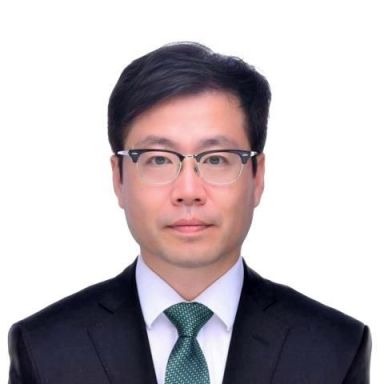
On the 24th (local time), the Peterson Institute for International Economics (PIIE) in the U.S. released a report titled "South Korea's Trade Policy Agenda in an Uncertain U.S. Trade Environment" containing these points. The authors included Ye Han-gu, a senior fellow at PIIE and former head of the Trade Negotiations Office at South Korea’s Ministry of Trade, Industry and Energy, and Allen Wolfe, a PIIE research fellow and former Deputy Director-General of the World Trade Organization (WTO).
Senior Fellow Ye said, "If the Republican Party comes to power, the key issue for South Korea will be whether it is exempt from the 10% universal tariff as a U.S. FTA partner or under the Korea-U.S. FTA," adding, "The U.S. may use the imposition of the 10% universal tariff as leverage in negotiations against countries with large merchandise trade deficits."
He predicted that the priority in Trump's second term would be less about renegotiating the Korea-U.S. FTA, which was a focus during his first term, and more about whether to extend tax reliefs expiring at the end of 2025, China policy, and preparations for the 2026 review of the United States-Mexico-Canada Agreement (USMCA). In this process, a major trade issue for South Korea will be whether it can secure an exemption from the 10% universal tariff. Previously, former President Trump had announced that if he won the election, he would impose a 10% universal tariff on all countries worldwide, over 60% ultra-high tariffs on all Chinese imports, and revoke most-favored-nation status for China.
Senior Fellow Ye stated, "South Korea has diversified away from China in terms of trade and supply chain structure, leading to a sharp increase in investment in the U.S.," and emphasized, "It is necessary to highlight to the U.S. that increased investment has resulted in higher exports and trade surpluses with the U.S." He added, "If this momentum is halted by sudden U.S. policy changes, it could disrupt U.S. manufacturing investment, job creation, and the acceleration of diversification away from China," stressing that "the Korea-U.S. FTA should be excluded from the universal tariff imposition."
There is also speculation that former President Trump may take measures to address the strong dollar to reduce the trade deficit. This is seen as a possible second Plaza Accord, where in 1985 the U.S. artificially lowered the dollar’s value against the Japanese yen, German mark, French franc, and British pound.
Senior Fellow Ye said, "According to PIIE analysis, it is theoretically impossible, as Trump claimed, to offset income tax cuts with tariffs to compensate for lost revenue," and predicted, "Since tariffs alone cannot resolve the merchandise trade deficit, exchange rate adjustments could be actively used as a new policy tool."
He forecasted that regardless of whether the Democratic or Republican administration takes power, industrial policies to foster domestic manufacturing, job creation, China containment, and supply chain recovery will become the 'new normal.' However, under a Democratic administration, policies such as the CHIPS and Science Act (CSA) and the Inflation Reduction Act (IRA) of the Joe Biden administration are expected to continue, reducing uncertainty.
Senior Fellow Ye also advised that as the U.S. shifts toward economic nationalism, rather than comprehensive market opening, South Korea and the U.S. could strengthen sectoral cooperation by major industries.
He said, "In the changed U.S. political environment, it is realistically difficult to resume comprehensive free trade agreements including the Korea-U.S. FTA and the Trans-Pacific Partnership (TPP)," adding, "Semiconductors, critical minerals, and the bio industry could be considered priority sectors for sectoral agreements between South Korea and the U.S."
Furthermore, he argued that the Korea-U.S. RDPA should be concluded promptly. The U.S. grants exceptions to the 'Buy American' provisions to countries that have signed the RDPA, treating them like domestic companies.
Senior Fellow Ye emphasized, "The U.S. is significantly behind China in key defense industry sectors such as steel and shipbuilding competitiveness, so South Korea can be an essential defense partner," and added, "Defense cooperation with allies like South Korea can ultimately strengthen the U.S. industrial base and national security, so the swift conclusion of the Korea-U.S. RDPA is necessary."
© The Asia Business Daily(www.asiae.co.kr). All rights reserved.


















