Yoon Byung-tae, mayor of Naju City in Jeollanam-do, visited Japan, the first country to introduce the ‘Hometown Tax Payment System’ ahead of Korea’s own Hometown Love Donation System, to explore ways to revitalize the hometown love donation system and respond to regional extinction.
According to the city on the 23rd, Mayor Yoon visited Sumida Ward in Tokyo, Kawaba Village in Gunma Prefecture, and Niigata Prefecture from the 17th to the 20th for a 3-night, 4-day trip.
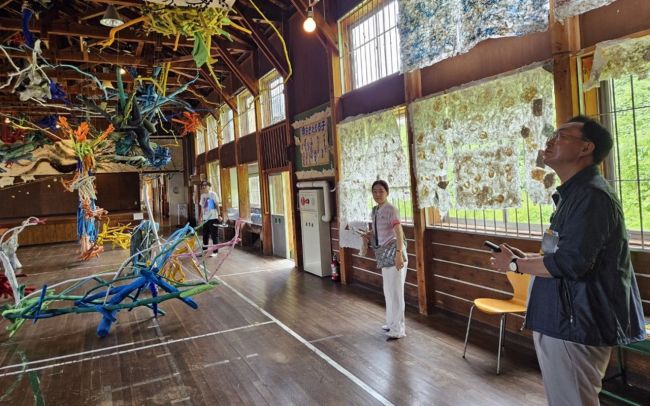 Mayor Yoon Byung-tae recently visited Sumida Ward in Japan, Kawaba Village in Gunma Prefecture, and Niigata Prefecture as part of an overseas training schedule to benchmark hometown tax system and rural extinction prevention cases.
 [Photo by Naju City]
This overseas training was organized with a focus on finding ways to overcome regional extinction caused by population concentration in the metropolitan area and a sharp decline in birth rates.
Mayor Yoon examined advanced policies for activating the hometown tax payment system in local governments, overcoming the extinction of small rural villages, and successful cases of tourist attractions combining nature and art, seeking ways to apply them to city administration.
The visit included eight members of the training group, including City Council member Jo Young-mi, public officials, and local journalists.
On the 18th, the delegation visited Sumida Ward in Tokyo to closely inspect the regional economic effects of the hometown tax system operation status and the projects funded by the collected funds.
Sumida Ward is one of the 23 special wards of Tokyo and ranked first among local governments in attracting hometown tax payments, recording hometown tax revenues of 1.05 billion yen, approximately 9.3 billion KRW, last year.
In particular, by utilizing the hometown tax, they resolved the shortage of construction costs for an art museum commemorating Katsushika Hokusai, a painter from the area, contributing to tourism revitalization.
Mayor Yoon toured the art museum and reviewed with the hometown tax system staff the importance of selecting return gifts for donors, the use of funds, and exemplary cases.
In the afternoon, the delegation visited Kawaba Village in Gunma Prefecture, a model case for overcoming rural extinction, with a population of about 3,000.
This village was once facing the crisis of rural extinction but transformed into a tourist attraction visited by more than 2 million tourists annually through exchange projects with Setagaya, known as the Gangnam district of Tokyo, and the establishment of a rural plaza combining agriculture and tourism.
Notably, it achieved significant results such as annual sales of 2.7 billion yen (about 24 billion KRW), creation of about 150 jobs, and 2.4 million annual visitors, and was selected as the number one village enterprise model nationwide by the Ministry of Land, Infrastructure, Transport and Tourism.
The delegation visited Rural Plaza Kawaba Co., Ltd. and Setagaya Kawaba Hometown Corporation, listening to officials about the progress and secrets of the village revitalization success.
On the last day (the 19th), Mayor Yoon viewed the ‘Echigo-Tsumari Art Triennale’ in Niigata Prefecture, known as a successful case of regional community revitalization blending rural landscapes and art.
The Echigo-Tsumari Art Triennale is a triennial art festival exhibiting contemporary art works reflecting the characteristics and charm of the 760 km² region called ‘Echigo-Tsumari.’
It is praised for regenerating regional communities facing population decline and aging through art, enhancing residents’ quality of life and pride.
The delegation toured the Kiyotsu Gorge Tunnel, Picture Book and Tree Fruit Museum, and Echigo-Tsumari Contemporary Art Museum, followed by a Q&A session with officials about the art festival’s promotion process and conflict resolution with residents.
Mayor Yoon said, “Japan has been ahead in contemplating and thoroughly preparing for low birth rates, aging, and regional extinction issues,” adding, “We will do our best to reflect the results of this overseas training in practical policies to overcome regional extinction and revitalize the region.”
He added, “We plan to incorporate various excellent cases such as population inflow policies mediated by Naju’s unique culture and arts and the development of region-specific products into regional development plans.”
Naju = Asia Economy Honam Reporting Headquarters Reporter Kim Yuk-bong baekok@asiae.co.kr
© The Asia Business Daily(www.asiae.co.kr). All rights reserved.

















