Increase of Food Value Limit to 50,000 Won under the Anti-Graft Act
The Anti-Corruption and Civil Rights Commission (ACRC) has closed the controversy over former Democratic Party leader Lee Jae-myung's 'helicopter transfer privilege' with a conclusion of 'no violation.' The value range for food under the Improper Solicitation and Graft Act has been raised from 30,000 won to 50,000 won.
On the 23rd, the ACRC announced that the full commission, which deliberated and resolved the case regarding Lee’s hospital transfer and use of the 119 emergency medical helicopter, concluded the matter with 'no violation' as of the previous day.
Following the attack on former leader Lee near Gadeokdo, Busan, on January 2, and his transfer from Busan National University Hospital to Seoul National University Hospital via the 119 emergency medical helicopter, the ACRC received multiple reports requesting investigation into possible improper solicitation and preferential treatment.
Based on relevant laws and facts, the full commission concluded that there is no code of conduct applicable to Lee and his secretary, National Assembly member Cheon Jun-ho. They also found insufficient evidence to prove violations of the Improper Solicitation and Graft Act, which was included as a reason for case closure.
Meanwhile, doctors affiliated with Seoul National University Hospital and Busan National University Hospital were found to have violated the code of conduct for public officials during the hospital transfer and 119 emergency medical helicopter dispatch request process. The ACRC plans to notify the Ministry of Education and the respective hospitals, which are supervisory bodies, about these violations. Additionally, the ACRC confirmed violations of the public officials’ code of conduct during the 119 emergency medical helicopter dispatch process by the Busan Fire and Disaster Headquarters and will notify the Fire Agency and Busan Metropolitan City, the supervisory authorities.
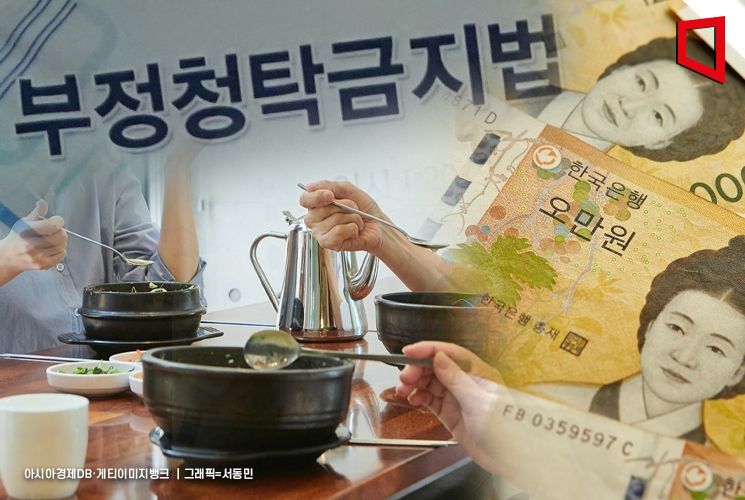
Furthermore, the ACRC approved an amendment to the Enforcement Decree of the Improper Solicitation and Graft Act to raise the value range for food from 30,000 won to 50,000 won.
The current Improper Solicitation and Graft Act allows exceptions for food valued at 30,000 won or less provided to public officials for smooth job performance, social, or ceremonial purposes.
While the Act has positive aspects, concerns have been consistently raised about its effectiveness due to gaps with social and economic realities and the decline in livelihood vitality. There have also been ongoing appeals, especially from the dining industry, small business owners, and self-employed individuals, to update the value standards for food and agricultural, livestock, and fishery product gifts under the Act.
In response, the ACRC gathered diverse opinions from various sectors, including the dining industry, agriculture, livestock and fishery industries, and small business and self-employed groups, reaching consensus on the need to reasonably adjust the value standards under the Act through legislative amendments. The ACRC plans to work with relevant ministries to swiftly proceed with the legislative process for the prompt implementation of the amendment to the Enforcement Decree.
However, the proposal to permanently raise the gift value for agricultural, livestock, and fishery products and processed goods to 300,000 won was not included in this amendment. The current Act allows the value range for such gifts to be doubled during Lunar New Year and Chuseok periods (from 24 days before to 5 days after the holiday). Therefore, if the gift value is raised to 300,000 won without amending the current law, it would effectively increase to 600,000 won during these holiday periods. Considering the legislative situation in the National Assembly, the ACRC decided to continue discussions on adjustments comprehensively.
Yoo Cheol-hwan, Chairperson of the ACRC, stated, "While maintaining the fairness and integrity values of the Improper Solicitation and Graft Act, we have tried to reflect the public’s appeals to improve the Act in line with changing social and economic realities as much as possible in this amendment to the Enforcement Decree. The ACRC will continue to listen directly to diverse opinions from all sectors raised in the field of public livelihood and do its best to resolve the difficulties faced by the public in the process."
© The Asia Business Daily(www.asiae.co.kr). All rights reserved.


















