Revised Enforcement Decree Takes Effect Today
Overseas Transfer for Research and Investigation Allowed Starting Next Year
Works created after 1946 can now be sold overseas or freely exhibited abroad. On the 23rd, the Cultural Heritage Administration announced that the revised "Enforcement Decree of the Cultural Heritage Protection and Utilization Act," which narrows the scope of "general movable cultural heritage," took effect on the same day.
General movable cultural heritage refers to cultural assets that are over 50 years old and possess artistic and academic value while meeting criteria such as rarity, clarity, uniqueness, and period characteristics.
In principle, overseas export is prohibited. Exceptions are only allowed when permission is granted by the head of the Cultural Heritage Administration for events aimed at international cultural exchange, such as overseas exhibitions.
Accordingly, works from the 1940s to the early 1970s were classified as regulated items. The art community criticized this, saying it hindered the expansion of the market. They unanimously argued that the Korean art market could grow in the long term only if the overseas collector base expands and transactions increase.
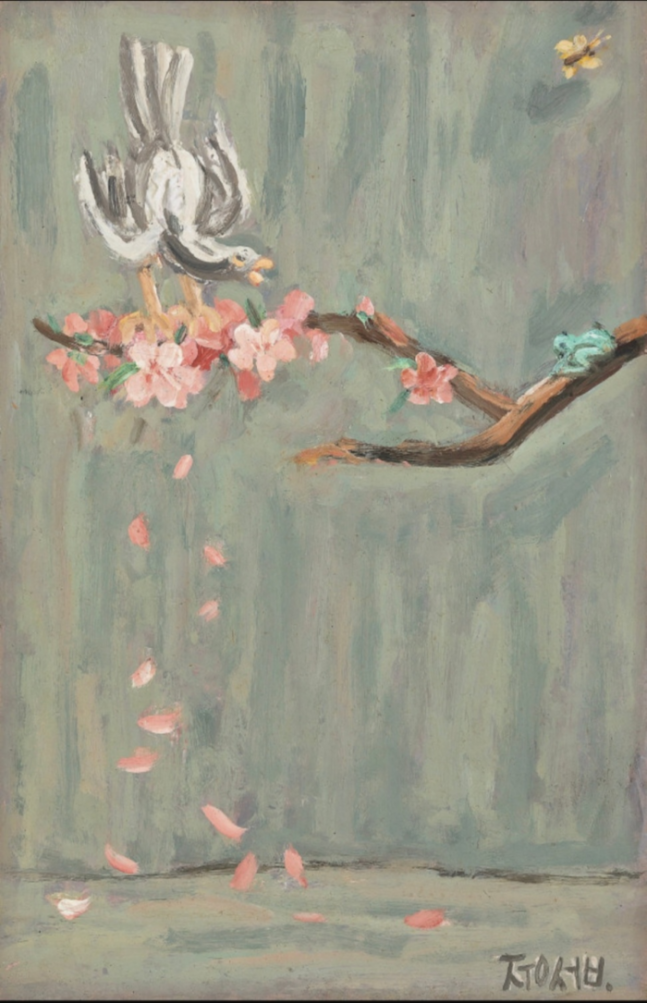
In fact, a work created in 1962 by the late artist Kwak In-sik was unable to be exhibited at the world-renowned art fair "Frieze Masters" held in the UK last year. Similarly, "Bird Sitting on a Flowering Tree Branch," painted by artist Lee Jung-seop in the 1950s, was prevented from being exported to Hong Kong in 2020 for the same reason.
In response to growing opposition from the art community, the Cultural Heritage Administration changed the production date criterion for general movable cultural heritage from "more than 50 years since creation" to "created before 1945." From now on, works created after 1946 can be exported or shipped abroad without separate permission.
A Cultural Heritage Administration official expressed hope that "the export path for modern and contemporary artworks will open, allowing the excellent value of K-cultural heritage to spread worldwide." They added, "In particular, clearly defining the production date criterion by a specific year is expected to improve export predictability and help resolve infringements on individual property rights."
The Cultural Heritage Administration also plans to implement the "Cultural Heritage Protection and Utilization Act," which permits overseas export for purposes such as investigation and research, starting January 24 next year. The official anticipated, "This will satisfy global interest in Korean cultural heritage while further promoting the excellence of our cultural assets more broadly."
© The Asia Business Daily(www.asiae.co.kr). All rights reserved.

















