A court ruling stated that when determining land compensation, the usage situation must be considered to evaluate the compensation amount.
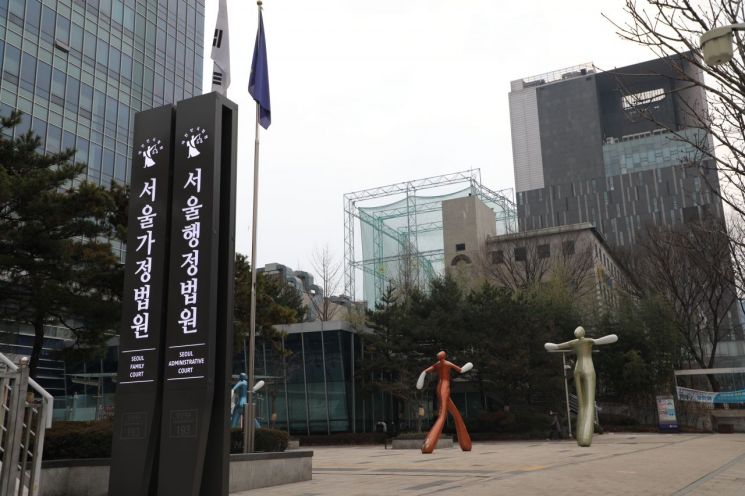
According to the legal community on the 22nd, Judge Shim Woong-bi of the Seoul Administrative Court, Division 13, ruled partially in favor of the plaintiffs in a loss compensation claim lawsuit filed by landowners Mr. A and seven others against Gwanak-gu, Seoul.
Mr. A and seven others are co-owners of 254㎡ of land in Sillim-dong, Gwanak-gu, Seoul. Although the land's designation is ‘dap’ (rice paddy), a type of farmland, it was designated as a road under the 1973 urban management plan and has been used as a road continuously. Some parts had been used as roads even before the urban management plan.
Gwanak-gu, after an objection decision by the Central Land Expropriation Committee, determined the loss compensation amount to be 848.84 million KRW. The appraisal firm evaluated 35㎡ of the land as ‘planned public road site’ forcibly converted into a road by the urban management plan, and the rest as ‘de facto private road’ installed by themselves or where others’ passage cannot be restricted. According to the Enforcement Rules of the Land Compensation Act, ‘de facto private roads’ are compensated at only one-third of the nearby land’s appraisal value.
The plaintiffs filed an administrative lawsuit, disputing the decision. They argued that since the land was used as ‘dap’ before being designated as a road under the urban management plan, it should not be judged as a ‘de facto private road.’
The court ruled, “The fact that the land has been provided for passage by an unspecified large number of people for a long time and that the owner has tolerated this does not necessarily mean that the usage situation as a road has been fixed.”
However, the court pointed out, “Considering the circumstances such as the history of land division and usage, the relationship with surrounding land, benefits gained from use as a road, and the degree of public interest infringement if restored to its original state, it is a situation where restoring to the standard usage state according to the original designation is significantly difficult.”
Then, the court ruled, “Adopt the court appraisal results that separately evaluated ‘dap’ and ‘de facto private road’ based on usage situations around the time of the urban management plan decision, and pay the amount corresponding to the difference from the existing compensation amount.”
Following the court’s decision, the plaintiffs will be able to receive an additional compensation of about 130 million KRW plus delayed damages from the state. Neither the plaintiffs nor the defendant appealed, so the ruling was finalized on May 31.
© The Asia Business Daily(www.asiae.co.kr). All rights reserved.
![Clutching a Stolen Dior Bag, Saying "I Hate Being Poor but Real"... The Grotesque Con of a "Human Knockoff" [Slate]](https://cwcontent.asiae.co.kr/asiaresize/183/2026021902243444107_1771435474.jpg)
















