Preparing Mid- to Long-Term Basic Plans for Seniors to Live Healthy and Dignified Lives in Their Communities
Providing Housing, Medical, Daily Life, and Healing Care Services in Five Stages Based on Health Status from 'Health' to 'Nursing'... Supporting Safety Products to Prevent Falls, Establishing New Health Care Centers to Create Senior-Friendly Communities in a Super-Aged Society
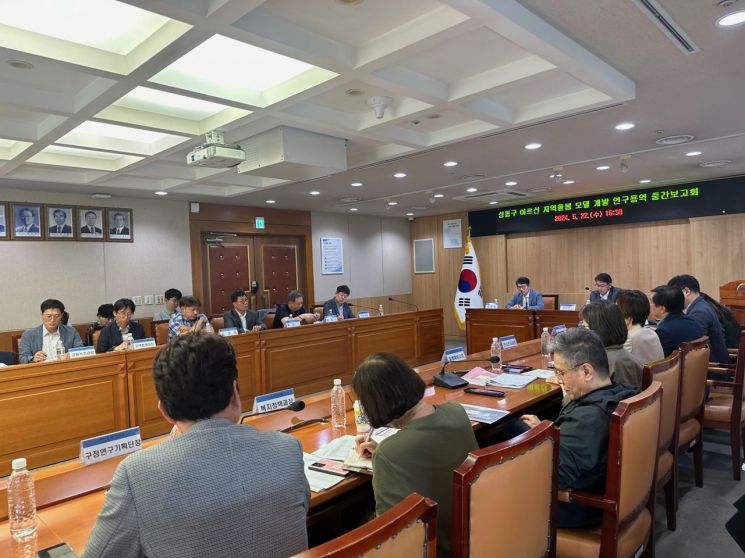
Seongdong-gu, Seoul (Mayor Jeong Wono) announced plans to accelerate the promotion of the "Seongdong-type Integrated Care for the Elderly" to enable seniors to live healthy lives in their own homes as the society approaches a super-aged stage.
Seongdong-gu has maintained its strong status as an age-friendly city, having been certified by the World Health Organization (WHO) Global Network for Age-friendly Cities in 2020 and receiving a second-stage re-certification last year.
On July 1, as the second half of the 8th local government term began, the district prepared a basic plan to establish the "Seongdong-type Integrated Care System for the Elderly," based on 10 years of achievements and experience in creating an age-friendly city. This plan sets goals for the next 10 years and aims to systematically implement a care model suited to local conditions to ensure seniors can live healthy and dignified lives in their communities.
South Korea is currently on the verge of entering a super-aged society. This presents an urgent challenge to meet the increasing demand for elderly care not only in small and medium-sized local cities but also in urban centers like Seoul.
As of the end of June, Seongdong-gu has approximately 50,000 residents aged 65 or older, accounting for 18.2% of the total population, which is a 34% increase compared to 10 years ago.
Moreover, multiple studies, including elderly status surveys, have shown that seniors prefer to remain living in their own homes even if their health deteriorates.
Accordingly, last year the district supported 500 elderly households with safety equipment worth about 500,000 KRW, such as safety handrails and anti-slip mats, to prevent fall accidents, laying the groundwork for community-based elderly care.
This year, efforts are being intensified to build the "Seongdong-type Integrated Care" model, which provides continuous and integrated care services centered on housing.
After benchmarking excellent cases by visiting domestic and international local governments and care facilities and understanding the needs of the elderly, a research project to develop the "Seongdong-type Integrated Care" model was launched in March.
As a result, under the vision of "Healthy aging at home, happy Seongdong together," four strategic areas and ten new implementation tasks were established: ▲ safe and comfortable residential care ▲ seamless medical care anywhere ▲ healthy and vibrant daily care ▲ healing care for body and mind in nature.
The care system categorizes seniors into five stages based on their health status, from the "healthy" stage with no difficulty in daily activities to the "long-term care" stage on the borderline of using nursing hospitals or facilities. Services are classified into preventive care, intensive integrated care, and medical/nursing care, providing tailored residential, medical, daily, and healing care according to individual characteristics.
The district plans to continuously cooperate with organizations, institutions, and the private sector, revising and supplementing tasks to gradually realize the "Seongdong-type Integrated Care" effectively.
In particular, the first "Elderly Health Care Center" will open in September this year. By December, a pilot customized health promotion program will be operated for 3,000 seniors who receive services such as Hyosarang health primary care and customized elderly care services but have difficulty managing their health voluntarily. This program aims to support seniors in building muscle strength and lowering their health age through active physical activities.
Additionally, using smart devices, the center will systematically conduct tailored muscle-strengthening exercises by assessing activities of daily living (ADL), frailty, and sarcopenia, while regularly monitoring health status to prevent progression to long-term care conditions.
Furthermore, the district plans to introduce the "Seongdong-type Senior Care Membership," which will form the foundation of the integrated care information system this year. This system will comprehensively manage information on seniors participating in medical and care projects operated by the district, allowing a clear overview of beneficiary services by target group. In particular, by establishing an organic cooperation system with medical, welfare departments, and institutions, fragmented care services will be provided continuously and integratively.
Seongdong-gu ranked first in the "Attitude toward Socially Vulnerable Groups" category in the 2023 Seoul Survey, recording the highest score for the item "Willingness to pay more taxes to expand social welfare for the elderly," and is recognized as an inclusive city representing all autonomous districts in Seoul.
Jeong Wono, Mayor of Seongdong-gu, stated, "Creating a community where seniors can live well in the face of a super-aged society is an essential task of our time," and added, "We will do our best to complete the 'Seongdong-type Integrated Care for the Elderly' so that seniors can live healthy and happy lives in their own homes."
© The Asia Business Daily(www.asiae.co.kr). All rights reserved.
![Clutching a Stolen Dior Bag, Saying "I Hate Being Poor but Real"... The Grotesque Con of a "Human Knockoff" [Slate]](https://cwcontent.asiae.co.kr/asiaresize/183/2026021902243444107_1771435474.jpg)
















