[Park Jong-il Autonomous News] Final Fierce Battle in the People Power Party Leadership Election
Concerns Over Aftereffects Regardless of Who Becomes Party Leader
Mayor Oh Steadily Manages Seoul City Administration
The ruling party, the People Power Party, is approaching the final stages of its party convention to elect the party leader, but the unsightly bickering among candidates is causing the public to view it unfavorably.
Meanwhile, the mobile voting rate among party members (July 19-20) for the People Power Party's July 23 convention to select the next leadership recorded 40.47%, which is 7.04 percentage points lower than last year's record-high mobile voting rate of 47.51% at the March 8 convention.
Of course, this phenomenon is not limited to the People Power Party. The opposition parties are also holding their own leadership elections simultaneously, but they are failing to attract much interest.
The Democratic Party of Korea's convention to elect its leader saw candidate Lee Jae-myung achieve a cumulative online voting rate of 90.75% among party members in Jeju and Incheon on the first day, confirming the expectation that "Lee Jae-myung will be the leader anyway," making it difficult to garner national attention. Candidate Kim Du-kwan received 7.96%, and candidate Kim Ji-soo received 1.29%.
The Innovation Party, which emerged as the third largest party solely through proportional representation in the 22nd general election, also held its national party members' meeting on the 20th, where candidate Jo Guk ran unopposed and received a 99.9% approval rate, making it another convention unlikely to excite much interest.
Thus, it seems difficult for the leadership elections of the ruling party and the first and second opposition parties to meet the reasonable expectations of the public.
In particular, the People Power Party's convention is unfolding in a chaotic manner, with candidates attacking each other's weaknesses.
Despite the fact that the People Power Party convention should be a chance to recover from its complete defeat in Seoul and the metropolitan area in the 22nd general election, controversies have erupted, such as candidate Won Hee-ryong raising the issue of a "text message apology from Mrs. Kim Geon-hee" during the election, and candidate Han Dong-hoon requesting candidate Na Kyung-won to drop charges, raising public concern about how conflicts will be resolved after the election.
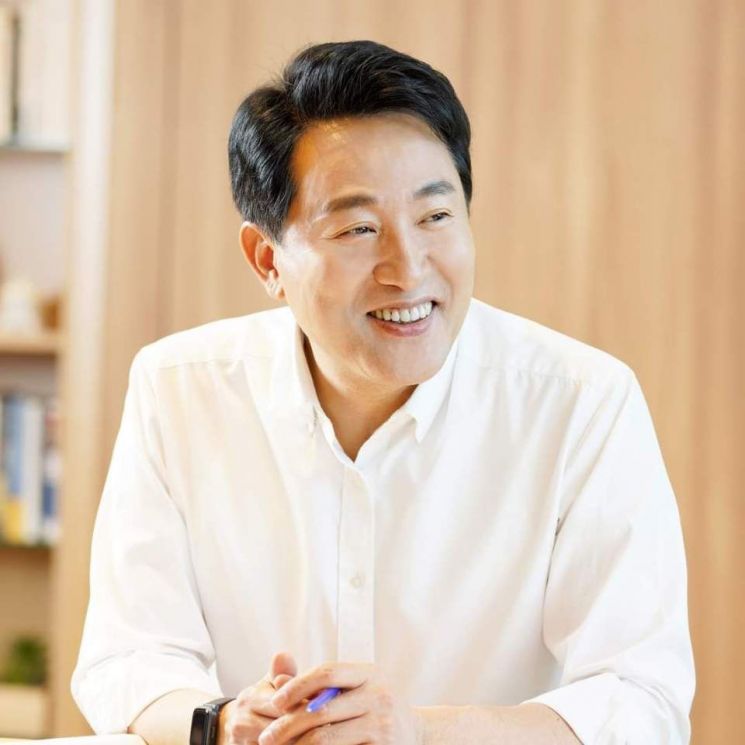
Amid this, there is growing attention on Seoul Mayor Oh Se-hoon, who is relatively gaining ground as a potential next presidential candidate.
A political insider said, "The People Power Party convention seems to be heading towards a meltdown, causing concern not only among party members but also the public," adding, "Relatively, Mayor Oh Se-hoon is solidifying his position as a next candidate by effectively managing Seoul's city affairs," offering a meaningful analysis.
Even immediately after the People Power Party's total defeat in the general election, political circles evaluated Mayor Oh as a strong contender for the next presidential race. Since the 22nd general election, Mayor Oh has been raising critical issues regarding the political situation, especially former Democratic Party leader Lee Jae-myung's judicial risks and the National Assembly's Judiciary Committee's holding of a hearing on the "request for impeachment motion against President Yoon Suk-yeol," earning high praise not only from conservatives but also from moderate citizens.
In this context, it was revealed that Mayor Oh ranked first with 36% in a favorability survey conducted by Gallup Korea from June 18 to 20 among 1,200 adults nationwide, surpassing Jo Guk of the Innovation Party at 35%, Democratic Party leader Lee Jae-myung at 33%, Daegu Mayor Hong Joon-pyo at 30%, and Reform Party lawmaker Lee Jun-seok at 27%. The survey was conducted via telephone interviews using randomly selected mobile virtual numbers, with a 95% confidence level and a margin of error of plus or minus 3.1 percentage points. The response rate was 12.2%. For more details, refer to the Central Election Poll Deliberation Commission website.
The fact that a metropolitan mayor surpassed incumbent lawmakers and others demonstrates Mayor Oh's significant presidential potential.
Notably, on June 16, Mayor Oh posted on his social network service (SNS) Facebook page a message titled "Do you want to be the captain of a bickering ship?" warning that if the convention continues down the path of mutual destruction, even the winner will be half a loser, urging candidates to exercise restraint. Mayor Oh, who holds the record as the first four-term Seoul mayor, has left a significant mark on Seoul's history through initiatives such as presenting a development blueprint for the Yongsan International Business District, hosting the Seoul Garden Expo, the "Great Han River" development, and constructing the second Sejong Center for the Performing Arts in Yeouido.
Riding this momentum, attention is focused on whether Mayor Oh can become the leading conservative candidate in the next presidential race over the next three years.
However, it remains to be seen how Mayor Oh will overcome his relatively weak regional base. He appears to need greater ability to present a clear national vision that will be recognized by both conservatives and moderates.
A Seoul city official said, "Mayor Oh will likely not run for office again after this term and will focus on a big-picture plan," adding, "It is necessary to establish a definite theme and image that can gain nationwide support."
© The Asia Business Daily(www.asiae.co.kr). All rights reserved.
![User Who Sold Erroneously Deposited Bitcoins to Repay Debt and Fund Entertainment... What Did the Supreme Court Decide in 2021? [Legal Issue Check]](https://cwcontent.asiae.co.kr/asiaresize/183/2026020910431234020_1770601391.png)















