The International Atomic Energy Agency (IAEA) has released an on-site investigation report reaffirming that the discharge of contaminated water from the Fukushima Daiichi Nuclear Power Plant in Japan (referred to as "treated water" by Japan and the IAEA) into the ocean complies with international safety standards.
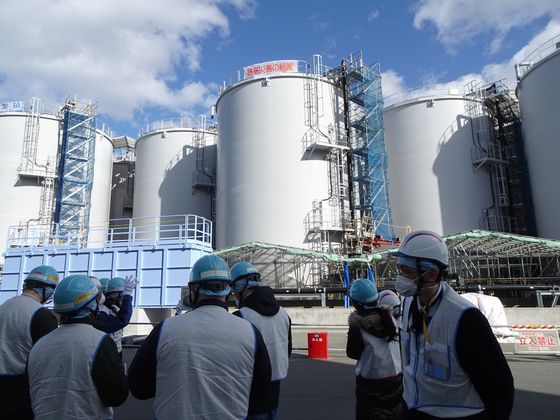
On the 19th (local time), the IAEA announced in a statement that a task force (TF) composed of experts from various countries visited Japan last April to inspect the discharge site at the nuclear power plant facility and interview officials, subsequently releasing this report.
The IAEA TF consisted of experts from 11 countries, including South Korea, and has been monitoring the appropriateness of Japan’s discharge plan and its post-discharge impacts on-site since 2021, when Japan began preparing to release contaminated water from the Fukushima Daiichi Nuclear Power Plant.
This report contains the findings from the investigation conducted between April 23 and 26.
The TF reviewed the tanks used to store the contaminated water after dilution until just before discharge, the flow control valves, and the independence of the IAEA resident experts who collect samples on-site during each discharge to analyze radioactive material concentrations.
The TF stated, “The regulatory environment overseeing the discharge process in Japan is appropriate, continuous on-site supervision activities by nuclear safety authorities were confirmed, and the equipment and facilities were installed and operated in accordance with international safety standards.”
They also added, “Verification activities and independent analyses by IAEA resident experts are important. This will help comprehensively and objectively verify the accuracy and reliability of the data reported by Tokyo Electric Power Company and the Japanese government.”
This report is similar to the one released in January this year, which included on-site investigation details from October of last year. It also does not significantly differ from the comprehensive report published by the IAEA in July last year, just before the ocean discharge began. The comprehensive report stated that if the contaminated water is controlled and gradually discharged into the sea as originally planned by Japan, the radiation impact on humans and the environment would be minimal.
Since August last year, Japan has been discharging contaminated water stored in tanks at the Fukushima Daiichi Nuclear Power Plant into the ocean after processing it through the ALPS (Advanced Liquid Processing System) treatment process to remove multiple radionuclides and diluting it with seawater. So far, diluted water totaling 55,000 cubic meters has been released into the sea in seven separate discharges.
© The Asia Business Daily(www.asiae.co.kr). All rights reserved.
![User Who Sold Erroneously Deposited Bitcoins to Repay Debt and Fund Entertainment... What Did the Supreme Court Decide in 2021? [Legal Issue Check]](https://cwcontent.asiae.co.kr/asiaresize/183/2026020910431234020_1770601391.png)















