Pilot Project for 'Tertiary General Hospital Structure Transition' to Apply from September
Transition to Specialist-Centered Hospitals Focusing on Severe, Emergency, and Rare Diseases
Concerns Raised Including "Annual Labor Costs May Increase by Over 1.3 Trillion Won"
Amid nearly half of the residents resigning, the government announced that it will operate a pilot project for the 'tertiary hospital structural transformation' starting in September. The government’s plan is to transform tertiary hospitals into specialist-centered hospitals focusing on severe, emergency, and rare diseases through this structural transformation. However, some concerns have been raised about potential hospital management deterioration and patient harm due to increased labor costs and decreased revenue caused by the sudden structural changes.
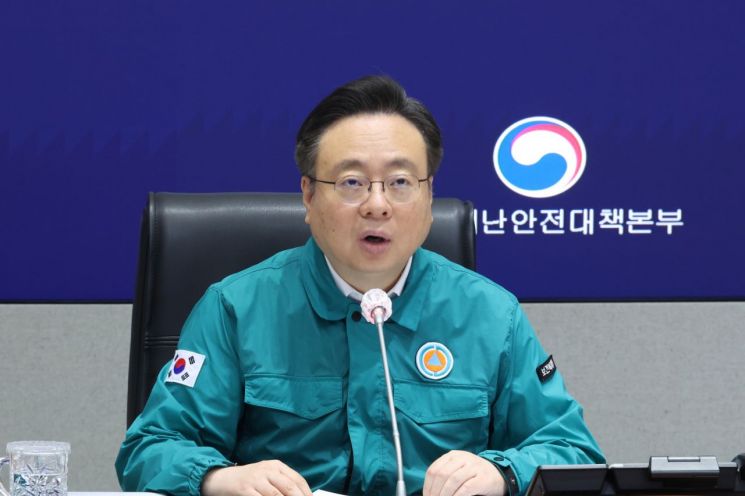 Health and Welfare Minister Cho Kyu-hong is speaking at the Central Disaster and Safety Countermeasures Headquarters meeting on doctors' collective action held at the Situation Center of the Government Seoul Office in Jongno-gu, Seoul on the 18th.
 [Image source=Yonhap News]
On the 19th, the Ministry of Health and Welfare reported that among 151 hospitals that had hired residents as of the previous day, 7,648 residents?56.5% of the total 13,531 residents (as of March 2024)?had resigned across 110 hospitals. The second half resident recruitment starting on the 22nd will coincide with the launch of the tertiary hospital structural transformation pilot project in September.
The government plans to institutionalize the tertiary hospital structural transformation after a three-year pilot project starting this September. The transformation will cover five areas: ▲medical treatment ▲medical cooperation ▲infrastructure ▲personnel ▲resident training. The project aims to establish tertiary hospitals as 'specialist-centered' institutions focusing on severe and emergency patient care, reducing general beds by up to 15%, and increasing the proportion of intensive care patients to over 50%.
First, a medical treatment system focusing on severe, emergency, and rare diseases will be established. Tertiary hospitals will reduce treatment of mild to moderate cases to concentrate on essential medical care such as severe, emergency, and rare diseases, cerebrovascular diseases, trauma, high-risk childbirth, and severe pediatric cases, ensuring patients receive timely treatment.
The medical delivery system will also be strengthened. The formal referral system will be restructured to ensure professional referrals accompanied by detailed physician opinions and medical records. Patients with mild to moderate conditions will be redirected to cooperative hospitals, and an enhanced cooperation system will be built to allow access to tertiary hospitals without waiting when necessary.
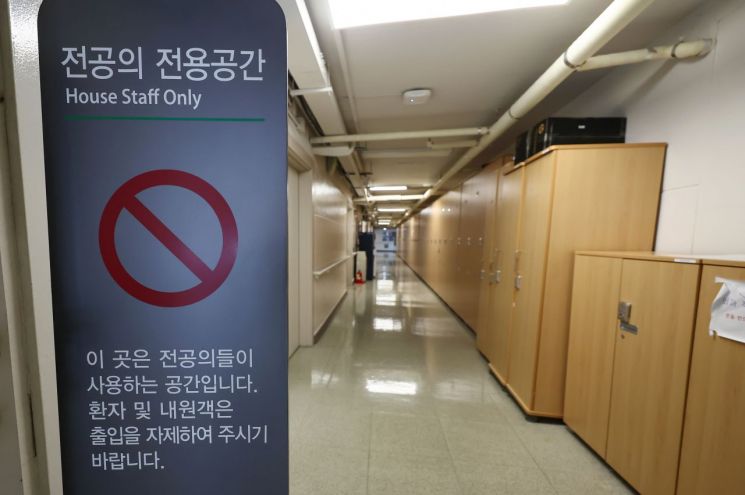 On the morning of the 9th, a dedicated space for residents at a university hospital in Seoul city. [Image source=Yonhap News]
To improve medical quality, general beds will be reduced, and intensive care beds expanded. Participating tertiary hospitals in the pilot project will be required to reduce 5% to 15% of general beds during the three-year pilot period, considering regional bed supply, current bed numbers, and severe patient treatment performance. Multi-bed rooms mainly used by mild patients will be converted into 2-3 bed rooms or intensive care units to enhance hospitals’ intensive care capabilities. According to the Medical Reform Special Committee, the proportion of intensive care beds to general beds in domestic tertiary hospitals is only 10%. Seoul National University Hospital, one of the top hospitals in Korea, has a ratio of 11.8%. In contrast, Johns Hopkins Hospital in the United States has an intensive care bed ratio of 17%.
The personnel structure will also shift from relying on residents’ excessive labor to a skilled workforce centered on specialists. To enhance severe patient treatment capabilities, education and training for doctors and nurses will be strengthened, and work will be redesigned to operate with teams of specialists and clinical support nurses, gradually reducing the proportion of resident care.
The vacancies left by residents will be filled by specialists and clinical support nurses (PA, Physician Assistant). Analysis suggests that replacing 10 residents with about 3 specialists and PA nurses can enable care without residents. To this end, the duties of PA nurses will be formalized. Earlier in March, the government announced the 'Guidelines on Tasks That Nurses Cannot Delegate and the Scope of Nurses’ Clinical Support Duties' containing these details. This was to address confusion and concerns about illegal medical practices arising from unclear task scopes in the field.
The guidelines distinguish nurses’ qualifications (specialist nurse, dedicated nurse, general nurse) and specify which detailed tasks each can perform. For example, all nurses can perform ultrasound examinations, emergency cardiopulmonary resuscitation, and emergency drug administration, while surgical site suturing is limited to dedicated and specialist nurses.
 On the afternoon of the 18th of last month, when private practitioners and some medical school professors went on a collective strike led by the Korean Medical Association, doctors are seen holding a large banner with phrases such as "Medical Manipulation" at the National Doctors' General Rally held on Yeouidaero, Yeongdeungpo-gu, Seoul.
 [Image source=Yonhap News]
However, concerns have been raised about side effects that may arise from such structural transformation. First, it has been pointed out that annual labor costs could increase by more than 50% for the tertiary hospitals to undergo the structural transformation as planned by the government. Depending on the number of specialists tertiary hospitals must hire to reduce the proportion of residents, additional annual labor costs could exceed 1.3 trillion KRW.
Professor Jeong Jae-hoon of the Department of Preventive Medicine at Gachon University College of Medicine raised these concerns in a research presentation on the 20th of last month, based on government data such as the Health Insurance Statistical Yearbook and the Korea Institute for Health and Social Affairs’ healthcare workforce survey. According to the study, as of 2022, there were 12,774 residents in total, including 3,137 interns and 9,637 residents. Residents account for 11.4% of the total physician workforce of 112,331. Notably, 68.0% of residents, or 8,687, work in tertiary hospitals. Residents make up 38.3% of the 22,683 physicians in tertiary hospitals. In 2022, there were 45 tertiary hospitals.
Professor Jeong estimated that the wage level required for the transition to specialist-centered hospitals could reach up to 1.3674 trillion KRW. Although the proportion of residents in specialist-centered tertiary hospitals has not yet been determined, it is expected to be around 10-20%. According to the 2022 ‘Healthcare Workforce Survey’ report by the Korea Institute for Health and Social Affairs, as of 2020, there were 20,236 physicians working in tertiary hospitals, including 11,717 specialists. Residents numbered 7,648, accounting for 37.8% of all physicians. Reducing this proportion to 10% would mean cutting 5,625 residents, leaving 2,023 residents, according to his calculations.
He also estimated the additional labor costs required if the duties of the 5,625 reduced residents were replaced by specialists. The estimate shows that replacing one resident with one specialist would require tertiary hospitals to spend an additional 481.3 billion KRW annually on labor costs. However, he argued that it would be more appropriate to divide one resident’s duties between two specialists. In this case, tertiary hospitals would need to hire 11,250 more specialists, increasing additional annual labor costs to 1.3674 trillion KRW. To reduce the resident proportion to 20%, the number of residents should be cut to 4,047. The 3,601 residents’ duties would need to be taken over by specialists, with additional labor costs up to 729.8 billion KRW.
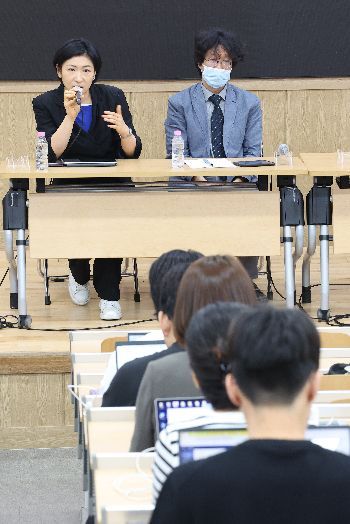 Professor Ha Eun-jin, a member of the Emergency Measures Committee at Seoul National University College of Medicine and Hospital (left), is speaking at a press conference on the morning of the 15th at the Convergence Hall of Seoul National University College of Medicine in Jongno-gu, Seoul, on the topic of "Opinions for Minister Cho Kyu-hong of the Ministry of Health and Welfare." Photo by Yonhap News
There are also claims that tertiary hospitals cannot bear the deficits caused by becoming specialist-centered hospitals. The Emergency Response Committee of Seoul National University College of Medicine and Hospital held a press conference at Seoul National University Hospital in Jongno-gu, Seoul, on the 15th, stating this. Professor Ha Eun-jin of the Department of Neurosurgery at Seoul National University College of Medicine pointed out, "According to the Health Insurance Review and Assessment Service’s research, the revenue from mild outpatient and inpatient care at tertiary hospitals amounts to 4.3 trillion KRW, which is 33% of total hospital revenue. If all of this is redirected to primary and secondary hospitals, they will not be able to bear the deficits."
Concerns have also been raised about health insurance finances and the suitability of the current patient classification system. Professor Jeong warned that even if specialist-centered hospitals are institutionalized, health insurance might not sustain it. As medical costs increase, health insurance premiums will also rise, potentially requiring citizens to pay 15% of their monthly salary as health insurance premiums in 30 years.
Criticism has been made that the current patient classification system is inadequate for distinguishing severe medical cases. The Korean Stroke Society recently expressed concern that if the current stroke patient classification system is not changed, most stroke patients may not receive treatment at structurally transformed tertiary hospitals. This is because most severe and emergency stroke patients are classified under general treatment disease groups in the current system.
A representative from a tertiary hospital in Seoul also said, "For thrombosis, if it is in the leg, it is not classified as an emergency, but it could move to the head and cause death at any time. Referring or transferring patients from primary and secondary hospitals is not as easy as it sounds."
© The Asia Business Daily(www.asiae.co.kr). All rights reserved.
![Clutching a Stolen Dior Bag, Saying "I Hate Being Poor but Real"... The Grotesque Con of a "Human Knockoff" [Slate]](https://cwcontent.asiae.co.kr/asiaresize/183/2026021902243444107_1771435474.jpg)


















