Busan Port Promotion Held for Local Shippers in Sapporo and Akita, Japan
Highlighting Major Logistics Cost Savings by Transshipment from Local Japanese Ports to Busan Port
Busan Port Authority (BPA) held promotional sessions for attracting transshipment cargo at Busan Port, targeting local shippers and logistics companies in Sapporo and Akita, Japan, in collaboration with local Japanese port authorities on the 17th and 19th.
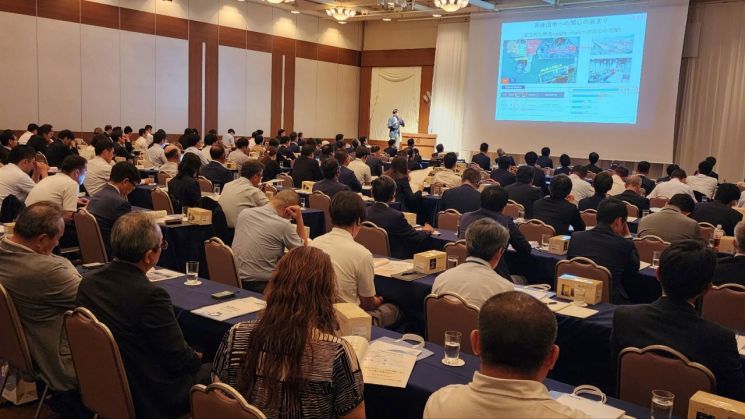
This event was organized in response to the declining trend in container traffic between Korea and Japan this year, aiming to revitalize shipping routes between Busan Port and Japanese local ports (Ishikarimanshin Port and Akita Port) and to encourage the transshipment of third-country cargo bound for Japanese local ports through Busan Port.
Recently, the overall cargo volume at Busan Port has been increasing, mainly driven by North America and Southeast Asia, but Japanese cargo has continued to decline. From January to May this year, import and export cargo volume between Busan Port and Japanese ports fell by 7.8% compared to the same period last year, and even transshipment cargo, which had previously seen smaller declines, dropped by 6.1%.
Japan is the country with the highest share of transshipment cargo at Busan Port, and is considered a region with long-term growth potential for transshipment volume. BPA is making every effort to newly attract local cargo in Japan, which was previously transported by truck, to Busan Port.
Since April this year, due to amendments to Japan's Labor Standards Act, a cap of 960 hours per year on truck drivers' overtime has been enforced, making land transportation more challenging.
For example, local shippers who previously transported cargo by truck to major Japanese ports such as Yokohama and Kobe for export and import may now increase the use of local ports and transship cargo through Busan Port due to rising trucking costs and other factors.
At this event, BPA focused on explaining Busan Port's excellent regular shipping routes and cost advantages as a strategic option in response to these changes in the Japanese logistics market.
According to data confirmed by BPA through logistics companies in April, if shippers in the Akita region transship imported cargo from China, North America, and Europe through Busan Port and then bring it into Akita Port, they can reduce logistics costs compared to importing through major ports such as Yokohama and then transporting by truck to Akita.
It was also found that when Akita region shippers export to China, North America, or Europe, transshipping through Busan Port can reduce logistics costs by more than 30% compared to using major Japanese ports such as Yokohama. BPA plans to actively promote these cost advantages and build trust in Busan Port to encourage Japanese shippers to use Busan Port in the long term.
Kang Junseok, President of BPA, stated, "Japan is a key market, accounting for about 10% of total import and export cargo and over 20% of export cargo to North America transshipped through Busan Port," adding, "We will more actively promote Busan Port's excellent facilities and cost competitiveness to local Japanese shippers and work to increase transshipment volume."
© The Asia Business Daily(www.asiae.co.kr). All rights reserved.

















