Using 23 Years of Judicial Experience as Head of Digital Content Center
YK Written Screen Submitted to Courts Nationwide
One-Stop Service from Start to Finish for Fair Trade Cases
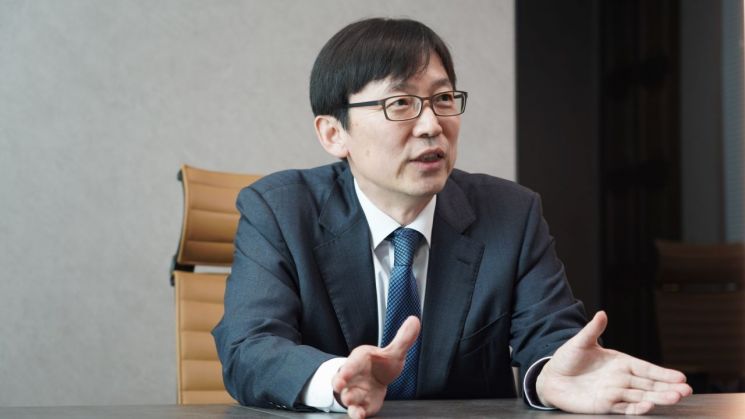
Law firm YK is rapidly growing under the aggressive management style of CEO Kang Kyung-hoon, attracting attention in the industry.
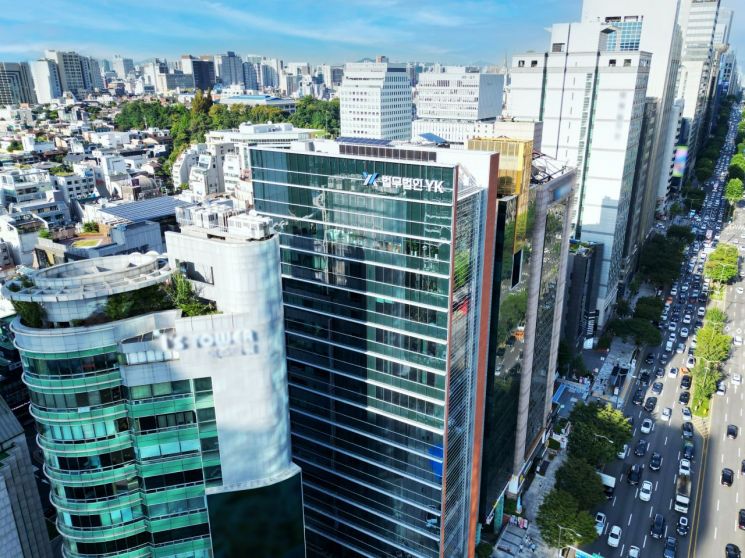
Last year, YK recorded sales of 80.3 billion KRW, surpassing law firm Dongin to enter the top 10 law firms. Recently, it has consecutively recruited prominent figures from various fields, increasing its number of affiliated lawyers to 303, rising to 7th place in the law firm rankings by number of lawyers. Currently, YK operates 29 branch offices nationwide directly and plans to open 10 more branches within the year in areas such as Seongnam and Dongtan in Gyeonggi Province.
On the 18th, we met Lee In-seok, former chief judge and now CEO of YK, who joined this year and simultaneously serves as head of the Digital Content Center and the Fair Trade Group, to ask about the background of YK’s rapid growth.
Below is a Q&A with CEO Lee In-seok of YK.
- What role do you play at YK?
▲ Drawing on my 23 years of experience as a judge, I mainly handle litigation cases. As head of the Digital Content Center, I focus on screening YK’s written submissions across courts nationwide to create high-quality documents both in form and substance. I also lead the Fair Trade Group, which provides one-stop services from the occurrence of fair trade cases through prosecution and court stages, working with skilled lawyers who came from the law firm Kwangjang’s fair trade team, former Supreme Court Justice Kwon Soon-il, and Deputy Group Leader Jin Ho-sik, a former prosecutor with experience at the Fair Trade Commission.
- YK entered the top 10 law firms for the first time last year based on sales. What motivated you to join YK, and what do you consider YK’s strengths compared to other firms?
▲ I am what people nowadays call a 'Seohak Ant' (Korean individual investor investing in US stocks). I especially enjoy discovering and investing in US growth stocks. If I had the foresight to recognize the value of companies like Nvidia or Tesla early on, I would have achieved great success. The key to growth stock investment is to look at the future of a company?predicting where it will be in 5 or 10 years and selecting companies to invest in accordingly. YK is a growing law firm just at the beginning of its growth. To someone who prefers growth stocks like Nvidia or Tesla over stable ones like Coca-Cola, YK would appear attractive. YK is growing and full of vitality.
- As of the end of June, YK’s total number of lawyers exceeded 300. In just 12 years since its establishment, it has risen to 7th place in the industry by number of lawyers. What significance do you attach to this?
▲ YK is establishing itself as a new growth model in an industry where there has been little change for a long time. The major trend of the times is shifting from offline to online, and accordingly, a law firm that combines online and offline services and can provide nationwide services without being concentrated in Seoul can offer optimal legal services to companies and individuals. I believe YK is rapidly growing by providing legal services that fit this new era’s trends.
- When you worked in the Fair Trade Division of the Seoul High Court or as a lawyer representing client companies in litigation, did you notice any points for improvement in administrative agency work practices?
▲ The investigation procedures of the Fair Trade Commission need improvement in terms of compliance with due process principles, similar to courts or prosecutors. While criminal procedures strictly observe due process, the Fair Trade Commission tends to prioritize investigation efficiency. When there is a risk of infringement on citizens’ property rights or human rights, the Fair Trade Commission should also comply with due process, requiring improvements in work practices and related regulations. For example, the Fair Trade Commission conducts on-site investigations without search warrants and collects extensive materials, with a scope much broader than criminal search and seizure executed with court warrants. Various problems can arise in this process.
- Are there any memorable cases you directly judged as a judge or handled as a lawyer?
▲ There are several, but many parties do not want to publicize them. As a lawyer, I recall cases where clients were acquitted. In fair trade cases, chairpersons or CEOs are often indicted on the assumption that they naturally ordered or were informed, but in reality, this is often not the case. By carefully reviewing related evidence and discovering circumstances contradicting the assumption that they were informed, we can achieve acquittals, which feels like assembling Lego blocks to complete a puzzle. The acquittal in the delivery app Yogiyo case is an example: Yogiyo was indicted for managerial interference for requesting restaurants not to discriminate prices by charging more for orders through the delivery app than in-store or phone orders, but the court ruled not guilty. Nowadays, it is problematic if delivery apps charge more than stores, but in this case, asking to charge the same price was considered managerial interference under the Fair Trade Act.
- More companies, including Samsung, are introducing compliance committees to monitor corporate compliance activities. What preparations are necessary to reduce judicial risks that may arise in corporate management?
▲ Recently, there has been great interest domestically and internationally in corporate compliance programs (CP), and law firms are providing much legal advice on this. Preventing problems before they occur is advantageous in many ways compared to dealing with issues after they arise. The Fair Trade Commission recently implemented a plan to reduce fines if companies receive AA grade or higher in CP evaluations, encouraging active participation.
- With more MZ generation judges in courts, a culture emphasizing work-life balance is spreading, and there were reports that judges in collegiate panels colluded to limit rulings to three cases per week. As fewer judges work overtime, trial delays have become a social issue. What are your thoughts?
▲ While work-life balance is the trend, there is also a romanticism in staying up all night doing what you love in your youth, and such experiences often serve as a foundation for great growth. On the other hand, we cannot demand unilateral sacrifice from the younger generation, so it seems necessary to create an environment where they can enjoy their work and devote themselves enthusiastically.
- In your 2021 article titled 'The Future of Polite Language in Judgments' published in the Legal Newspaper, you argued that judgments in a democratic country where the people are the owners should be written to be easy to read and to make people feel respected, evolving from Chinese characters to Hangul and from complex to simple judgments, with the next step being 'polite language judgments.' Could you elaborate?
▲ For example, comparing judgments from 30 years ago to now, you can quickly see they have become much easier. Even without quoting constitutional provisions, since the people are the owners of the country, judgments should naturally be written from the people's perspective, easy to read and understand. If the media raises this issue and the courts and Ministry of Justice make efforts, I believe improvements will follow. Currently, there are almost no opponents to this direction, which is a significant advancement. Initially, many questioned why judgments should be written simply.
- In your article on 'Advanced Country-Type Judicial System,' you pointed out that the judicial policy decided by one or a few elite groups pursuing short-term efficiency and the practice of collegiate panels deciding cases quickly with simplified agreements between two judges instead of substantive consensus among three judges make it difficult to provide advanced-level judicial services, and that the internal decision-making structure of our judiciary should be reformed to an advanced country model. Could you explain?
▲ We can see this in the respected US judiciary. For example, in the US federal court panels, if there are two Republican-appointed judges and one Democrat-appointed judge, they engage in open discussions on issues to reach the best conclusion. If the focus were only on quick processing, two Republican-appointed judges could simply decide cases easily, but the founding fathers who designed the US system assumed judges could have diverse views and aimed to derive balanced optimal conclusions through mutual discussion. While the Chief Justice and others could handle cases swiftly with a single opinion, that would be far from the essence of justice. Typical cases that do not require discussion could be better handled by AI than by judges with guaranteed status and independence.
- YK is expanding its legal services into corporate areas such as fair trade and labor law. What message would you like to give to young lawyers who want to work with YK?
▲ It is wonderful to challenge new tasks and grow together with colleagues while fully demonstrating your abilities at a growing law firm. I look forward to many proactive and enterprising young lawyers joining YK. YK will support young lawyers who join to take pride and become the best in their fields.
- Lastly, do you have any goals or aspirations you want to achieve at YK going forward?
▲ I think the legal profession has been somewhat inaccessible to the general public. I want to make high-quality legal services available to all citizens at reasonable prices within close reach.
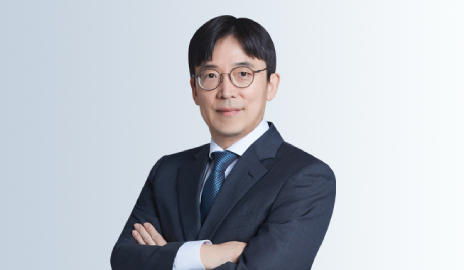
◆ CEO Lee In-seok Profile
▲ Graduated from Seoul National University, Department of Public Law, 1992
▲ Passed the 37th Judicial Examination, 1995
▲ Completed Judicial Research and Training Institute (27th class), 1998
▲ Judge, Seoul District Court, 1998
▲ Judge, Northern Branch of Seoul District Court, 2000
▲ Judge, Cheongju District Court, 2002
▲ Judge, Goyang Branch of Uijeongbu District Court, 2005
▲ Judge, Seoul Southern District Court, 2008
▲ Judge, Seoul High Court and Criminal Review Officer at the Court Administration Office, 2009
▲ High Court Judge, Seoul High Court, 2011
▲ Member, Special Committee on Criminal Procedure Law Revision, Ministry of Justice, 2013?2016
▲ Editorial Board Member, Legal Newspaper, 2016?2021
▲ High Court Judge, Daejeon High Court, 2018
▲ 8th President, International Human Rights Law Research Association, 2018
▲ Opened law practice and lawyer at Kwangjang Law Firm, 2021
▲ Member, Policy Transparency Committee, Fair Trade Commission, 2022?present
▲ CEO of Law Firm YK, Head of Fair Trade Group and Digital Content Center, 2024
© The Asia Business Daily(www.asiae.co.kr). All rights reserved.
!["The Woman Who Threw Herself into the Water Clutching a Stolen Dior Bag"...A Grotesque Success Story That Shakes the Korean Psyche [Slate]](https://cwcontent.asiae.co.kr/asiaresize/183/2026021902243444107_1771435474.jpg)


















