Electricity Generated in Donghae Transported Around Three Sides of the Sea
Alternative Plan Emerges as Land Transmission Becomes Difficult
Significant Costs for Transport Cables Remain a Challenge
"Efficient Supply Is Crucial to Reduce Electricity Bills"
The 'U-shaped tube plan,' which transports electricity produced in the East Sea around three sides of the sea to the metropolitan area, is gaining attention from the government and the power cable industry. As plans to transmit electricity from the East Coast to the metropolitan area, where power demand is high, through inland routes have become difficult due to opposition from local governments, the option of connecting via undersea cables, despite the higher costs, is attracting interest. In particular, since the Yongin Semiconductor Cluster, planned to be established by 2042 with an investment of about 300 trillion won over the next 20 years, will require a large amount of electricity, the 'U-shaped' transmission method is expected to be seriously considered.
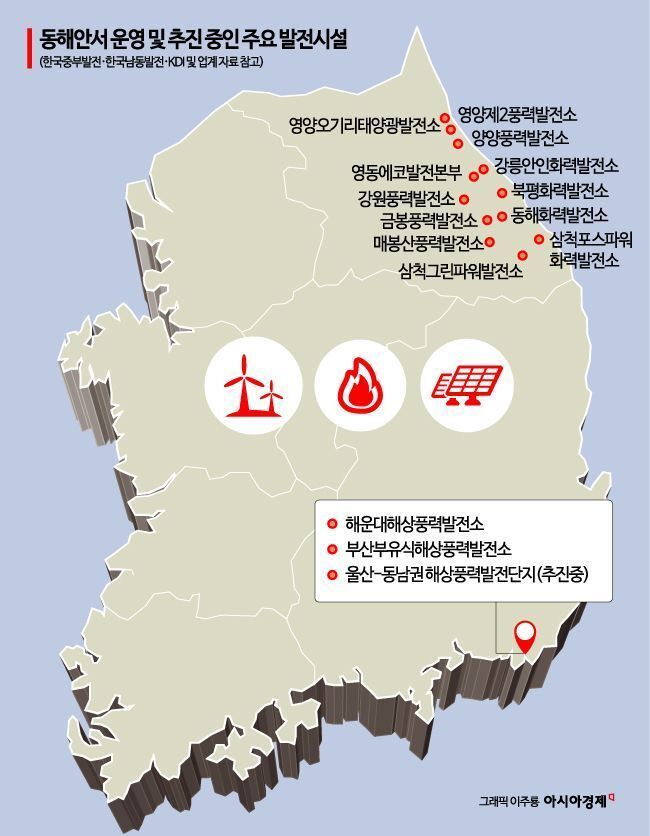
According to related industries on the 21st, the 'U-shaped tube plan' was proposed during the process of gathering expert opinions for the 11th practical plan (applicable from 2024 to 2038) by the Basic Plan for Electricity Supply and Demand (Jeon-gi-bon) General Committee in May. This plan involves transmitting electricity generated using natural energy from the East Sea or East Coast not by bringing it to land but by sending it along the sea through the East Sea, South Sea, and West Sea to the metropolitan area. A significant amount of electricity can be obtained from thermal power and liquefied natural gas (LNG) in the East Sea. Recently, as interest in offshore wind power has increased, the East Sea has been recognized as a 'treasure trove' of power energy. However, offshore wind power is all 'offshore floating type,' which has the disadvantage of being costly, with costs reaching up to around 10 billion won. Compared to the West and South Seas, the East Sea has deeper waters, so only the offshore floating type, which involves floating structures and installing turbines in the sea to generate electricity, is possible. Bringing this electricity to the shore incurs additional costs, making it burdensome.
The U-shaped tube plan was devised to solve this cost issue. It is considered more efficient if electricity can be transmitted directly to the metropolitan area via long undersea cables through the South Sea and West Sea without bringing it to the East Coast. The West Coast has a large tidal range and shallow waters, making it easier to transport electricity to land. An industry insider said, "I understand that the government is discussing the U-shaped tube plan in more detail with private developers," adding, "I think a related draft will be released within this year."
East Coast Power Plants Blocked from Inland Transmission
The background of the U-shaped tube plan lies in the difficulties of inland transmission. Since the power generation areas and power demand areas differ, some thermal power plants on the East Coast have significantly reduced their output due to delays in building transmission towers. It is reported that output has been reduced by about 20-30%. If offshore wind power development proceeds in the East Sea in the future, transmission problems could become even more serious.
Even if transmission lines are expanded to match the additional power plants and increased output, it is uncertain whether the problem can be resolved. Priority use of transmission lines is given to nuclear power plants, so the transmission network cannot efficiently accommodate other types of power generation. Transmission lines built across land face strong opposition from residents living in the areas they pass through. Residents oppose transmission line construction due to safety concerns and environmental damage. An industry insider said, "There are thermal and LNG power plants in the East Sea, but there is no way to bring that power to Seoul," adding, "We have no choice but to discuss connecting them in a U-shape."
However, a major challenge remains in that connecting in a U-shape requires bearing considerable costs. The government is focusing on expanding the power supply network, including completing ultra-high voltage direct current (HVDC) transmission by June 2026 to quickly transport electricity produced on the East Coast to the metropolitan area via land routes.
Experts point out that securing an efficient supply route is an urgent task. How much electricity can be transported while reducing costs directly affects the price of electricity. If transportation costs are high, electricity rates will increase accordingly. Electricity rates can be a significant burden for Korean companies competing with global firms, so the supply system and current situation must be carefully examined. Professor Lee Sang-jun of the Department of Energy Policy at Seoul National University of Science and Technology said, "For example, Samsung Electronics currently pays about 210 won per kWh in the auction market, whereas Taiwan's TSMC pays around 130-140 won." He added, "Taiwan operates a power demand auction system that allows TSMC to enter into third-party power purchase agreements (PPAs), which helps lower rates." Taiwan Power has operated an auction system since May 2015 to manage power demand nationwide. Major corporations like TSMC, which require high voltage and large amounts of electricity, can resell the power secured through auction bids. This helps companies save on electricity costs. Even if auction bid prices are somewhat high, selling power at higher prices in PPAs can reduce costs.
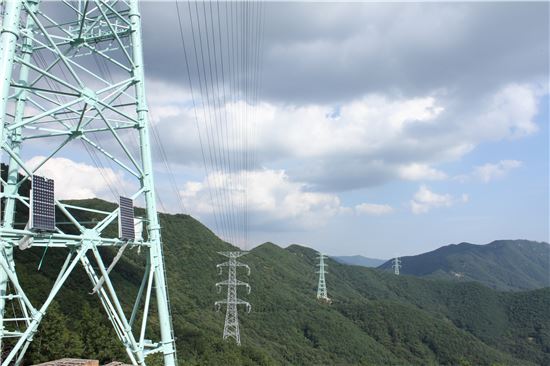 Transmission tower
Cooperation from Local Governments is Key
To ensure smooth power supply through renewable energy development such as the U-shaped tube plan, a 'structural reform' must first be achieved. Jeong Dong-wook, chairman of the Jeon-gi-bon General Committee and professor of Energy Systems Engineering at Chung-Ang University, pointed out, "Renewable energy requires more power grids, but so far, Korea's power grid has not been designed to suit renewable energy." He also said, "Currently, public acceptance is not good." When new power grids are built, agreement from residents in the construction areas is necessary, but opposition remains strong on site. Local governments are also dissatisfied that the electricity produced is not enjoyed by local residents but is transmitted to the metropolitan area. Without residents' cooperation, it is difficult for lawmakers representing these areas to provide legislative support.
According to political circles, there is no disagreement between ruling and opposition lawmakers in the 22nd National Assembly regarding the expansion of renewable energy power grids, but some constituencies oppose it, causing some lawmakers to struggle to persuade local residents. Experts emphasize that residents' cooperation must be achieved on a grand scale and that appropriate legislation must be enacted in the National Assembly.
Chairman Jeong said, "At the end of the 21st National Assembly, a 'Special Act on Power Grid Expansion,' which simplified approval procedures and made support funds for areas through which transmission lines pass transparent, was proposed but ultimately did not pass," adding, "Many such bills need to be introduced in the future. We need to approach power issues more receptively."
© The Asia Business Daily(www.asiae.co.kr). All rights reserved.
![Clutching a Stolen Dior Bag, Saying "I Hate Being Poor but Real"... The Grotesque Con of a "Human Knockoff" [Slate]](https://cwcontent.asiae.co.kr/asiaresize/183/2026021902243444107_1771435474.jpg)
















