A professor at Seoul National University filed a lawsuit seeking damages against the operator of an online university professor evaluation site that posted negative reviews about him from students but ultimately lost the case.
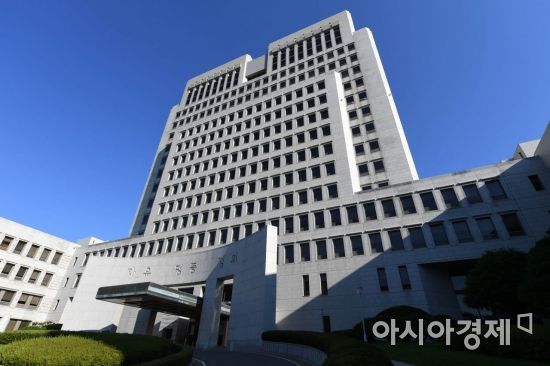
According to the legal community on the 17th, the Supreme Court's 3rd Division (Presiding Justice No Jeong-hee) upheld the lower court's ruling that dismissed the damage claim lawsuit filed by Professor A of Seoul National University against Palusomni, the operator of the internet site 'KimBaksaNet'.
The court stated, "Considering comprehensively the plaintiff's status as a public figure, the public nature and public interest of personal information, the benefits the defendant gained from processing the information, the processing procedures and usage patterns, and the degree of potential infringement on the plaintiff's interests, the defendant's act of collecting and providing the plaintiff's personal information cannot be regarded as an unlawful act infringing on the plaintiff's right to self-determination of personal information. Also, the act of providing professor evaluation results on KimBaksaNet cannot be seen as an illegal infringement of the plaintiff's personality rights."
It further explained the reason for dismissing Professor A's appeal, stating, "There is no error in the constitutional interpretation regarding the infringement of fundamental rights as claimed in the appeal, nor any mistake that affected the judgment by exceeding the limits of free evaluation contrary to the rules of logic and experience."
KimBaksaNet, established in 2018, is a site that provides evaluation information on professors and laboratories of major domestic universities' science and engineering graduate schools, allowing prospective graduate students to search for necessary information when selecting an advisor.
Current students and alumni who have verified their email accounts can rate ▲professor's character ▲actual labor cost ▲thesis guidance ability ▲lecture delivery ability ▲laboratory atmosphere on five indicators from A+ to F, assigning grades to laboratories, and can also leave anonymous one-line comments about professors.
The entered information was mechanically aggregated without the operator's intervention and provided in the form of a pentagonal evaluation graph.
On this site, Professor A's laboratory received mostly failing grades of F or D+ on most of the five evaluation indicators. The one-line comments about Professor A were also largely negative, including remarks such as "Personality....", "Difficult to get a job, does not allow graduation, master's graduation within 2 years is difficult. No vacation," and "Verbal abuse."
In response, Professor A requested KimBaksaNet to delete the laboratory evaluation graph and the one-line comments. However, the defendant company removed Professor A's name, email, and photo from KimBaksaNet and blocked access to the one-line comments, but did not delete the pentagonal evaluation graph. For the one-line comments that were made private, a notice stating "This one-line comment has been blocked at the request of the professor" was added.
Professor A then filed a lawsuit seeking 10 million won in compensation and the deletion of the remaining posts. In court, Professor A argued that the defendant company defamed or insulted him and infringed on his personality rights by leaving the pentagonal graph with a low rating in the 'character' category undeleted on KimBaksaNet, causing mental distress as an illegal act violating the Information and Communications Network Act.
However, the first-instance court did not accept Professor A's claims.
First, regarding Professor A's claims of defamation and insult, the court stated, "If an information and communication service provider selectively posts expressions provided by third parties in a space it directly manages, and those expressions contain defamatory content, the service provider should be liable for damages for defamation just like the third party. However, simply providing search and access functions for third-party expressions cannot be regarded as such."
The court also ruled on the defendant company's refusal to delete the evaluation graph, stating, "Even if the defendant refused to delete the graph in question, there is no indication that any specific fact about the plaintiff was stated, nor can it be seen as expressing any abstract judgment or emotion about the plaintiff," thus not recognizing it as defamation or insult.
Finally, the court judged that making the one-line comments private and posting a notice that they were blocked at Professor A's request was a measure in accordance with the disclosure obligations of information and communication service providers under the Information and Communications Network Act and posed no problem.
Professor A appealed, but the second-instance court's judgment was the same.
The second-instance court accepted the first-instance court's reasoning and additionally addressed the public status of Professor A, a national university professor, and freedom of expression.
The court stated, "The plaintiff is a public figure, and his job performance is subject to broad public scrutiny and criticism," adding, "While there is some doubt as to whether the items and methods used by the defendant to evaluate the professor are objectively reasonable and sufficient, to realize the purpose of guaranteeing freedom of expression, an important constitutional fundamental right, even in the private legal domain, strict standards should not be applied to the method of expression."
It concluded, "The defendant's act of collecting and providing the plaintiff's personal information cannot be regarded as an unlawful act infringing on the right to self-determination of personal information or the freedom of privacy."
Professor A filed another appeal, but the Supreme Court also found no problem with the second-instance court's judgment.
© The Asia Business Daily(www.asiae.co.kr). All rights reserved.












