Situation with Residents Not Returning
Severe Medical Gaps and Declining Bed Occupancy Rate
"Hope Residents Make a Quick Decision"
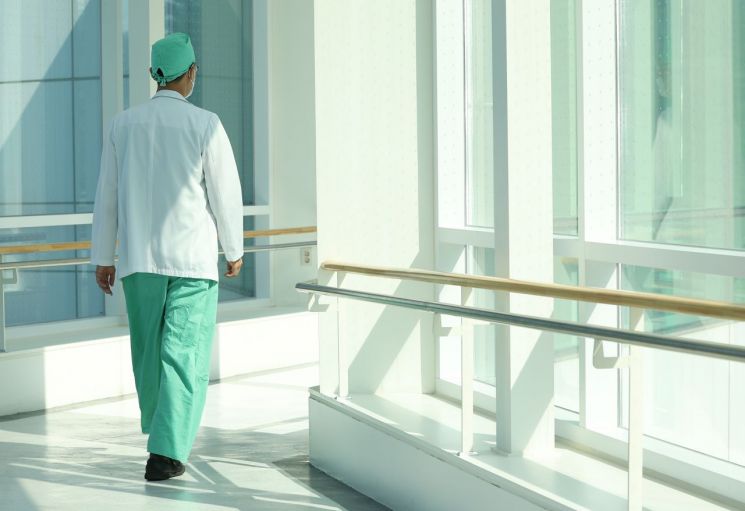
The deadline set by the government for accepting residents' resignation letters (the 15th) has passed, but most residents have still not expressed their intention to return to training hospitals or resign. Choi Hee-seon, chairperson of the National Health and Medical Workers' Union, stated, "There is a severe medical gap and hospital bed occupancy rates are falling," adding, "We have given special privileges, so I cannot understand why they are not returning."
On the 17th, on MBC Radio's 'Kim Jong-bae's Focus,' Chairperson Choi said, "The government intends to process residents' resignations collectively, but they cannot even get in touch with the residents," and added, "They have not expressed whether they will resign or return, which is very frustrating."
Following the Central Disaster and Safety Countermeasures Headquarters (CDSCH) meeting on the 8th regarding the doctors' collective action, the government announced that it would withdraw administrative sanctions such as license suspensions not only for residents returning but also for those resigning. The government stated that it would not impose sanctions on any residents in the future. Referring to this situation, Chairperson Choi said, "The government, patients, and the public all hope for a swift normalization of medical services, so as a last resort, these special privileges are being continuously provided," emphasizing, "I hope the residents make a decision quickly."
She continued, "The government has withdrawn all administrative sanctions and opened the path for the second half of the year’s resident training starting in September," and said, "They have offered many special privileges, so I want to ask why they have not returned. This is just too much."
Chairperson Choi argued that there should be discussions and changes regarding residents' educational environment and improvements in working hours and treatment. She explained that increasing the number of medical students is essential to achieve this. She emphasized, "To demand shorter working hours and better treatment for residents, we must agree to increase medical school admissions," and added, "They need to return and engage in dialogue about these changes."
Some voices are calling for a complete overhaul of the current system, where large hospitals are operated centered around residents. Regarding this, Chairperson Choi said, "From the hospital's perspective, even if it costs more money, if that is the right direction, it should be done," adding, "Since it would be specialist-centered, issues related to fees and other matters could also be compensated."
Meanwhile, according to the Ministry of Health and Welfare, among 13,756 residents affiliated with 211 training hospitals nationwide, only about 40 to 50 residents had returned by the resignation processing deadline on the 15th. The government plans to finalize the number of processed resident resignations by today (the 17th).
© The Asia Business Daily(www.asiae.co.kr). All rights reserved.
![User Who Sold Erroneously Deposited Bitcoins to Repay Debt and Fund Entertainment... What Did the Supreme Court Decide in 2021? [Legal Issue Check]](https://cwcontent.asiae.co.kr/asiaresize/183/2026020910431234020_1770601391.png)















