When Writing the Korean Standard Classification of Diseases (KCD), the International Classification of Diseases (ICD) is for Reference Only
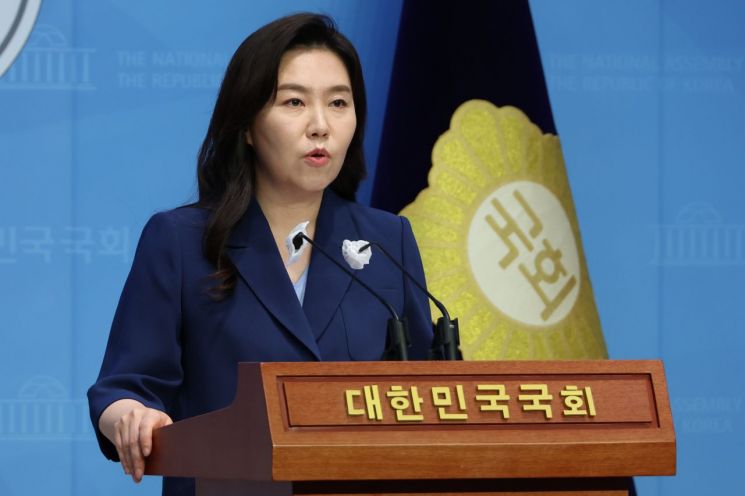
As opposition from related industries and academia intensifies over the domestic adoption of the disease code for 'Gaming Disorder' as defined by the World Health Organization (WHO), a bill to block the classification of Gaming Disorder as a disease has been introduced in the National Assembly for the first time.
On the 16th, Kang Yoo-jung, a member of the Democratic Party of Korea, announced that she had taken the lead in proposing a partial amendment to the Statistics Act, which stipulates that the Korean Standard Classification of Diseases (KCD) should refer to, rather than directly adopt, the International Classification of Diseases (ICD) when compiling the Korean version.
In 2019, WHO classified Gaming Disorder as a disease and included it in the International Classification of Diseases (ICD-11). The South Korean government, led by the Office for Government Policy Coordination, formed a public-private consultative body to discuss whether to include Gaming Disorder in the domestic standard classification.
However, even if the public-private consultative body reaches an agreement, current law requires that the domestic standard classification must directly reflect the international standard classification, making it inevitable that Gaming Disorder will be classified as a disease.
In response, Representative Kang proposed an amendment to revise the clause in the Statistics Act that mandates the standard classification be created 'based on' the international standard classification to instead require it to be created 'with reference to' it, and to gather opinions from stakeholders and experts in advance to ensure application suited to domestic circumstances.
Representative Kang explained the background of the bill, stating, "If Gaming Disorder is introduced as a disease code, the domestic game industry, which accounts for 67.8% of total content exports, could shrink by about 8.8 trillion won over two years, and 80,000 jobs could be lost, causing significant social and economic damage." She added, "As a member of the National Assembly’s Culture, Sports and Tourism Committee, I will carefully oversee to prevent even the game industry from shrinking."
Not only Representative Kang but also academia is united in urging the government to be cautious about classifying Gaming Disorder as a disease. On the same day, Professor Park Jong-hyun of the College of Law at Kookmin University emphasized at a forum titled ‘Controversy over WHO Gaming Disorder Domestic Adoption: How Far Have We Come?’ hosted by the Cultural Solidarity at the Francisco Education Center in Jung-gu, Seoul, that “registering a disease code is not a simple statistical task but a policy decision by the state to define diseases that require preventive expenditure. It is unfair for administrative agencies to arbitrarily decide or follow international organization standards against the will of the public.”
Professor Lee Dong-yeon of the Korea National University of Arts’ Department of Korean Arts also pointed out, “The consultative body has been discussing at a rate of about twice a year for five years since its inception, which is not sufficient,” and added, “The main activities were limited to reviewing research projects and providing advice, and there was no intense debate among the stakeholders.”
He further criticized, “At least until next year, a diagnostic tool should be developed based on scientific evidence to conduct a survey on the actual situation, and social consensus should be reached based on quantitative data on the ripple effects. This is difficult under the current consultative body structure.”
© The Asia Business Daily(www.asiae.co.kr). All rights reserved.

















