After Oil Industry CEOs Meeting
Government Pressures to Restrain Price Hikes for Inflation Control
Focus on Expanding Portfolio in Eco-Friendly Aviation Fuel Sector
Heo Se-hong, CEO of GS Caltex, stated that the company's second-quarter performance this year was worse than the first quarter due to the sluggish refining industry. He added that overcoming this difficult situation is the biggest task for the second half of the year. This implies that the outlook for this year is not as good as expected as refining margins in the oil refining industry have plummeted. However, the government has requested the industry to refrain from raising prices for the sake of price stability.
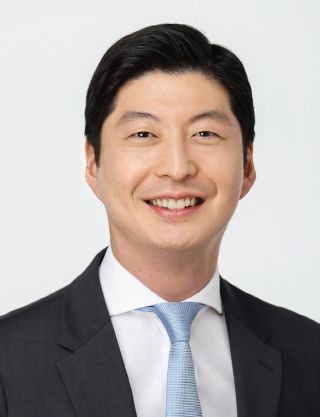
On the 16th, after a meeting of oil refining industry CEOs chaired by Choi Nam-ho, Vice Minister of the Ministry of Trade, Industry and Energy, held at an undisclosed location in Jung-gu, Seoul, CEO Heo told reporters, "The second-quarter performance is worse than the first quarter," and added, "The management keyword for the second half of the year is 'to overcome difficult situations well'." His remarks seem to emphasize that the recent deterioration in the performance of oil refining companies is more severe than expected.
In particular, the meeting gained more weight because it was a venue where the government ordered the stabilization of oil prices. Vice Minister Choi asked the four domestic refining companies, including GS Caltex, SK Energy, S-OIL, and HD Hyundai Oilbank, to refrain from raising prices in order to ease the burden on the public while discussing measures to stabilize domestic oil prices.
He said, "Although the inflation rate has somewhat slowed down since April, the perceived inflation remains high," and added, "The government will implement all necessary measures to reduce the burden of oil prices on the public." He continued, "We ask the industry to also refrain from excessive price increases and to join the government's efforts to stabilize oil prices." Since June 1, the reduction rate of the fuel tax has been reduced, causing an increase in gasoline prices by about 41 KRW per liter, diesel by about 38 KRW, and LPG by about 12 KRW per liter.
 Choi Nam-ho, Vice Minister of the Ministry of Trade, Industry and Energy, is speaking at the oil refining industry CEO meeting held on the 16th at Dalgaebi in Jung-gu, Seoul. Attending the meeting were Oh Jong-hoon, President of SK Energy; Heo Se-hong, President of GS Caltex; and Joo Young-min, CEO of HD Hyundai Oilbank. Photo by Jo Yong-jun jun21@
However, the oil refining industry complains that the refining margin, a profitability indicator, is on a downward curve, causing significant burden. The refining margin, which is the difference between crude oil prices and transportation and operating costs, has been sluggish throughout the second quarter due to oversupply in China, India, and other countries. Additionally, the lack of demand recovery ahead of the summer driving season is also acting as a negative factor.
SK Securities forecasted that GS Caltex's operating profit in the second quarter would have fallen 47.4% from the previous quarter to 219.1 billion KRW. Kim Do-hyun, a researcher at SK Securities, analyzed, "The weakness in refining margins continued due to weak downstream demand in the second quarter."
It is uncertain whether refining margins will improve after the third quarter. CEO Heo's expression of determination to overcome difficult situations in the second half of the year is interpreted as reflecting the uncertainty about how long the recession will continue.
Oil refining companies are pursuing portfolio expansion beyond refining. In particular, they are focusing on the aviation fuel sector, where the transition to eco-friendly fuels such as Sustainable Aviation Fuel (SAF) is accelerating. GS Caltex and SK Energy are currently building production facilities related to bio-based raw materials. HD Hyundai Oilbank was the first in Korea to export SAF to Japan, and S-OIL also received the first official certification for SAF production in Korea.
Sustainable Aviation Fuel refers to eco-friendly fuel that is not made from fossil fuels, is chemically similar to conventional aviation fuel, and can be used without structural modifications to aircraft. Using SAF can reduce carbon emissions by up to 80-90% compared to fossil fuel-based fuels, making it the most effective method for carbon reduction in the aviation industry.
Vice Minister Choi said, "Expanding the use of Sustainable Aviation Fuel is a new opportunity and challenge for Korea's petroleum industry," and added, "We will announce a 'Mid- to Long-term Strategy for the Expansion of Sustainable Aviation Fuel' jointly with the Ministry of Land, Infrastructure and Transport in the third quarter."
© The Asia Business Daily(www.asiae.co.kr). All rights reserved.
![Clutching a Stolen Dior Bag, Saying "I Hate Being Poor but Real"... The Grotesque Con of a "Human Knockoff" [Slate]](https://cwcontent.asiae.co.kr/asiaresize/183/2026021902243444107_1771435474.jpg)

















