2005 Year Phone Directory Publication Volume Peak
Users Decline After Internet and Smartphone Spread
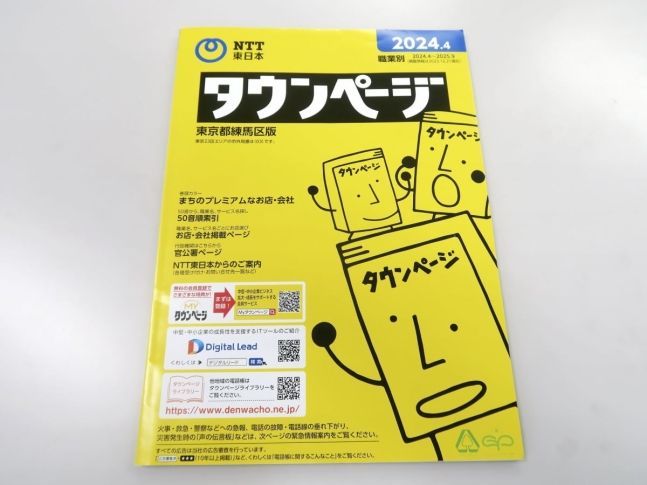 Japanese media reported on the 12th that the publication of the paper version of the telephone directory "Town Page," which lists Japanese stores and company contacts by industry, will be discontinued. The photo shows the cover of the Town Page. [Image source=Yonhap News]
A Japanese telephone directory that has been around for over 130 years is coming to an end.
On the 12th, Asahi Shimbun and Sankei Shimbun reported that Japan's telecommunications companies NTT East and NTT West have decided to stop publishing the free telephone directory "Town Page," which lists nationwide store and business contacts by industry. However, these companies will continue to provide online services.
The origin of Town Page dates back to Japan's first telephone directory, "Telephone Subscriber Directory," published in 1890. The highest circulation of Town Page was about 63.1 million copies in 2005. However, as the internet and smartphones rapidly spread, the number of users declined, and in 2022, the circulation dropped to 31.36 million copies.
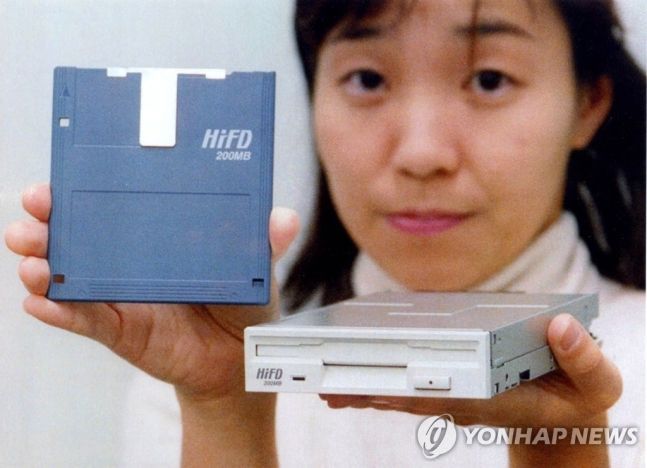
Japan is one of the countries that insist on analog methods. Once regarded as a technological powerhouse, Japan has fallen behind in the wave of digital innovation in recent years due to strong resistance to change.
In December last year, a survey revealed that Japanese school administration still relies on analog methods. At that time, the Ministry of Education, Culture, Sports, Science and Technology announced that 95.9% of public elementary and junior high schools responded that they still use fax machines. Additionally, 76.8% of schools reported that they do not use generative artificial intelligence (AI) at all in their work.
Meanwhile, the Japanese government recently announced it will completely abolish the use of floppy disks in administrative procedures. Floppy disks are square-shaped storage devices widely used before the development of USB. While most countries no longer use floppy disks, it is known that many fields in Japan still use them.
© The Asia Business Daily(www.asiae.co.kr). All rights reserved.


















