Intensive Care Unit and Severe Surgery Fees Strengthened... Performance-Based Compensation
Separate Organization Established and Operated for 'Medical Dispute Mediation System Monitoring'
"Expecting Concrete and Bold Promotion Plans Reflecting Voices from Medical Field"
On the 11th, the government held the '5th Medical Reform Special Committee (Special Committee)' at the Government Seoul Office in Jongno-gu, Seoul, discussing the transition of the structure of tertiary general hospitals, innovation of the medical dispute mediation system, strengthening investment in essential medical care, and related progress and plans.
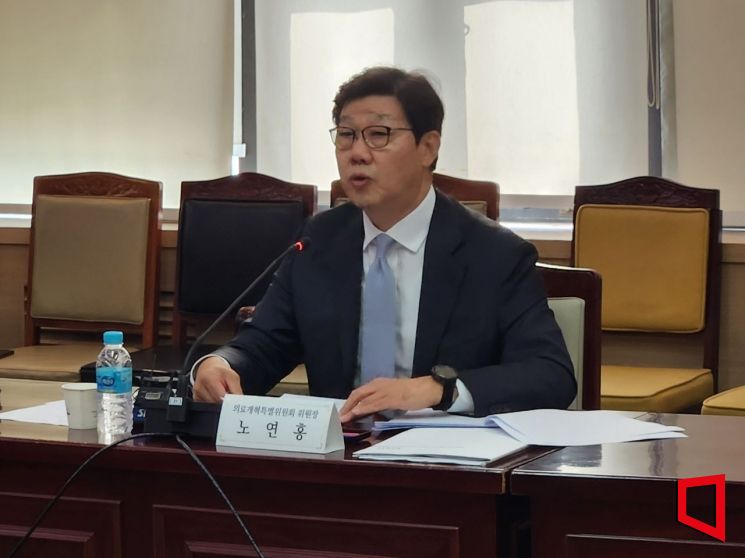 Noh Yeon-hong, Chairman of the Special Committee on Medical Reform, is delivering an opening remark at the 5th Special Committee on Medical Reform held at the Government Seoul Office in Jongno-gu, Seoul, on the morning of the 11th.
 Photo by Choi Tae-won peaceful1@
◆ Transition of the Structure of Tertiary General Hospitals for Establishing a Sustainable Medical Treatment System = The government plans to transform the structure of tertiary general hospitals across five areas: ▲medical treatment ▲medical cooperation ▲infrastructure ▲personnel ▲resident training. The 'transition of the tertiary general hospital structure' will be institutionalized after a three-year pilot project, aiming to start in September. All tertiary general hospitals can participate, but must designate medical cooperation hospitals within their region and submit a 'Five Major Innovation Implementation Plan.' The plan must be tailored to hospital conditions but must include mandatory elements such as goals and implementation plans to increase the proportion of patients with diseases suitable for tertiary general hospitals, such as severe cases, and plans to reduce general beds.
First, a medical treatment system focusing on severe, emergency, and rare diseases will be established. Tertiary general hospitals will reduce treatment of mild to moderate cases and concentrate on essential medical care for severe, emergency, rare diseases, cardiovascular and cerebrovascular diseases, trauma, high-risk childbirth, and severe pediatric cases. This aims to prevent situations where severe or emergency patients do not receive timely treatment or where urgent severe patients face long waiting times.
For pilot project participants, compensation will be significantly strengthened focusing on severe cases, such as intensive care unit fees and severe surgery fees. A performance-based compensation system will also be introduced so that tertiary general hospitals focusing more on appropriate severe case treatment can receive higher rewards.
In the medical cooperation field, a strong cooperative system with medical cooperation hospitals will be established. Patients within the region will receive the best treatment according to their severity through cooperation between tertiary general hospitals and local clinics and hospitals, transitioning the structure accordingly.
The formal referral system will be reformed to strengthen professional referrals (using the medical cooperation system) with detailed physician opinions and medical records attached. Patients with mild to moderate conditions will be referred back to medical cooperation hospitals, and a strengthened cooperation system will be established to allow use of tertiary general hospitals without waiting when necessary.
Additionally, medical cooperation will be enhanced through information linkage such as EMR integration and medical information exchange, and strengthening cooperation infrastructure like medical cooperation centers, enabling high-quality medical services through patient registration management between tertiary general hospitals and medical cooperation hospitals.
To improve medical quality, general beds will be reduced and intensive care beds expanded. Participating tertiary general hospitals in the pilot project will reduce 5% to 15% of general beds during the three-year pilot period, considering regional bed supply status, current bed numbers, and severe patient treatment performance. Strengthening bed management, including establishing specialist criteria per bed, will also be reviewed.
The personnel structure will shift from over-reliance on residents' excessive work to a skilled workforce centered on specialists. To enhance severe patient treatment capabilities, education and training for doctors and nurses will be strengthened, and work will be redesigned to operate with teams of specialists and support nurses, gradually reducing residents' treatment proportion.
Resident training environments will also be improved. Working hours per week will be gradually reduced from 80 to 60 hours, and maximum continuous working hours from 36 to 24 hours.
Tertiary general hospitals participating in the pilot project will join the resident continuous work pilot project, and further working hour reductions will be considered based on pilot results. Clarification of residents' work scope will also be implemented.
To provide intensive training programs, the number of supervising specialists will be increased, and hospitals will be required to design systematic training programs. Network training will be introduced, allowing residents to systematically gain diverse experiences not only in tertiary general hospital treatment but also in regional medical care, specialized treatment, and primary care.
National-level support will also be expanded. By the end of this year, a resident education plan will be established, and national financial support for training costs will be strengthened. The current training environment evaluation committee will have enhanced evaluation functions, and a certification system for excellent training programs will be developed.
Sufficient compensation will be provided to tertiary general hospitals participating in the pilot project to ensure sustainable operation.
First, compensation focusing on severe cases will be strengthened, and intensive care unit fees and hospitalization fees will be significantly increased to improve inpatient service quality. Tertiary general hospitals participating in the pilot project and medical cooperation hospitals functioning as regional or local emergency medical centers will be compensated through health insurance for on-call and standby costs to strengthen emergency treatment functions. Hospitals will submit plans for required on-call personnel, and compensation will be provided accordingly, with payments managed within total limits and regularly verified.
Furthermore, referral and return fees between tertiary general hospitals and medical cooperation hospitals will be increased for substantial patient referrals and returns using the system, and additional support funds for operating medical cooperation centers will be provided considering related costs.
Finally, an institution-level incentive will be applied to evaluate and reward performance such as severe treatment achievements, so that tertiary general hospitals focusing more on appropriate treatment can receive higher compensation.
After the pilot project, from 2027 when the 6th term tertiary general hospitals are designated, gradual institutional improvements will be pursued to link with designation criteria.
First, the current name 'tertiary general hospital' will be reviewed for renaming, considering issues such as implying hierarchy and not clearly indicating the final treatment role in the delivery system. Increasing the minimum proportion of high-difficulty specialized disease groups among all patients will be considered to favor tertiary general hospitals providing more appropriate severe treatment.
Patient classification criteria for tertiary general hospital designation will be reclassified to reflect not only disease characteristics but also patient condition and difficulty. Essential medical treatment functions to be performed will be detailed into severe emergency, heart, brain, severe trauma, high-risk childbirth, severe pediatrics, etc., and mechanisms to evaluate the performance capabilities of each function will be established.
Finally, appropriate disease groups and evaluation criteria by medical institution function will be prepared, and treatment effectiveness indicators comprehensively evaluating patient health improvement outcomes and treatment costs will be developed to enhance treatment efficiency. Indicators evaluating responsibility and role performance for essential medical patients within the region will also be newly established.
Based on this revamped evaluation system, the uniform additional fees applied to tertiary general hospitals will be abolished and replaced with additional fees considering medical institution functions and performance such as the proportion of appropriate disease group treatment, patient treatment outcomes, efficient treatment, and regional friendliness.
The plan for transitioning the tertiary general hospital structure will undergo public consultation this month, with the final plan announced at the 6th Special Committee meeting at the end of August. It aims to start after deliberation by the Health Insurance Policy Deliberation Committee in September. The 'Innovative Medical Supply and Utilization System' will have its establishment direction announced at the 6th Special Committee and the final plan released as the 2nd reform plan of the Special Committee in the second half of this year.
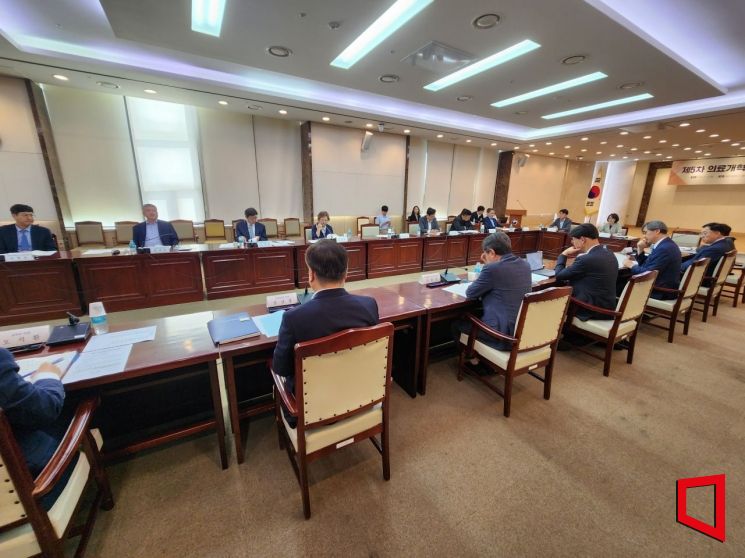 On the morning of the 11th, the 5th Medical Reform Special Committee meeting is being held at the Government Seoul Office in Jongno-gu, Seoul. Photo by Taewon Choi peaceful1@
◆ Review of Innovation in the Medical Dispute Mediation System = The 'Medical Accident Safety Net Expert Committee' under the Medical Reform Special Committee focused on discussing ▲medical accident prevention and communication activation ▲improvements to the appraisal and mediation system, and reviewed the 'Innovation Direction for the Medical Dispute Mediation System' based on expert committee findings.
First, there was consensus on the importance of preventing conflict escalation through communication with medical staff or institutions, and related improvements were discussed. To enhance the effectiveness of the legally mandated 'Medical Accident Prevention Committee,' the hospital director will serve as ex officio chair to strengthen institutional responsibility, safety managers will be appointed by department to solidify accident prevention and monitoring functions, and committee activity performance will be considered in dispute mediation procedures.
In cases of serious medical accidents such as death, institutionalizing explanations of accident circumstances, expressions of condolence and regret, referencing overseas cases, was also discussed to minimize conflicts between patients and medical personnel.
Innovations to enhance fairness and objectivity throughout the mediation process were also reviewed. To improve fairness in the appraisal panel composition, a random assignment method will be adopted, and non-medical appraisal committee members such as patients, consumers, and legal professionals will be empowered to prioritize appraisal issues through inquiries during issue selection, which can influence appraisal direction and conclusions.
It was also suggested that appraisal reports, which serve as important grounds for judgments in litigation and post-mediation processes, should faithfully reflect issues raised by parties, and procedures for recording minority opinions during appraisal panel discussions should be clarified.
The establishment of a (tentatively named) 'Patient Advocate System' was also discussed. This system would provide expert counseling from the early stages of medical accidents and assist in selecting appraisal issues, helping patients who lack medical information and knowledge to navigate dispute mediation procedures and understand the substance and issues of accidents more easily.
To enhance the medical reliability of appraisals, the number of medical appraisal committee members for complex and high-difficulty cases such as death and serious injury will be increased from the current two to three or four to allow cross and multiple verifications. There was consensus on the need to significantly expand the pool of appraisal committee members considering the complexity and expertise required for medical accidents.
To establish a thorough and highly acceptable mediation system, the number of mediation consultations will be expanded from one to two. Additionally, if patients or medical personnel (medical institutions) object to appraisal results, a new appeal procedure will be introduced to allow reappraisal and additional or supplementary appraisals upon request.
Furthermore, there was agreement on establishing and operating a separate organization to monitor the operation of the medical dispute mediation system and propose improvements, and on disclosing appraisal and mediation results to the public, patients, and medical institutions.
Based on today's discussions, the Medical Accident Safety Net Expert Committee will concretize the 'Innovation Plan for the Medical Dispute Mediation System' and, after gathering opinions from various sectors, report related legislative plans at the 6th Special Committee meeting at the end of August.
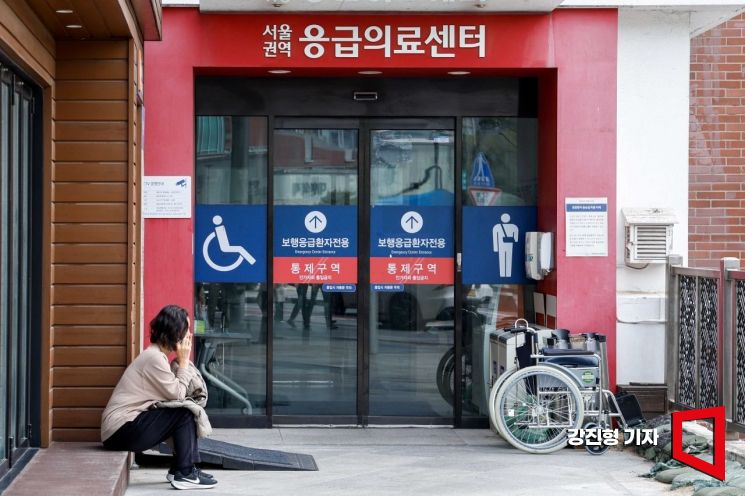 On April 26th, a visitor is sitting in front of the emergency room of a large hospital in Seoul. Photo by Jinhyung Kang aymsdream@
◆ Progress and Plans for Strengthening Investment in Essential Medical Care = Progress and plans for strengthening investment in essential medical care were also reviewed. The government has committed to investing '10 trillion KRW + α' in essential medical care by 2028. The '5-3-2' investment plan allocates 5 trillion KRW to supply shortage response, 3 trillion KRW to demand reduction response, and over 2 trillion KRW to treatment linkage cooperation. So far, 1.2 trillion KRW has been decided and is being implemented.
First, compensation for severe, emergency patients and high-difficulty diseases with supply shortages will be significantly increased. Additional fees for surgeries within 24 hours of emergency room visits by severe emergency patients will be expanded. Weekday and daytime fees will increase by 100%, and nighttime and holiday fees are expected to increase by 150-200%.
Childbirth infrastructure maintenance and severe pediatric fees will also be strengthened. Neonatal intensive care unit admission fees will rise sharply from 520,000 KRW to 780,000 KRW. Nighttime fees for children under six will increase from 100% to 200%.
Efficient use of medical resources and strengthening of treatment cooperation for patients were also discussed. Through the pediatric treatment regional cooperation system pilot project, 200 million KRW per regional network will be provided annually. A 'Pediatric Specialist Management Fee' will also be newly established.
Going forward, the Special Committee will establish priorities and principles for essential medical care investment and fundamentally reform the current procedure-based fee system, including relative value and conversion indices. Discussions on reform plans related to compensation, such as introducing value-based alternative payment systems, will accelerate.
Chairman Noh Yeon-hong of the Special Committee stated, "Now that the government has announced measures for resident return, it is time to focus on medical reform discussions desired by the public and medical field." He added, "Accordingly, the Medical Reform Special Committee will steadfastly promote social discussions for fundamental structural reform and accelerate the preparation of concrete reform plans."
He continued, "The transition of the tertiary general hospital structure for establishing a sustainable medical treatment system and innovation of the medical dispute mediation system discussed today are core reform tasks that the medical community also recognizes as important, so I expect bold implementation plans reflecting the voices of the medical field to be concretized."
© The Asia Business Daily(www.asiae.co.kr). All rights reserved.



















