University Presidents' Demands Accepted, Guidelines Established
Curriculum and Evaluation Criteria Expanded by End of Academic Year
Special Measures Reflecting Non-Application of Failing Grade Standards
Reduced Class Days Operation, Utilization of Prepaid Tuition Fees
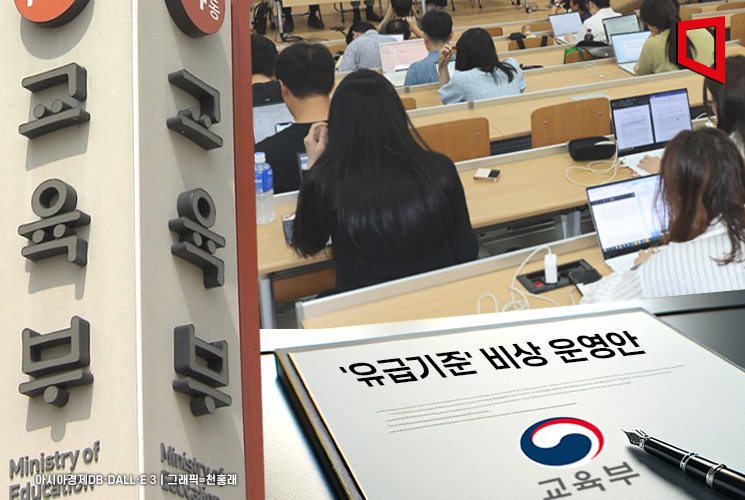
The Ministry of Education has established academic operation guidelines applicable to medical schools to prevent medical students from repeating a year. The grading evaluation criteria have been shifted from the end of the semester to the end of the academic year, and a 'temporary special measure' has been introduced to exempt medical students from repeating a year only for this year.
On the 10th, Lee Ju-ho, Deputy Prime Minister for Social Affairs and Minister of Education, held a press conference at the Government Seoul Office and announced the 'Flexible Academic Operation Guidelines for Medical Schools.' Previously, last month, the 'Council of University Presidents for the Normalization of Medical Schools (UCPNMS),' composed of university presidents, urged the Ministry of Education to devise measures to prevent students from repeating a year.
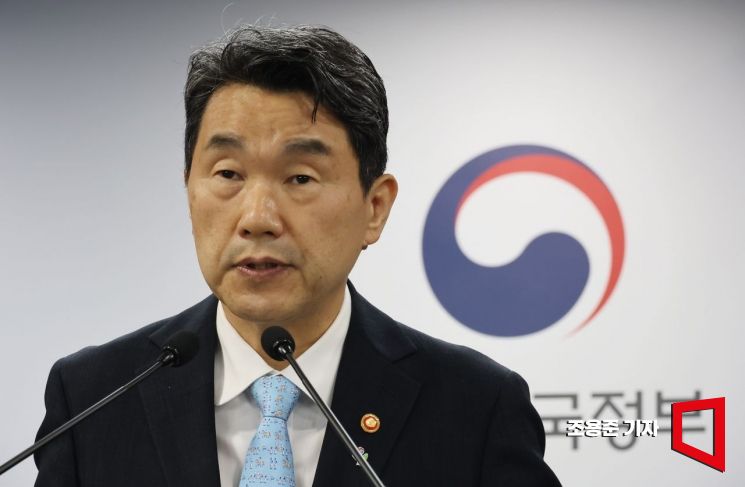 Lee Ju-ho, Deputy Prime Minister for Social Affairs and Minister of Education, is announcing measures to normalize medical school education on the 14th at the Government Seoul Office in Jongno, Seoul. Photo by Jo Yong-jun jun21@
The guidelines incorporate many of the measures included in the academic operation plans submitted by universities to the Ministry of Education in May. First, the Ministry has allowed for the establishment of temporary special measures so that the repetition criteria may not be applied to medical students this year. Methods such as granting opportunities for retaking courses until the end of the academic year with comprehensive evaluations, and the application of the 'I-grade system,' which allows incomplete credits to be supplemented within a deadline, can also be applied.
For first-year pre-medical students, promotion requirements can be modified so that returning students can advance to the medical program without repeating a year. Additionally, plans will be made to prioritize protecting the learning rights of freshmen entering in the 2025 academic year by granting priority in course registration.
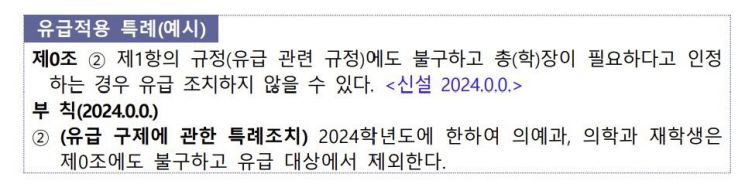
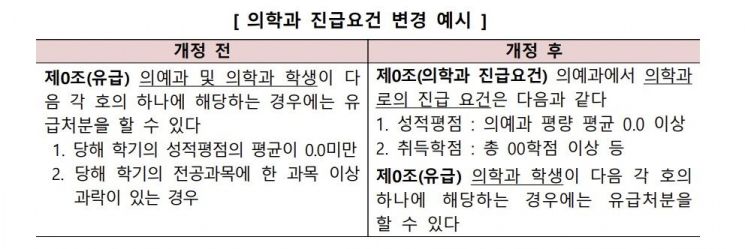
Furthermore, the curriculum and grading evaluation for the first semester of this year can be operated on an academic year basis rather than a semester basis. If students fail to complete courses they are enrolled in, they can cancel or withdraw their original course registration and retake the courses. The operation of the first semester can be autonomously applied by universities through methods such as running it concurrently with the second semester depending on university circumstances, extending the first semester and shortening the second semester, or operating a total of three semesters.
The number of class days per subject can be reduced by up to two weeks from the usual '30 weeks or more' per academic year. Teaching methods can utilize night classes, remote classes, weekend classes, and seasonal semesters as needed. Due to semester adjustments, methods such as 'intensive completion system,' which operates shorter than the original class period, and curriculum adjustments can be applied.
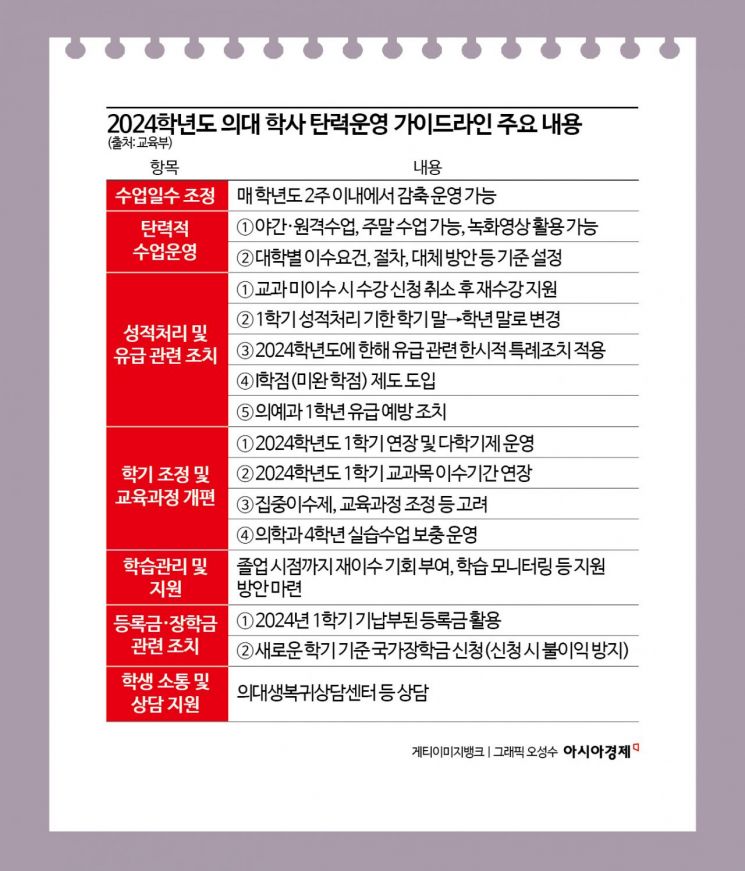
Practical training for fourth-year medical students will be supplemented in the second semester of this year, and some practical courses that are difficult to make up will be offered through next year's seasonal semesters. The Ministry of Education and the Ministry of Health and Welfare are considering an additional administration of the 2025 medical licensing examination to encourage the return of fourth-year medical students.
If the first semester is extended or supplemented this year, tuition fees paid for the first semester can be used. Measures will be taken to allow applications for national scholarships based on the new semester criteria. While the first application is the principle for enrolled students, an extension plan is also being considered to allow applications during the second application period. Universities will also prioritize support for general repayment student loans according to the semester start date.
To alleviate the academic burden on returning students, management plans such as providing learning materials, monitoring learning progress, counseling, and guidance will also be prepared.
© The Asia Business Daily(www.asiae.co.kr). All rights reserved.



















