Weak Political Climate in Korean Parties
French-Style Electoral Alliances Impossible
Concerns Over Spread of Racial, Gender, Religious Hatred
US Presidential Election Focused on Congressional Diplomacy Advantage
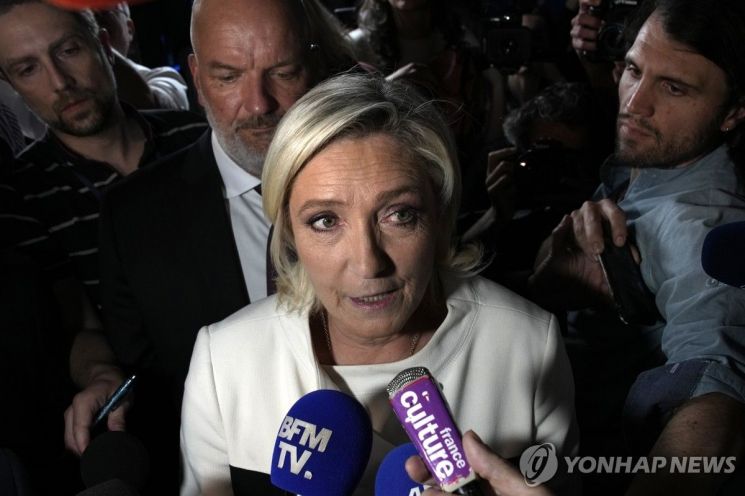
Far-right parties are making significant advances in Europe. They have appealed to voters who have become anxious due to the pandemic and economic crisis by promoting anti-immigration, anti-European Union (EU), and anti-globalization agendas. In the French general election, the National Rally (RN) failed to become the largest party in parliament but increased its seats by 47% (from 88 to 147 seats, a gain of 59 seats), shaking up the mainstream political landscape. Italy's Brothers of Italy (FdI) and Germany's Alternative for Germany (AfD) also performed well in last month's European Parliament elections, receiving 28.8% and 15.9% of the vote, respectively. The far-right Reform UK party also succeeded in entering parliament with 14.3% of the vote. In Nordic countries such as Finland and Sweden, parties advocating right-wing policies are gaining support.
Although European far-right parties cover a broad spectrum, they often openly display white supremacy and discrimination against people of color. Alternative for Germany (AfD), which has caused controversies with Nazi glorification and plans to deport immigrants, is a representative example. They have frequently sparked controversy with hate speech and discriminatory remarks based on race, gender, ideology, and religion.
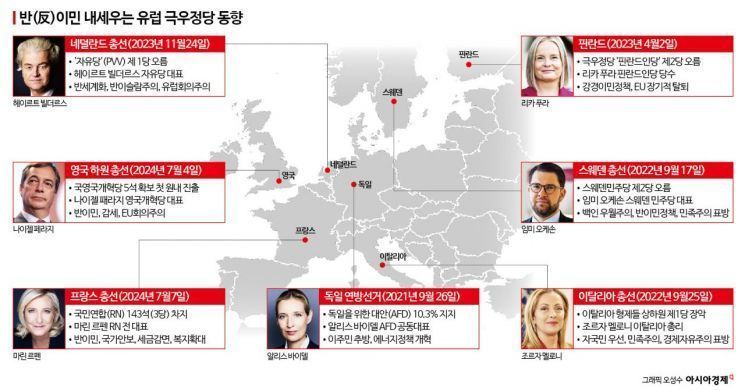
Concerns Over the Spread of Hate Based on Race, Gender, and Religion
On the 3rd, a campaign worker for the Reform UK party caused an uproar by saying during a rally, "Let's use refugees entering the UK as shooting practice targets for new recruits." Jean-Marie Le Pen, a leading far-right politician in France and father of RN leader Marine Le Pen, also drew criticism in 2019 when he stated that "same-sex couples should be excluded from funerals." In July 2013, at a press conference in Nice, Le Pen said, "There is a foul smell coming from hundreds of Gypsies in the city."
Political commentator Park Sang-byeong said, "Far-right parties are exploiting the sentiments of young voters dissatisfied with established parties due to high inflation and economic difficulties." Political commentator Lee Jong-hoon noted, "As a result of neoliberalism, MZ generation voters prefer 'putting their own citizens first' and are becoming more conservative, which is a common phenomenon seen in global politics." Park added, "In Korea, the two-party system and entrenched regionalism between the East and West make it difficult to even imagine electoral coalitions like those in France. Even the third party only has proportional representation, and the alternating power structure between the two major parties weakens political power and limits choices."
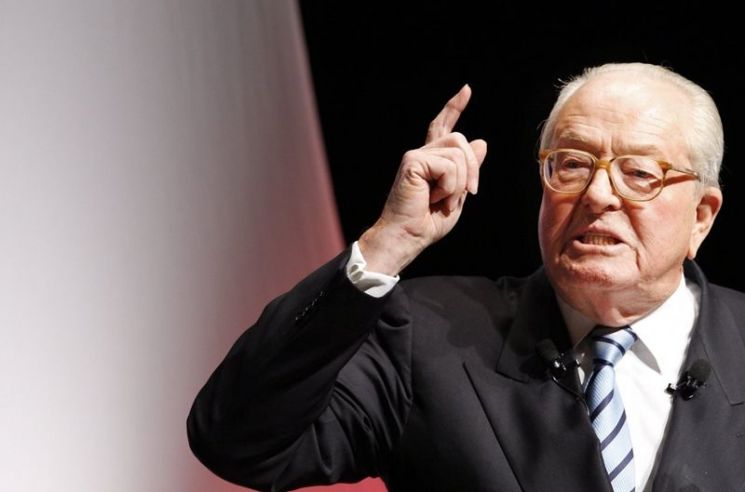 Jean-Marie Le Pen, a leading far-right politician in France, also drew criticism in 2019 by stating that "same-sex partners should be excluded from attending memorial services." Prior to this, in July 2013, Le Pen sparked controversy at a press conference in Nice by saying, "There is a foul smell coming from the hundreds of Gypsies in the city." (Photo by Yonhap News)
 On the 4th (local time), in Clacton-on-Sea, Essex, UK, a woman sprayed a beverage at Nigel Farage, leader of the UK Independence Party, as he was moving after declaring his candidacy for the general election. (Source=AFP Yonhap News)
If Trump Wins, Changes in North Korea Nuclear Policy... Calls for Focus on Congressional Diplomacy
The upcoming U.S. presidential election scheduled for November currently appears to favor former President Trump. This is due to growing calls for President Biden's resignation after his rambling performance in TV debates. A poll conducted by Bloomberg News and Morning Consult from the 1st to the 5th showed Trump with 47% support and Biden with 45%.
With Trump's chances of winning high at present, some predict a shift in policy if he returns to office, including establishing official diplomatic relations with North Korea and opening a U.S. embassy in Pyongyang. Andrew Yeo, a senior fellow at the Brookings Institution, recently reported, "Trump and Kim Jong-un maintained a personal bond even after the Hanoi summit collapsed in 2019," and "Trump is likely to want to conclude negotiations with North Korea and may even abandon the non-proliferation principle, possibly not pursuing complete denuclearization this time."
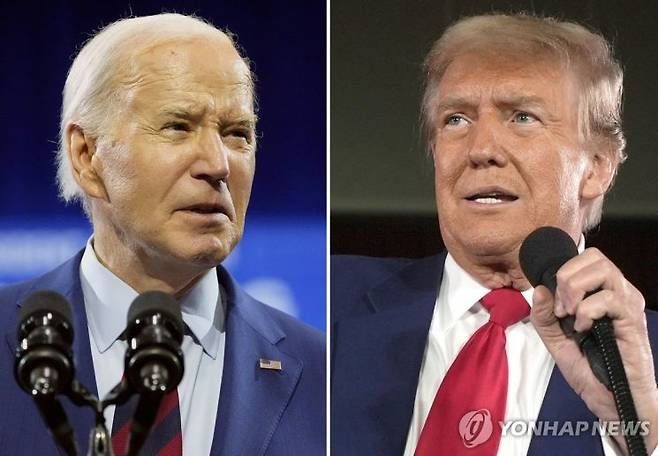
However, whether Biden or Trump wins, neither can serve another term, leading to analyses that the U.S. Congress will exert strong influence over security and economic policies within two years. Bong Young-sik, a senior research fellow at Yonsei University's Institute for Unification Studies, said, "(Whichever is elected) neither can serve a second term since both have already served once. A lame-duck period will emerge within two years of taking office." He added, "Focusing diplomacy on Congress will help manage the Korea-U.S. relationship positively in the long term." An example cited is former President Jimmy Carter, who attempted to withdraw U.S. troops from South Korea during Park Chung-hee's government, but the U.S. Congress intervened and canceled the policy.
Meanwhile, over the past 30 years, except for about two years during the Kim Dae-jung-Clinton administration, the party affiliations of Korean and U.S. presidents have generally been mismatched. The U.S. presidents have been Bill Clinton (1993?2001), George W. Bush (2001?2009), Barack Obama (2009?2017), Donald Trump (2017?2021), and Joe Biden (2021?present). During this time, South Korean presidents were Kim Young-sam (1993?1998), Kim Dae-jung (1998?2003), Roh Moo-hyun (2003?2008), Lee Myung-bak (2008?2013), Park Geun-hye (2013?2017), Moon Jae-in (2017?2022), and Yoon Suk-yeol (2022?present). However, since there are few comparable cases and unclear causal relationships, the general view is that consistent decoupling has not been observed.
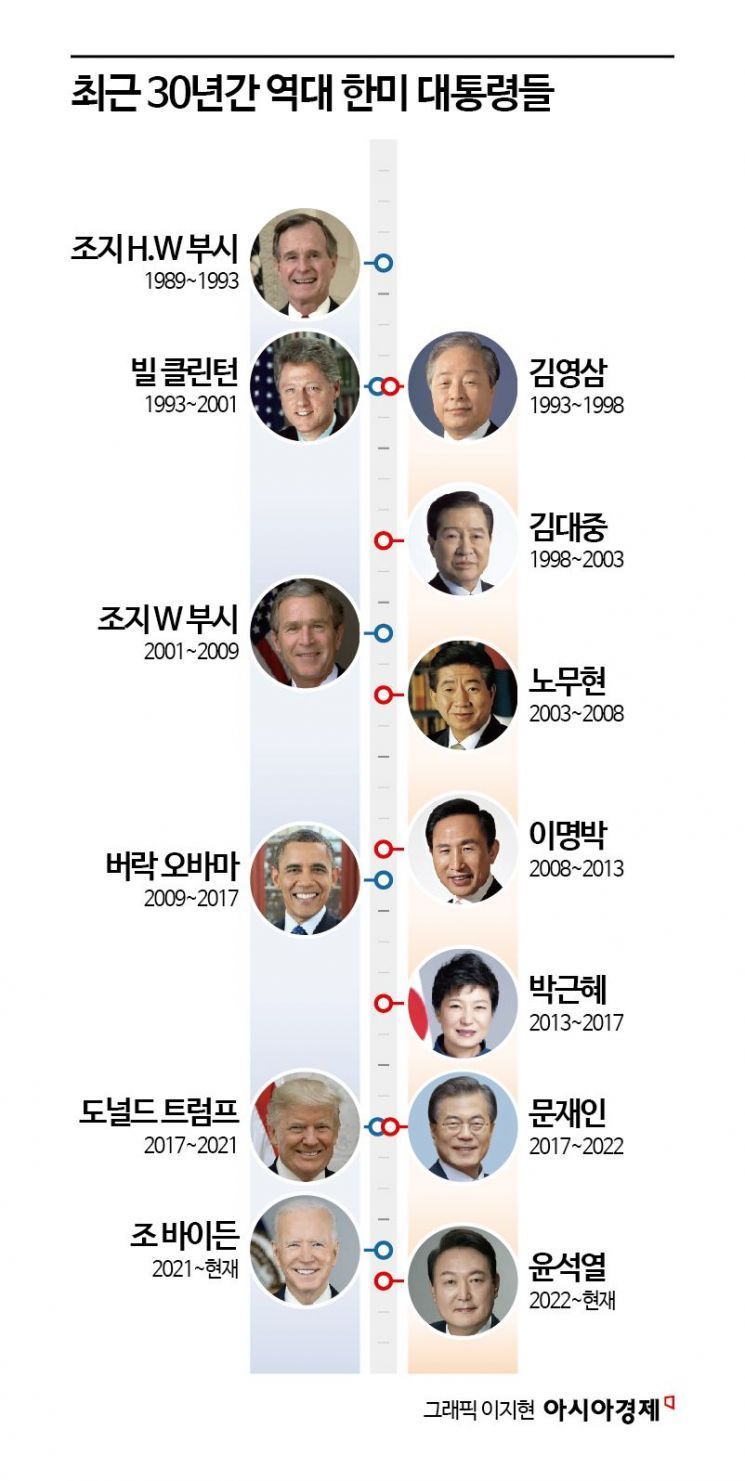 The past 30 years of South Korean and U.S. presidents. Except for the two years during the Kim Dae-jung-Clinton administration, the political parties of the presidents of South Korea and the United States have generally been opposite.
© The Asia Business Daily(www.asiae.co.kr). All rights reserved.
![From Hostess to Organ Seller to High Society... The Grotesque Scam of a "Human Counterfeit" Shaking the Korean Psyche [Slate]](https://cwcontent.asiae.co.kr/asiaresize/183/2026021902243444107_1771435474.jpg)


















