Analysis of 93 Smoothies... Equivalent to 17 Sugar Cubes
Sugar Content 94.6g in Smoothies Too
"Need to Control Sugar Levels"
It was found that an average cup of smoothie contains the equivalent sugar amount of 17 sugar cubes.
On the 8th, the Seoul Institute of Health and Environment announced the results of an analysis conducted from April to June on 93 types of smoothies from small and medium-sized coffee and beverage specialty stores where nutritional content verification was difficult.
The sugar content in one cup of smoothie averaged 52.2g, equivalent to 17 sugar cubes. According to the Korean Nutrient Intake Standards, drinking just one cup means consuming more than half of the daily recommended intake. In particular, some smoothies contained as much as 94.6g of sugar.
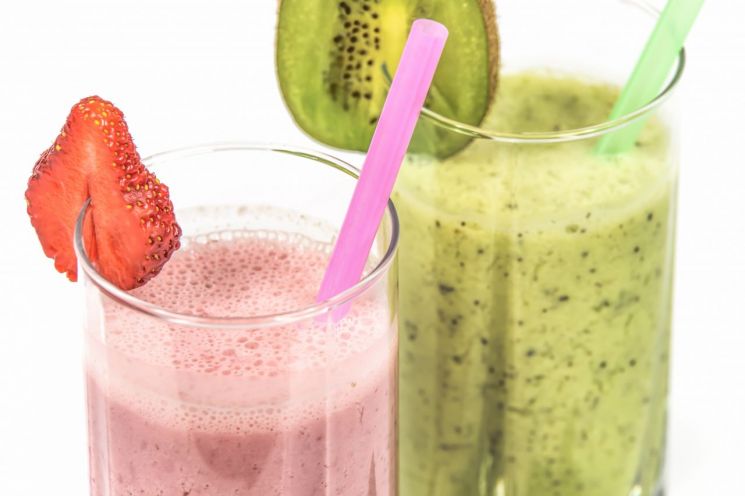
The study also analyzed how much the sugar content decreases when customers request sugar level adjustments when ordering drinks. The sugar levels were categorized into three stages: original sweetness, 'less sweet', and 'half sweet'. The results showed that 'less sweet' reduced sugar content by an average of 15%, while 'half sweet' reduced it by an average of 40%.
Park Juseong, director of the Seoul Institute of Health and Environment, said, "To reduce sugar intake from high-sugar beverages like smoothies, a consumer environment where 'less sweet' options can be chosen is necessary," adding, "We will continue to investigate and provide various nutritional information."
Meanwhile, American nutritionist Darryl Geoffrey advised that to become healthier, one must first quit 'sugar', the root of all diseases. According to his recently published book, Sugar Addiction, sugar causes 'glycation' in the body. This refers to the reaction when glucose molecules bind with protein or fat molecules. Glycation induces inflammation and oxidizes tissues. Oxidation is a major factor in aging, and damage caused by glycation weakens collagen in blood vessel walls, leading to hypertension, stroke, and aneurysms. Furthermore, it contributes to the formation of brain plaques that cause Alzheimer's disease and dementia.
© The Asia Business Daily(www.asiae.co.kr). All rights reserved.

















