Hankyung Association commissions Monoresearch to survey top 500 companies
74.2% "Investments similar in scale to first half"
Only 16.7% respond "Will expand investments"
Aging facilities and improved business outlook are key factors
Despite the prolonged period of high interest rates and high exchange rates and the uncertainty in international affairs, it was found that 9 out of 10 major South Korean conglomerates plan to continue investments in the second half of this year at a scale similar to or larger than the first half.
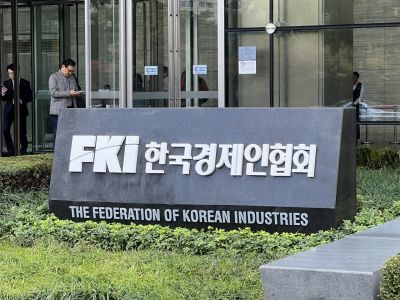
The Korea Economic Association (KEA) announced on the 8th that, based on a survey commissioned to the polling agency Monoresearch targeting the top 500 companies by sales, 74.2% (98 companies) of the 132 respondents said they would invest at a scale similar to the first half of the year. Those who responded that they would increase their investment compared to the first half accounted for 16.7% (22 companies), while 9.1% (12 companies) said they would reduce it.
The main reasons cited by companies planning to increase investment in the second half were 'replacement/improvement of aging existing facilities' and 'expectations of business condition improvement' (each 31.8%). Additionally, 13.7% responded that they would secure competitiveness through active investment during the recession.
On the other hand, companies planning to reduce investment expressed concerns about 'continued global monetary tightening due to high interest rates' (33.4%) and 'expanded risks due to rising costs' (16.7%). Regarding this, KEA interpreted that although there are concerns about continued monetary tightening, many companies overall intend to maintain or increase investment at the first half level due to expectations of economic recovery through increased global demand.
Regarding the timing when investment activities will become full-scale, the largest portion of respondents, 37.1%, expected it to be 'the first half of next year.' Those who answered 'already activated' accounted for 24.2%, and 'the second half of this year' was 15.2%.
KEA explained that although growth slowdown is expected in the second half of this year due to the global tightening effects, companies predict the timing of investment activation to be next year as the global economy recovers and key indicators stabilize.
For policy tasks to improve the domestic investment environment, companies most frequently cited deregulation of corporate regulations (25.0%). This was followed by strengthened tax support such as corporate tax cuts and investment credits (22.7%), and price stabilization (12.9%). Additionally, 43.9% of the respondent companies either planned (10.6%) or were considering (33.3%) investments in artificial intelligence (AI) in the second half of the year. The most common reason for AI investment was improving efficiency in production processes and logistics systems (46.6%). This was followed by new product development and service quality improvement (29.3%), and data analysis and strategy formulation (13.8%).
Lee Sang-ho, head of the Economic and Industrial Division at KEA, said, "While expanding tax support and deregulation to enable companies to increase their investment capacity, it is necessary to induce investment in future industries through research and development (R&D) incentives."
© The Asia Business Daily(www.asiae.co.kr). All rights reserved.

















