Repair costs exceed 600 million won in Jeonju over one year
Various foreign objects such as bowling balls, dumbbells, hammer heads, aluminum pots, kitchen knives, and metal pipes were found inside a machine that crushes food waste into small pieces. The safety of workers is threatened due to these foreign materials that someone accidentally or intentionally put into the food waste bin.
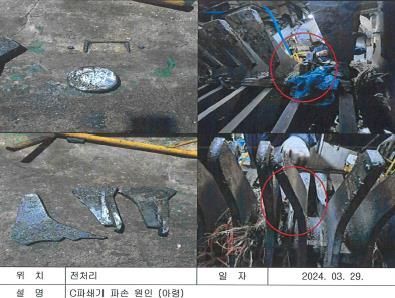
On the 7th, Yonhap News reported, citing the operator of the Jeonju Recycling Town, that the food waste crusher and dryer were damaged 25 times in the past year due to various foreign objects. The repair costs amounted to 619 million won. This facility processes food waste discharged from residential areas and one-room apartments in Jeonju city.
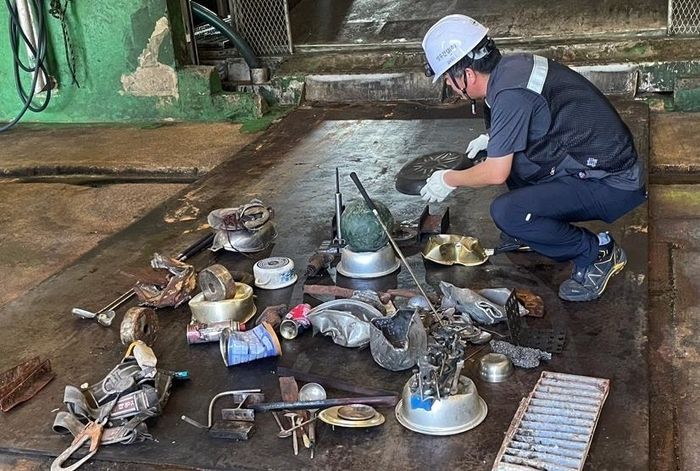 Foreign substances from the food waste crusher at Jeonju Recycling Town. The blue sphere in the center is a bowling ball.
 [Photo by Recycling Town]
While foreign materials like animal bones or seashells can be crushed by the machine, objects such as bowling balls or dumbbells, which are incomprehensible as to why they were brought in, cause the machine to stop operating when stuck, requiring repairs. The bigger issue is the safety of workers near the machine. If foreign objects caught in the crusher fly around or blades break, it could potentially lead to serious accidents.
Delays in food waste processing are also a problem. All food waste in the Jeonju area is processed at one location, so if the crusher breaks down, the work must be either outsourced to another region or halted until repairs are completed. This results in additional costs and delays in waste collection during the repair period. The repair costs are substantial, and the operator expressed difficulties in managing the facility.
An operator from the company said, "Various foreign objects have been mixed into the waste over time, but recently it feels like these incidents have increased significantly. We have already repaired the machine seven times this year alone." He added, "Although no worker has been seriously injured by foreign objects yet, every time items like kitchen knives or pipes come out of the machine, we feel anxious about potential accidents."
The operator emphasized the need to install an RFID-based food waste electronic tag weighing system to resolve this issue. The RFID weighing system automatically measures the weight and charges fees based on the amount of waste discharged.
The company representative suggested to Yonhap News, "If RFID weighing systems are introduced, the input of foreign objects into food waste bins will significantly decrease. Since other regions are also expanding the distribution of weighing systems, we hope Jeonju city actively considers this as well."
© The Asia Business Daily(www.asiae.co.kr). All rights reserved.
![User Who Sold Erroneously Deposited Bitcoins to Repay Debt and Fund Entertainment... What Did the Supreme Court Decide in 2021? [Legal Issue Check]](https://cwcontent.asiae.co.kr/asiaresize/183/2026020910431234020_1770601391.png)

















