Efforts to Save the Environment by Recycling Discarded Sewing Fabrics into Nonwoven Fabrics in Mapo-gu, Gwangjin-gu, Jongno-gu, and Others Receive Applause
More Seoul autonomous districts are recycling enormous amounts of sewing fabric every month.
This is because if simply discarded as general waste, it causes serious pollution.
Districts such as Mapo-gu and Gwangjin-gu are receiving applause for their dedicated efforts to recycle sewing fabric.
These districts produce special bags exclusively for disposing of waste sewing fabric, distribute them to local sewing businesses, collect the fabric, and recycle it into nonwoven fabric and other materials.
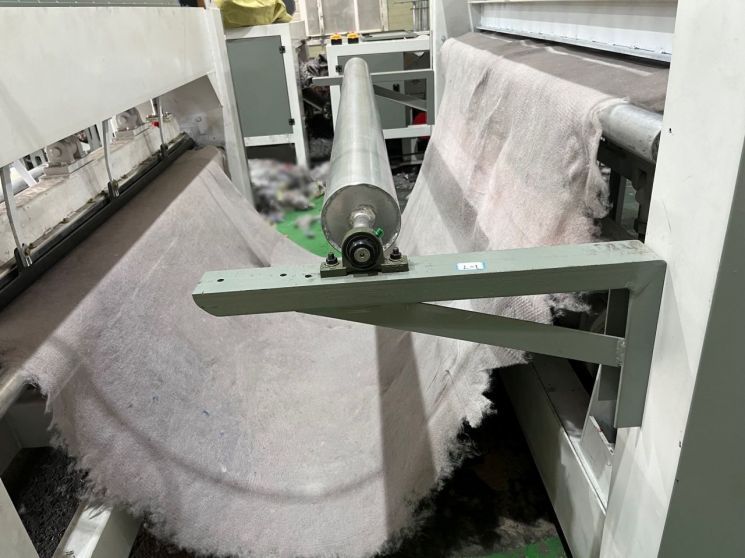 The image shows discarded sewing fabric in Mapo-gu being recycled and transformed into non-woven fabric.
Mapo-gu Transforms 700 Tons of Discarded Sewing Fabric into Nonwoven Fabric
Special Collection Bags Produced and Distributed to Local Sewing Businesses
Mapo-gu (Mayor Park Gang-su) was the first to initiate recycling of sewing fabric waste.
Mayor Park Gang-su of Mapo-gu is making various efforts to reduce the amount of waste brought into Seoul, amid conflicts with the city over the landfill issue in Sangam-dong.
This movement aims to empirically demonstrate that reducing waste output from homes and factories is ultimately the way to protect the environment and save the planet.
Currently, it is estimated that about 60 tons of waste sewing fabric are collected monthly as household waste in Mapo-gu and then incinerated or landfilled. However, waste sewing fabric is a material that can be recycled into nonwoven fabric such as geotextiles if separated properly.
Accordingly, the district has produced 50ℓ special disposal bags for waste sewing fabric and has been distributing them free of charge to local sewing businesses since the 14th, aiming to recycle the fabric and reduce household waste.
Businesses write their address and contact information on the outside of the special bags when disposing of them, and Mapo-gu’s household waste collection contractors collect them separately. The collected waste sewing fabric will be recycled into nonwoven fabric and other materials by specialized recycling companies contracted with the district.
In particular, since the recycling process is carried out free of charge, the district expects that about 700 tons of resources will be recycled annually and household waste reduced with minimal budget input.
Mayor Park Gang-su of Mapo-gu said, “We must continue to discover resources that can be sufficiently recycled among the waste that is incinerated or landfilled at great cost,” adding, “Mapo-gu will focus on reducing household waste that is incinerated or landfilled and accelerate resource recycling projects in the second half of the year.”
The district recruits sewing businesses to participate in sewing fabric recycling throughout the year. For participation applications and other inquiries, contact the Mapo-gu Resource Circulation Division.
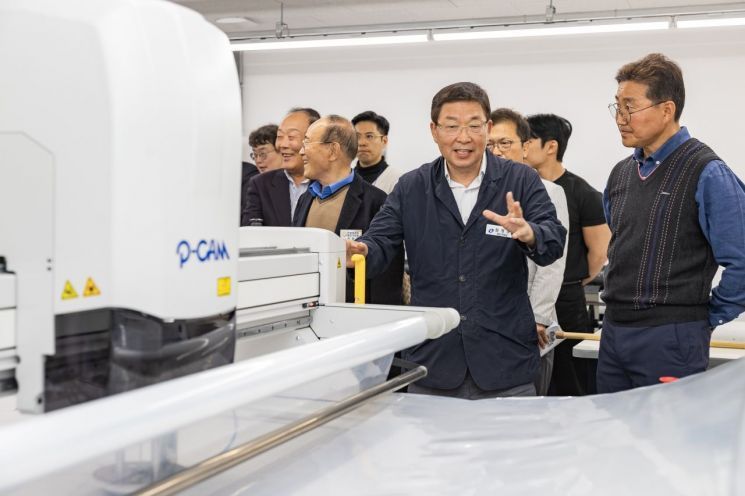 Kim Kyung-ho, Mayor of Gwangjin-gu, talking with officials at a sewing factory (second from the right)
Gwangjin-gu Rolls Up Its Sleeves to Recycle 100 Tons of Discarded Sewing Fabric Monthly, Launches Waste Sewing Fabric Recycling Project in July
Produces Special Collection Bags and Distributes to Local Sewing Businesses to Encourage Participation
Gwangjin-gu (Mayor Kim Kyung-ho) also started recycling waste sewing fabric in July to reduce fabric waste generated during sewing work and alleviate the disposal burden on sewing businesses.
There are about 1,200 sewing businesses in Gwangjin-gu, which produced 1,135 tons of waste sewing fabric last year. Although fabric waste is recyclable if separated, it is actually landfilled or incinerated with general waste, causing serious environmental pollution.
Therefore, the district decided to participate in Seoul’s waste sewing fabric recycling project to recycle fabric waste. The collected fabric waste is delivered to Seoul’s dedicated waste sewing fabric collection center and then collected by recycling companies to be transformed into intermediate products such as auxiliary fuel.
To encourage participation and promote separate disposal among local sewing businesses, the district supports special 50ℓ bags for sewing fabric. These bags can be obtained at nearby community service centers. Disposers fill in their information on the bags before disposal, and if household waste is mixed with the sewing fabric, collection will not be made. For more details, contact the Gwangjin-gu Office Cleaning Division.
Mayor Kim Kyung-ho of Gwangjin-gu said, “Recycling discarded sewing fabric scraps can reduce about 14% of the waste landfilled annually in our district. We hope for much interest and participation from sewing workers,” adding, “We will continue to make multifaceted efforts to reduce waste, protect the environment, and promote resource circulation.”
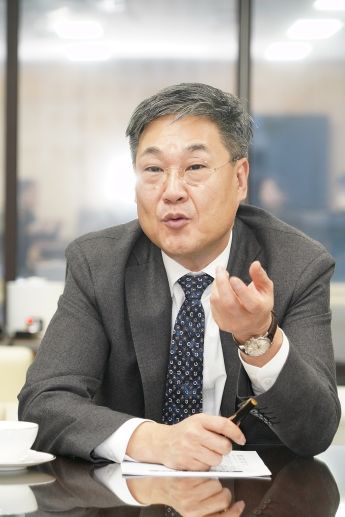
Jongno-gu Promotes Resource Recirculation of Waste Fabric
Ministry of Environment, Seongdong-gu, Dongdaemun-gu, and Korea Textile Resource Circulation Association Sign Business Agreement for 'Pilot Project to Establish Waste Fabric Scrap Resource Circulation System'
Jongno-gu (Mayor Jeong Mun-heon) is taking on the challenge of both reducing the burden on local garment manufacturers and promoting resource recirculation by improving the disposal method of waste fabric scraps.
On January 16, Jongno-gu (Mayor Jeong Mun-heon) signed a business agreement with the Ministry of Environment, Seongdong-gu, Dongdaemun-gu, and the Korea Textile Resource Circulation Association for the 'Pilot Project to Establish Waste Fabric Scrap Resource Circulation System.'
This project, starting from January this year, involves separating waste fabric generated by local garment manufacturers by material type and recycling it into vehicle soundproofing materials, pellets, and other products.
Currently, about 1,800 garment manufacturers are registered in Jongno, and previously, they disposed of waste fabric scraps in volume-based waste bags, which the district collected.
However, with this agreement, Jongno-gu plans to support the entire process on-site, from providing special bags for separated disposal of waste fabric to transportation and processing. This is expected to reduce the cost burden on many garment manufacturers and save related budgets.
Jongno-gu plans to recommend participation through consultations with local sewing associations by March this year and will continue to gather opinions.
The Ministry of Environment oversees the overall project, and the Korea Textile Resource Circulation Association will produce and supply special bags for smooth separation and collection, as well as produce recycled products.
Mayor Jeong Mun-heon said, “Since waste fabric is a high-value resource that can be recycled into high-quality materials, we aim to successfully establish this pilot project to support local garment manufacturers and contribute to environmental protection.”
A Seoul city official said, “We hope more Seoul autonomous districts will join the waste reduction movement.”
© The Asia Business Daily(www.asiae.co.kr). All rights reserved.
![Clutching a Stolen Dior Bag, Saying "I Hate Being Poor but Real"... The Grotesque Con of a "Human Knockoff" [Slate]](https://cwcontent.asiae.co.kr/asiaresize/183/2026021902243444107_1771435474.jpg)


















