Kimchi Exports Reach $83.8 Million in First Half of Year, Up 4.0% YoY
Number of Items Doubles to 1,741 Over 6 Years as of 2022
Challenges Include Agricultural Price Volatility and Chinese Kimchi
Kimchi export value in the first half of this year has reached an all-time high. Thanks to the popularity of K-food, the domestic kimchi manufacturing industry continues to expand steadily. However, challenges such as increased costs due to volatility in agricultural product prices and trade deficits caused by inexpensive Chinese kimchi have been pointed out.
According to the Ministry of Agriculture, Food and Rural Affairs on the 6th, kimchi export value this year reached $83.8 million (approximately 115.5 billion KRW) by the first half, a 4.0% increase compared to the same period last year ($80.5 million). In particular, in the United States, consumer interest and demand for fermented and vegan foods have increased, achieving the highest export performance ever. In Europe, exports increased by more than 40% compared to the previous year by introducing kimchi that can be stored and distributed at room temperature and promoting it in connection with Korean cultural events.
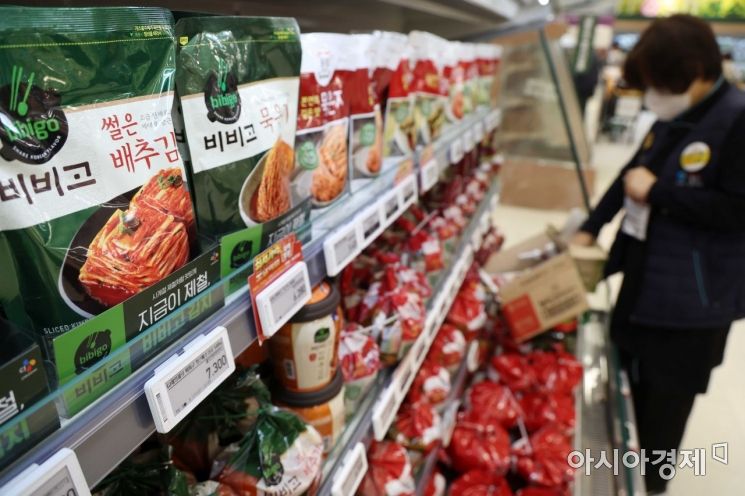
The daily kimchi consumption per Korean has been steadily decreasing from 109.9g in 2010 to 87.0g in 2021 due to westernized eating habits. However, with the increase in single-person households and consumer preference for convenience, the proportion of kimchi purchased and consumed is rising. Above all, the recent surge in popularity of K-food over the past few years has driven the growth of the kimchi industry through increased export volume.
In fact, kimchi export value, which had decreased from $107 million in 2012 to $74 million in 2015, began to rebound to $145 million in 2020 as the immune-boosting effects of kimchi became known during the COVID-19 pandemic, and increased to $155.61 million (approximately 215 billion KRW) last year, marking progress in the industrialization of kimchi exports. Last year’s export volume also reached a record high of 44,041 tons, surpassing the previous record of 42,544 tons in 2021.
As kimchi demand increases, the number of domestic kimchi manufacturers is also growing. According to the Korea Rural Economic Institute, the number of domestic kimchi manufacturers was 1,741 in 2022, a 102.4% increase compared to 2016. The number of kimchi manufacturers, which was 860 in 2016, rose to 1,248 in 2019 and 1,703 in 2020, then stagnated during the COVID-19 pandemic from 2020 to 2021, before resuming growth in 2022. During the same period, the number of employees in the kimchi manufacturing industry increased by 13.8%, from 9,415 to 10,714.
With the increase in kimchi manufacturers, the shipment value of kimchi manufacturing businesses with 10 or more employees, considered a certain scale, rose from 1.1751 trillion KRW in 2016 to 1.6917 trillion KRW in 2022, showing an average annual growth rate of 6.3%. The shipment value per company also increased from 5 billion KRW in 2016 to 7 billion KRW in 2022, an average annual growth rate of 5.8%, indicating continuous expansion of the retail kimchi market.
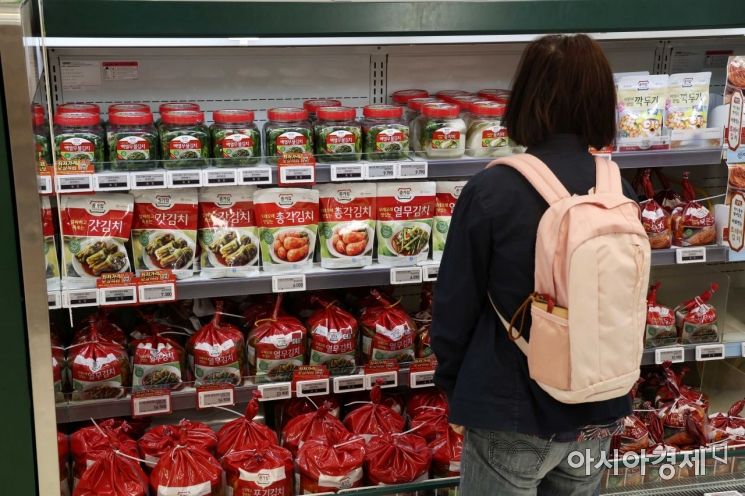
Although the market size has grown, profits have decreased due to rising costs. The total cost of domestic kimchi manufacturers, which was 1.0539 trillion KRW in 2016, increased to 1.685 trillion KRW in 2022, showing an 8.1% growth rate that exceeds the increase in shipment value. The proportion of raw material costs in total costs slightly decreased from 59.2% in 2016 to 55.6% in 2022 but still accounted for the highest share. The annual average increase rate of raw material costs was 7.0%, higher than the shipment value growth rate.
Accordingly, operating profit decreased from 121.2 billion KRW in 2016 to 116.7 billion KRW in 2019, and dropped sharply to 24 billion KRW in 2020 due to the severe impact of COVID-19. It recovered to 119.8 billion KRW in 2021 but fell again to 6.7 billion KRW in 2022.
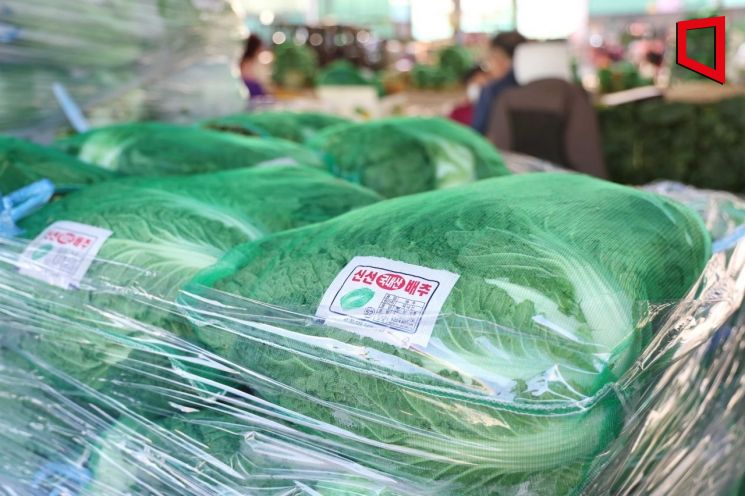
Kimchi’s raw materials mainly consist of fresh agricultural and marine products such as napa cabbage, radish, red pepper powder, garlic, and solar salt, with a domestic usage rate of around 95%, showing a stronger linkage with the agricultural sector than any other food. However, recent supply instability caused by abnormal weather has increased volatility in domestic agricultural product prices, significantly impacting the operating costs of kimchi manufacturers. The farm sales price index for vegetables such as napa cabbage and radish, key raw materials for kimchi, rose from 92.2 in 2016 to 113.4 in 2022, causing cost increases for kimchi manufacturers using these raw materials.
The resurgence of Chinese kimchi imports, which had slowed during COVID-19, is also posing a threat to the domestic kimchi industry. According to Korea Customs Service export-import trade statistics, kimchi import value reached $71.53 million by May this year, exceeding export value ($70.69 million) and resulting in a trade deficit of $840,000. During this period, imports of Chinese kimchi amounted to $71.52 million.
At this rate, it seems difficult to avoid a kimchi trade deficit this year as well. Since kimchi export-import statistics began in 2007, there have only been two years with a trade surplus in kimchi over the past 16 years: 2009, right after the global financial crisis, and 2021, when the Chinese “naked kimchi” controversy occurred.
Currently, the kimchi manufacturing industry is also challenged by its structure, where companies with four or fewer employees account for more than 70% of the total. As of 2022, small-scale companies with four or fewer employees made up 73.6% of kimchi manufacturers, and the operating profit margin per company is below 10%.
Researcher Park Ki-hwan of the Korea Rural Economic Institute advised, “The kimchi industry needs to pursue scaling up in response to the growing retail kimchi market, improve management efficiency through automation of manufacturing processes and stable procurement of domestic raw materials, and actively respond to imported kimchi by enhancing taste, quality, and safety, so that the recent positive momentum surrounding the kimchi industry can be fully utilized.”
© The Asia Business Daily(www.asiae.co.kr). All rights reserved.



















