The Supreme Court has ruled that the cooperative's decision to expel the head of the Agricultural Cooperative, who was convicted in a criminal trial for repeatedly sexually harassing a female employee, was justified.
In the trial, the issue was whether the expulsion reason stated in the cooperative's bylaws, "cases where the cooperative loses its credit," should be interpreted as limited to cases where the cooperative loses its "economic" credit. The Supreme Court judged that expulsion grounds apply not only when economic credit is lost but also when the cooperative's general credit is damaged.
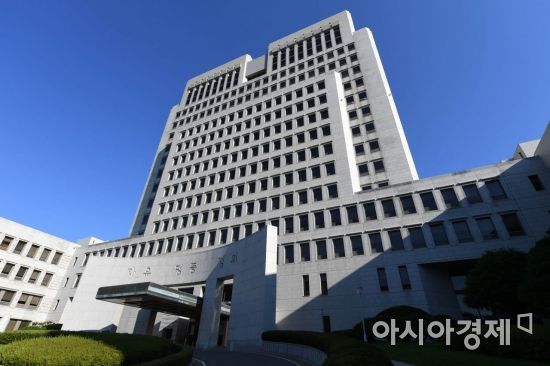
According to the legal community on the 5th, the Supreme Court's Second Division (Presiding Justice Kwon Young-jun) overturned the lower court's ruling partially in favor of the plaintiff, Park, the former head of Cheonun Agricultural Cooperative in Hwasun, Jeonnam, who filed a lawsuit against the cooperative and the current head Kim, seeking confirmation of the invalidity of his expulsion as a member. The Supreme Court canceled the first trial's ruling (where the plaintiff lost) regarding the cooperative and confirmed that the expulsion resolution against the plaintiff was invalid, remanding the case to the Gwangju High Court.
The court stated, "The lower court's ruling, which judged the expulsion resolution in this case to be invalid due to lack of grounds for expulsion, contains errors in interpreting the objective meaning of the expulsion grounds and in the legal principles regarding the abuse or deviation of disciplinary discretion, which affected the judgment," as the reason for the reversal and remand.
Park, who was the head of Cheonun Agricultural Cooperative, was prosecuted on charges of sexually harassing a female employee in her 20s six times between February and July 2019 by abusing his authority (sexual harassment under the Act on Special Cases Concerning the Punishment, etc. of Sexual Crimes).
Park was accused of touching the victim's neck and ears and slapping her buttocks. Notably, when the victim protested, he even told her to slap his buttocks.
The Gwangju District Court, which handled the first trial, sentenced Park to eight months in prison in May 2021, ordered him to complete a 40-hour sexual violence treatment program, and imposed a three-year employment restriction at child and youth-related institutions and welfare facilities for the disabled.
In the appeal trial, considering that Park had reached a settlement with the victim, the second trial court reduced the sentence to an eight-month prison term with a two-year probation, and the second trial ruling was finalized in August 2021.
Park resigned from his position as head of the cooperative in 2019 citing "personal reasons," but the cooperative held a delegates' meeting on January 28, 2022, and resolved to expel Park, who had been convicted of sexual harassment charges. Among the 51 delegates present (excluding the chair), 48 voted, and 37 voted in favor of Park's expulsion. The reason for Park's expulsion was that he "caused loss to the cooperative or caused the cooperative to lose its credit through intentional or gross negligence."
Park filed a lawsuit claiming that the expulsion was unfair.
In the trial, Park argued that there were procedural and substantive defects in his expulsion. He claimed that when he was initially notified of the grounds for expulsion, it was stated as "defamation of the cooperative," but the actual reason for expulsion was different, so he was unable to properly exercise his right to defense. He also argued that his criminal punishment did not damage the cooperative's reputation, cause economic loss, or change the cooperative's credit, so it did not constitute grounds for expulsion.
However, the first trial court rejected all of Park's claims and ruled against him.
The court found no problem with the cooperative's resolution to expel Park. Contrary to Park's claim, the court judged that there was no reason to interpret the expulsion ground "cases where the cooperative loses its credit" as limited only to cases where the cooperative loses its economic credit.
The court stated, "The wording of the provision does not limit the expulsion ground to cases where economic loss occurs, and there is no basis for such a limited interpretation when examining the rest of the bylaws. Considering the ordinary meaning and usage of the wording, it is not interpreted narrowly."
It added, "The cooperative's image damage and resulting defamation caused by media reports on the plaintiff's related criminal case can be evaluated as a loss to the cooperative, and it can be assessed that the cooperative lost its credit with the general public."
Park sued Kim, the cooperative head, for 10 million won in damages, claiming that Kim distributed newspaper articles containing the first trial results where Park was sentenced to imprisonment but did not disclose that the second trial resulted in a suspended sentence. However, the court dismissed the claim, ruling that the article's content was truthful and Kim's actions were for the public interest and not unlawful.
However, the second trial court reversed the ruling.
The court judged that Park's acts were personal misconduct and could not be considered as causing loss or loss of credit to the cooperative, and that credit should be narrowly interpreted as economic credit, thus the expulsion was unfair.
But the Supreme Court overturned the decision again.
The court stated, "It is difficult to view the expulsion resolution in this case as made without proper grounds or as an abuse or deviation of disciplinary discretion that is socially unacceptable," and found no problem with the cooperative's expulsion action.
The court explained, "The purpose of the defendant (the cooperative) is not limited to economic benefits or activities but includes the improvement of members' status in social and cultural areas. Acts that fail to fulfill essential matters for the cooperative's existence and maintenance, as well as acts that hinder such purposes, can be grounds for expulsion."
The court found the second trial court's judgment, which assessed the expulsion grounds from an economic perspective, to be incorrect.
The court stated, "The disputed provision stipulates 'cases where the cooperative loses its credit' as grounds for expulsion, without limiting it to 'economic credit.' The bylaws do not define credit, and according to the dictionary meaning, credit means 'the degree of belief or trust that a person or thing is reliable and unquestionable.'"
It concluded, "Therefore, if the plaintiff's conduct caused the defendant to lose credit, the grounds for expulsion should be recognized regardless of whether the defendant's economic credit declined."
© The Asia Business Daily(www.asiae.co.kr). All rights reserved.

















