Named 'Gonyallox Gunsanensis' After Gunsan
The Korea Institute of Ocean Science and Technology (KIOST) has discovered a new species of marine phytoplankton, a dinoflagellate, in the waters off Gunsan, Korea. The species was named Gonyaulax kunsanensis after the region of Gunsan and was published in the international journal Botanica Marina.
Dinoflagellates are marine phytoplankton with two flagella that allow them to swim. The paper, authored by Shin Hyunho and Yoon Juyeon of KIOST and others, was published in June 2024 under the title "Morphology and molecular phylogeny of Gonyaulax kunsanensis sp. nov. (Gonyaulacales, Dinophyceae) from Korean coastal waters."
The research team led by Dr. Shin Hyunho at the KIOST South Sea Research Institute, in collaboration with the National Marine Biodiversity Institute of Korea, discovered the new dinoflagellate species that produces the toxin yessotoxin in surface seawater samples collected from the Gunsan area in August 2020.
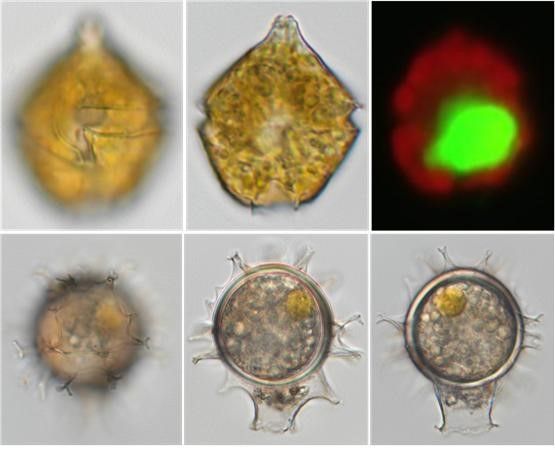
This toxin is expected to be used as an alternative to narcotic analgesics and, through mass cultivation, could also be used to produce standard substances for monitoring toxin occurrence along the Korean coast.
Yessotoxin was first discovered in the digestive glands of scallops in Japan in 1986. When humans consume shellfish contaminated with this toxin, symptoms such as diarrhea, nausea, and vomiting may occur. Recently, it has also been found to adversely affect the liver, pancreas, and cardiac muscle.
With the recent growth of the marine bio market, research is actively underway to develop new materials for pharmaceuticals, food, and environmental sectors by utilizing marine bioresources. Internationally, the entry into force of the Nagoya Protocol (October 2014) has increased the importance of managing and utilizing marine bioresources.
In response, the research team has, since 2019, been conducting studies to secure, classify, and develop cultivation methods for marine phytoplankton found in Korea, aiming to discover useful materials based on bioactive substances contained in marine phytoplankton. To date, they have discovered numerous new and previously unrecorded species of dinoflagellates. These species are currently preserved and managed at the "Marine Bioresource Deposit and Registration Institution" designated by the Ministry of Oceans and Fisheries, located at the KIOST South Sea Research Institute's Marine Sample Library.
Shin Hyunho, principal researcher at KIOST, stated, "This achievement is significant in that it contributes to strengthening Korea's sovereignty over marine biological resources. We will continue related research so that the development of standard substances and analytical technologies for toxin analysis can be actively pursued, as is done in advanced countries such as France and Canada."
Lee Heeseung, president of KIOST, said, "Marine bioresources are a very important national asset that forms the foundation of the marine bioindustry. We will do our best to secure marine biological resources, such as discovering new and unrecorded species, and to ensure that the marine bioindustry becomes a new driving force for national growth."
© The Asia Business Daily(www.asiae.co.kr). All rights reserved.
![Clutching a Stolen Dior Bag, Saying "I Hate Being Poor but Real"... The Grotesque Con of a "Human Knockoff" [Slate]](https://cwcontent.asiae.co.kr/asiaresize/183/2026021902243444107_1771435474.jpg)
















