Special Management of the Seven Key Areas
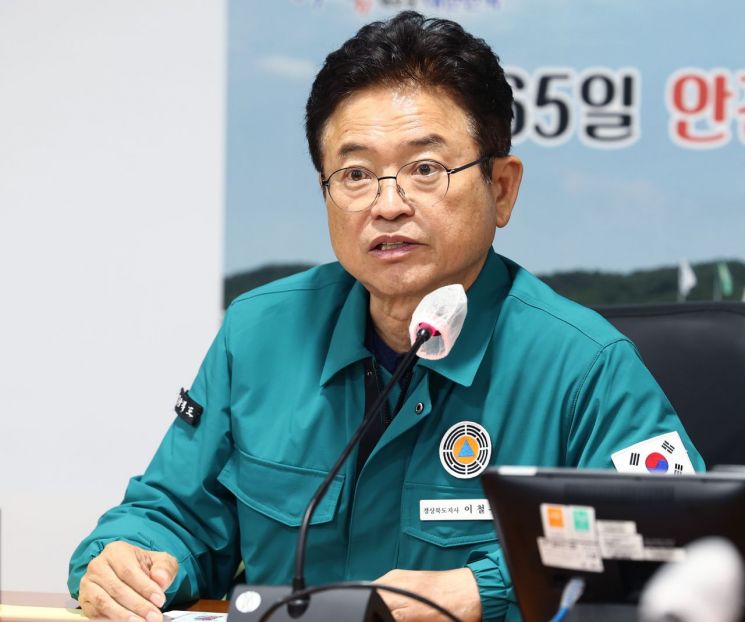
Lee Cheolwoo, Governor of North Gyeongsang Province, stated on the 4th, "The duty of the provincial government is to protect the safety and lives of the residents," and added, "During this monsoon season, we will adhere to the principles of maximum prevention, proactive evacuation, and optimal protection."
The province believes that this year's monsoon is characterized by its localized and volatile nature, as it initially brought 600mm of rainfall to Jeju Island and recorded extreme hourly rainfall of 80mm in North Chungcheong Province.
Last year, North Gyeongsang Province suffered casualties due to extreme heavy rain, with the main causes being nighttime disasters, mountainous terrain, and a high number of elderly victims.
Therefore, Governor Lee has instructed deputy heads of local governments to personally inspect 664 areas at risk of human casualties, including landslide-prone zones, steep slopes, reservoirs, natural disaster risk improvement districts, riverside parking lots, underpasses, and flood-prone areas.
In addition, before the full onset of the monsoon, on June 28, Governor Lee visited a disaster risk improvement project site for Hancheon Stream in Sangjang-ri to Geouidong, Jangcheon-myeon, Gumi City, to check the progress of the construction in preparation for summer heavy rains.
North Gyeongsang Province is currently providing special management for seven key areas under its disaster response plan for heavy rain and the monsoon season: (1) four cities/counties in the northern region affected by extreme rainfall, (2) Tohamsan Seokguram in Gyeongju, (3) villages near Wangsin Reservoir in Gyeongju, (4) villages near Naengcheon in Pohang, (5) areas affected by wildfires in Uljin County, (6) Geobukbawi in Ulleung County, and (7) underpasses at risk of external flooding.
For these seven managed areas, the province is focusing on checking daily and cumulative rainfall during emergency duty, monitoring CCTV, patrolling high-risk areas, and assessing the need for evacuation to ensure that no casualties occur due to natural disasters.
Meanwhile, on June 29, the province mobilized 1,002 members of the village patrol teams in 525 villages across 12 cities and counties, where risks from heavy rain were anticipated, to conduct pre-inspections of disaster-prone areas and ensure the safety of vulnerable groups, making every effort to protect the lives of residents.
Going forward, when dangerous conditions arise?such as hourly rainfall of 80mm or more, cumulative rainfall exceeding 300mm, or the issuance of a landslide advisory?the plan is to proactively evacuate residents to safe village shelters in advance.
Governor Lee Cheolwoo said, "We will respond actively to extreme heavy rain according to the situation, and by fully mobilizing the North Gyeongsang-style disaster response model and resident evacuation system, we will ensure the protection and safety of our residents in any disaster."
© The Asia Business Daily(www.asiae.co.kr). All rights reserved.

















