A paper has been published on producing an alternative with properties similar to eggs using microorganisms. This raises expectations that it could help solve domestic livestock environmental issues, which resemble factory-style animal breeding and production, and contribute to establishing a sustainable food system.
KAIST announced on the 4th that Research Professor Kyungrok Choi of the Bio Process Research Center and Distinguished Professor Sang Yup Lee of the Department of Bio and Chemical Engineering published a paper titled "Development of Microbial-Derived Eco-Friendly Liquid Egg Alternative."
Professors Choi and Lee confirmed that the gel formed by heating microbial lysate has microscopic structures and physical properties similar to boiled eggs. They also demonstrated that it is possible to create various textures by adding edible enzymes derived from microorganisms or plant-based materials, and furthermore, that microbial lysate in liquid form can functionally replace egg liquid, such as baking meringue cookies.
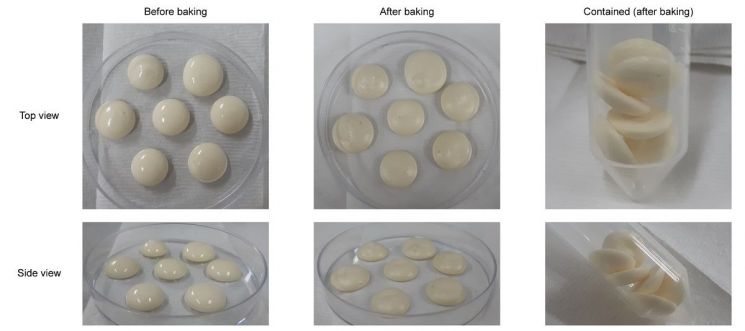 Foaming ability of microbial lysates and example data of meringue cookie production. Provided by KAIST
There have been ongoing developments of egg substitutes based on non-animal proteins. However, no substitute has yet been developed that fully provides the nutrition of eggs while replicating the functional properties of egg liquid (卵液) as a cooking ingredient, such as gelation and foam formation.
Considering this situation, the research team attempted to develop microbial biomass as an egg liquid substitute. They focused on the fact that the protein content per unit dry mass of microbial biomass can be comparable to that of meat.
The long history of human consumption has verified the safety of various microorganisms such as yeast, Bacillus subtilis, lactic acid bacteria, and other probiotic strains, as well as their high-quality nutritional components, which influenced the development of microbial biomass as an egg liquid substitute. Additionally, the relatively low carbon dioxide emissions during microbial biomass production and the minimal requirement for resources such as water and land were fully taken into account.
However, a challenge identified during the research was that when the semi-solid microbial biomass recovered through microbial cultivation was heated, it was observed to turn into a liquid state, unlike egg liquid.
In response, the research team focused on the fact that to make steamed eggs, one must first break the eggshell (nangak·卵殼) and collect the egg liquid. They then produced microbial lysate by breaking down the cell wall and cell membrane of microorganisms, which correspond to the eggshell structure. They finally confirmed that when heated, the proteins coagulate and transform into a gel form similar to egg liquid. This completed the research result that microbial-derived alternatives with properties similar to eggs can be produced.
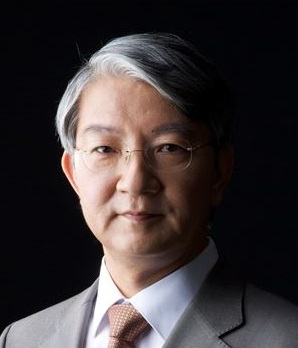 Professor Sangyeop Lee. Courtesy of KAIST
Distinguished Professor Sang Yup Lee of KAIST said, "The egg alternative produced by microorganisms has excellent nutritional components, making it suitable not only as a regular food source but also as emergency food for future long-distance space travel or wartime situations." He added, "Above all, it is expected to help secure a sustainable food system."
Meanwhile, this research was conducted as an extension of the project "Development of Next-Generation Biorefinery Core Technologies to Lead the Bio-Chemical Industry," supported by the Ministry of Science and ICT under the Petroleum Alternative Eco-Friendly Chemical Technology Development Program, and the project "Development of Protein Production Technology from Inorganic Materials through Microbial Metabolic System Control," supported by the Agricultural Microbial Project Group of the Rural Development Administration.
© The Asia Business Daily(www.asiae.co.kr). All rights reserved.

















