US Continued Unemployment Claims Highest in 31 Months
Private Employment Increased by 150,000 in June... Three Consecutive Months of Decline
73% Chance of Rate Cut in September... Government Bond Yields Fall
Attention on Last Month's FOMC Minutes Release
Signs have emerged that the U.S. labor market is cooling down. The number of unemployment benefit claims filed for more than two weeks reached its highest level in 31 months, and the growth in private sector employment has declined for the third consecutive month. As the cumulative effects of aggressive tightening show signs of slowing employment, expectations for a rate cut in September are rising.

According to the U.S. Department of Labor on the 3rd (local time), the number of continuing unemployment claims, which are filed for at least two weeks, was recorded at 1.858 million for the week of June 16-22, an increase of 26,000 from the previous week.
For the second consecutive week, this marked the highest level since November 2021 (1.878 million). Continuing claims have also increased for nine straight weeks, the longest streak of growth in six years since 2018.
New unemployment claims for the week of June 23-29 were 238,000. This exceeded both the expert forecast (234,000) and the previous week's figure (234,000). The 4-week moving average of unemployment claims, which smooths out volatility to better reflect trends, rose by 2,250 to 238,500 compared to the previous week.
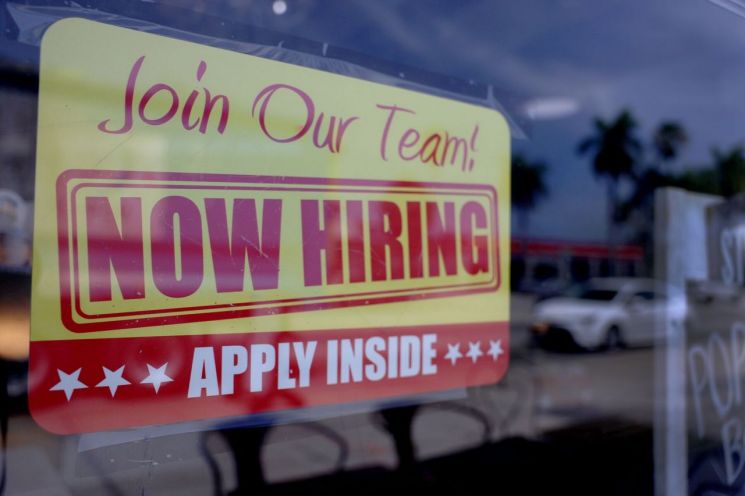
Last month, the growth in private sector employment in the U.S. also declined for the third consecutive month. According to ADP, a private labor market research firm, private sector job growth in June increased by 150,000. This was below the market expectation of 163,000 and also less than May’s increase of 157,000.
Wages for workers who have been at the same job for the past 12 months rose by 4.9% year-over-year, the lowest level since August 2021. Wage growth for job changers also slowed to 7.7%.
This is interpreted as a sign that the previously hot labor market is cooling as the Fed’s high interest rate policy prolongs.
Bloomberg News diagnosed, "As borrowing costs rise and the economy slows, labor demand is gradually becoming more limited."
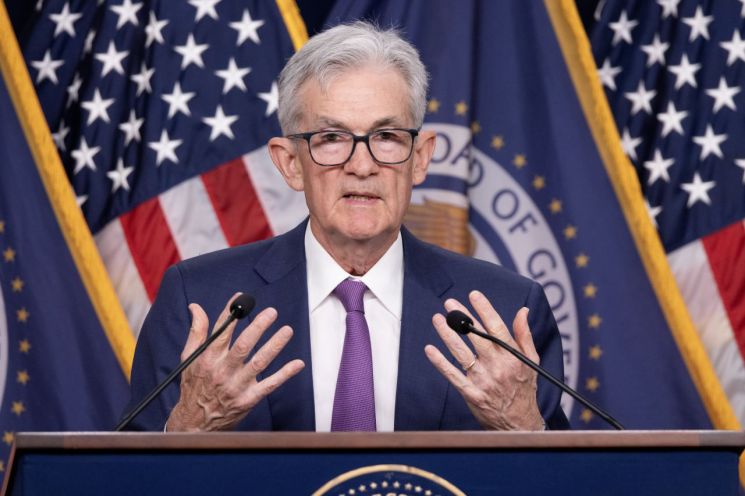
The minutes of the June Federal Open Market Committee (FOMC) meeting, released on the same day, also revealed Fed officials’ caution regarding the labor market slowdown.
According to the minutes, some participants expressed concern that further labor market weakening due to restrictive monetary policy could lead to a rise in unemployment. The minutes stated, "Some participants noted that while the labor market remains strong, the number of job openings per unemployed person has returned to pre-pandemic levels, and if the labor market cools further, the pace of layoffs could accelerate." It added, "Some emphasized that monetary policy should be prepared to respond to an unexpected economic downturn."
With weak employment indicators raising expectations for a rate cut, Treasury yields are declining. The 10-year U.S. Treasury yield, a global benchmark for bond yields, fell 8 basis points (1bp = 0.01 percentage points) from the previous trading day to 4.35%, while the 2-year Treasury yield, sensitive to monetary policy, dropped 3 basis points to 4.73%. As "bad news" turned into "good news," the S&P 500 and Nasdaq indices rose 0.51% and 0.88%, respectively, hitting record highs in the New York stock market that day.
Investors are also increasing bets on a rate cut in September. According to the Chicago Mercantile Exchange (CME) FedWatch tool, the federal funds futures market reflected a 72.6% probability that the Fed will cut rates by at least 0.25 percentage points at the September FOMC meeting. This was a slight increase from 68.9% the previous day. The probability of a 0.25 percentage point or greater cut in November rose from 80.1% to 82.6%.
The market is focusing on the Labor Department’s employment report to be released on the 5th, which will provide a more accurate picture of the U.S. labor market. Experts expect nonfarm payrolls to have increased by 189,000 last month, a significant slowdown from the previous month’s 272,000. The unemployment rate is forecast to remain steady at 4%.
© The Asia Business Daily(www.asiae.co.kr). All rights reserved.



















