With the consecutive emergence of antibody therapies that improve the fundamental causes of Alzheimer's dementia, expectations for conquering dementia are growing. As these root-cause treatments are expected to take a larger share in the near future, the related market is also projected to grow significantly.
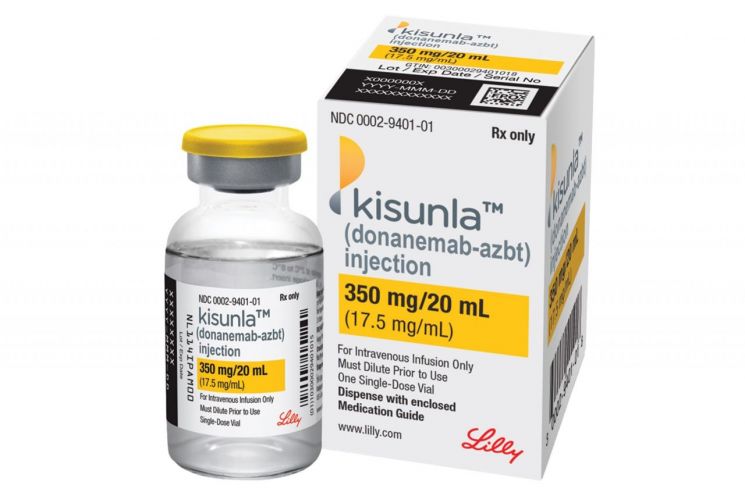
On the 2nd (local time), Eli Lilly announced that its treatment Kisunla for patients with mild cognitive impairment (MCI) and mild Alzheimer's disease received approval from the U.S. Food and Drug Administration (FDA). The treatment was known by the generic name Donanemab during its development phase. In the Phase 3 clinical trial, an average 35% reduction in the integrated Alzheimer's Disease Rating Scale (iADRS) decline was confirmed. The iADRS measures memory, thinking, and daily functioning, indicating that patients taking Kisunla experienced a slower decline in cognitive functions compared to other dementia patients.
Kisunla previously attempted to enter the market through the FDA's "accelerated approval" system, which grants conditional approval for treatments with high unmet needs before clinical trials are completed, but faced setbacks. Since Phase 3 trials are still ongoing, the problem was that there were few patients who had been treated long-term among those who participated in the Phase 2 trials submitted as approval data. However, Lilly stated that this was "a problem caused by better efficacy" due to the clinical design.
Kisunla works by reducing amyloid-beta protein in the brain, known as the most likely cause of Alzheimer's disease, thereby slowing dementia progression. Accordingly, the clinical trial was designed so that treatment with Kisunla would be discontinued once a predetermined level of amyloid removal was achieved. The reduction speed of amyloid was so fast that many clinical participants stopped treatment as early as six months. Furthermore, one-year follow-up results showed that the level of cognitive decline slowing was similar between patients who stopped treatment after six months and those who continued treatment for one year.
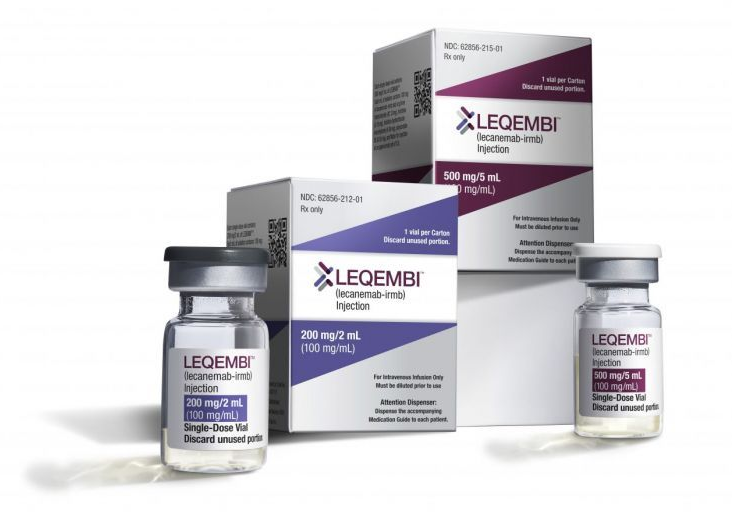 Eisai and Biogen's Alzheimer's dementia treatment 'Leqembi (generic name: lecanemab)' [Image source=AP Yonhap News]
With the recent domestic approval of Biogen and Eisai's Leqembi followed by Eli Lilly's Kisunla, expectations for conquering dementia are rising, and the treatment market is expected to rapidly reorganize. Pharmaceutical research firm Kotelis projected that the Alzheimer's treatment market size will grow from $1.6 billion (approximately 2.2237 trillion KRW) in 2020 at an average annual growth rate of 29%, reaching $20 billion (approximately 28 trillion KRW) by 2050. Especially, as antibody therapy development continues, the current prescription share of acetylcholinesterase inhibitors at 47% is expected to surge to 69% with antibody therapies like Kisunla and Leqembi by next year.
Actual sales growth is also anticipated. Global academic information service company Clarivate forecasted that by 2027, Kisunla will generate $1.34 billion (approximately 1.8586 trillion KRW) in sales, and Leqembi will reach $1.02 billion (approximately 1.258 trillion KRW). Researcher Kim Jeong-hyun from Kyobo Securities stated, "Assuming about 30% of newly diagnosed Alzheimer's patients are prescribed Kisunla for one year, the average peak sales estimate for Kisunla is $5 billion (approximately 7 trillion KRW)," adding, "With the launch of two Alzheimer's treatments, the degenerative brain disease antibody therapy market is also beginning to blossom."
Meanwhile, in the industry, there is speculation that Samsung Biologics' mega contract worth $1.06 billion (approximately 1.4637 trillion KRW) announced the day before may be related to these dementia antibody therapies. Researcher Seo Geun-hee from Samsung Securities explained, "The contract period extends until 2030, requiring production of at least 240 billion KRW annually over the next six years. Although it is undisclosed and difficult to confirm, the market believes the contract involves Alzheimer's treatments, antibody-drug conjugate (ADC) therapies, or similar products." Considering the production cost ratio of total sales, it is also inferred that annual sales exceeding 2 trillion KRW over the next six years are necessary, which is deemed feasible given the growth trend of dementia treatments.
© The Asia Business Daily(www.asiae.co.kr). All rights reserved.


















