The Oldest Portrait of a Meritorious Subject, High Art Historical Value
Four Items Including Portraits of Gwon Sang-ha and Yu Seol-gyeonghakdaejang Designated as Treasures
The portrait of Shin Suk-ju (1417?1475), who left a clear mark in politics and scholarship during the early Joseon period, will be designated as a National Treasure.
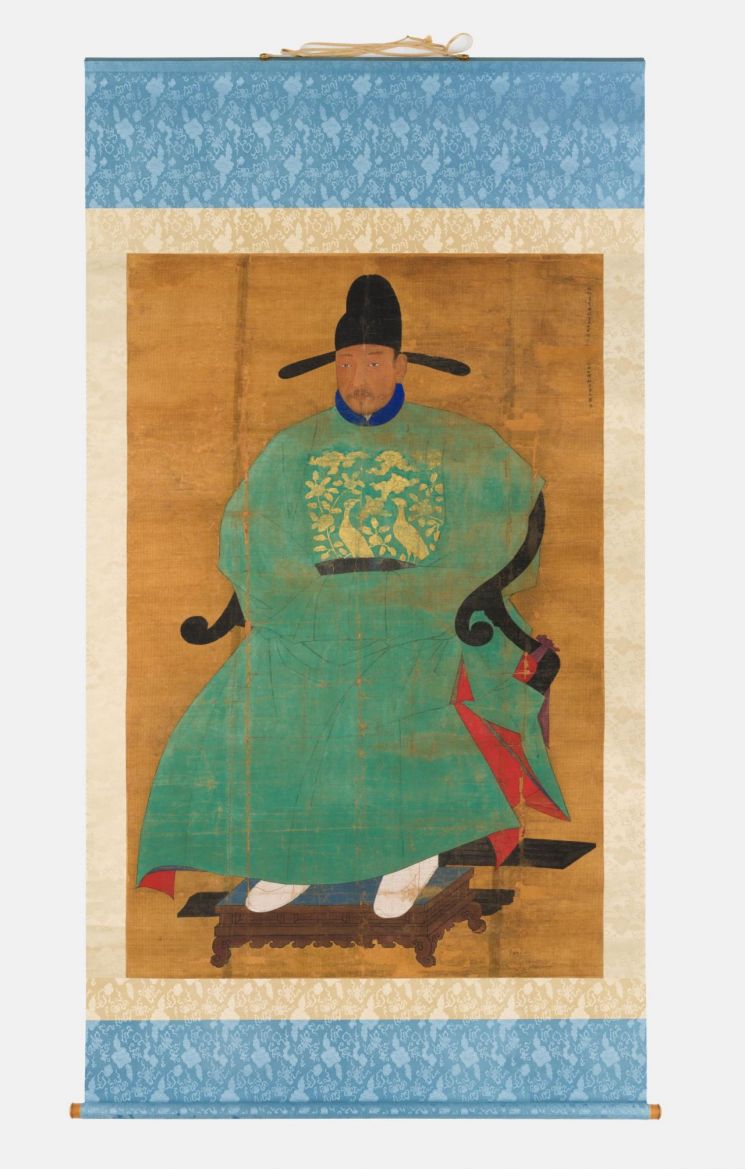 The Cultural Heritage Administration announced on the 3rd that it plans to designate the "Portrait of Shin Suk-ju," considered the oldest existing portrait of a meritorious subject, as a National Treasure. The photo is the "Portrait of Shin Suk-ju."
 [Photo by Cultural Heritage Administration]
On the 3rd, the Cultural Heritage Administration announced the preliminary designation of the 'Portrait of Shin Suk-ju,' the oldest existing portrait of a meritorious subject, as a National Treasure. His portrait enshrined at Gubong Yeongdang (九峯影堂) in Cheongju was elevated from Treasure status, designated in 1977, to National Treasure after about 47 years.
Shin Suk-ju was a Jiphyeonjeon scholar during King Sejong’s reign and played an important role in the creation of Hunminjeongeum. Later, he served as Minister of War, Daesaseong, and Left State Councillor, and was recognized as a civil official skilled in literature and highly knowledgeable.
In the portrait, Shin Suk-ju is wearing a green official robe called baekhan hyungbae and a belt decorated with silver around his waist. This attire corresponds to the third rank of civil officials and is presumed to have been made as a reward when Sejo (reigned 1455?1468) ascended the throne in 1455 and recognized Shin Suk-ju’s merits by appointing him as a Left Wing Meritorious Subject.
The Cultural Heritage Administration explained, "The Portrait of Shin Suk-ju is the oldest portrait of a meritorious subject and represents early Joseon meritorious portraits. It preserves the original form from the time of its creation, making it highly valuable art historically."
On the same day, the Cultural Heritage Administration also announced the preliminary designation of four items as Treasures: the 'Portrait of Kwon Sang-ha,' 'Yuseolgyeonghak Daejang,' 'Yeonggwang Bulgapsa Wooden Jizo Bodhisattva Triad and Ten Kings Statues with Associated Relics,' and the 'Haenam Eunjeoksa Iron Seated Vairocana Buddha Statue.'
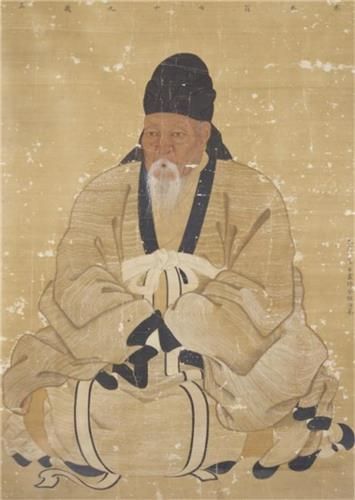 The Cultural Heritage Administration announced on the 3rd that it plans to designate four items as treasures: 'Portrait of Kwon Sang-ha,' 'Yuseolgyeonghak Daejang,' 'Wooden Triad of Jizo Bodhisattva and Ten Kings Statues at Bulgapsa Temple in Yeonggwang, along with Associated Burial Artifacts,' and 'Seated Iron Vairocana Buddha Statue at Eunjuksa Temple in Haenam.' The photo is of the 'Portrait of Kwon Sang-ha.'
 Photo by the Cultural Heritage Administration
Image source: Yonhap News
Kwon Sang-ha (1641?1721) was a scholar regarded as a disciple of Wuam (尤庵) Song Si-yeol (1607?1689) and a legitimate successor of the Giho School.
His portrait enshrined at Hwanggang Yeongdang in Jecheon, Chungbuk, bears the inscription "Hansuwong (referring to Kwon Sang-ha) 79 years old true portrait" (寒水翁七十九歲眞), indicating it was painted when he was 79 years old.
The portrait was created in 1719 by the royal painter Kim Jin-yeo (1675?1760), who participated in producing King Sukjong’s (reigned 1674?1720) royal portrait. It is characterized by soft brushstrokes and three-dimensional expression.
'Yuseolgyeonghak Daejang' is a material held by the Jonggyeonggak of Sungkyunkwan University, summarizing 148 key topics of Confucian classics that appeared in the civil service examination. It was printed using the smallest size of metal movable type called Gyeongja type (庚子字) from the early Joseon period.
A Cultural Heritage Administration official explained, "The Gyeongja type was made of copper in 1420. Among the Gyeongja types, this edition is rare as it is the only one printed entirely in small type."
Additionally, Buddhist statues and relics from Yeonggwang Bulgapsa Temple and Haenam Eunjeoksa Temple, which hold important value for understanding Buddhist faith and sculpture, were also preliminarily designated as Treasures.
The Iron Seated Vairocana Buddha Statue at Eunjeoksa was made during the period when bronze Buddha statues transitioned to iron ones. Although the knee part is damaged, the existing parts are evaluated to possess the sculptural qualities and artistic value of the late Silla to early Goryeo period.
The Cultural Heritage Administration plans to finalize the designation of one National Treasure and four Treasures as nationally designated cultural heritage after collecting and reviewing opinions from various sectors during the 30-day public notice period and undergoing the Cultural Heritage Committee’s deliberation.
© The Asia Business Daily(www.asiae.co.kr). All rights reserved.


















