105 Billion KRW National Budget Allocated for Purchase of 15ha Farmland in Dongcheon Estuary
Suncheon City (Mayor Noh Gwan-gyu) announced that it completed land acquisition and registration procedures last June to restore farmland within the Dongcheon Estuary Wetland Protection Area back to wetlands.
This initiative was carried out using the largest domestic wetland land acquisition fund secured through the National Assembly's budget increase project last year.
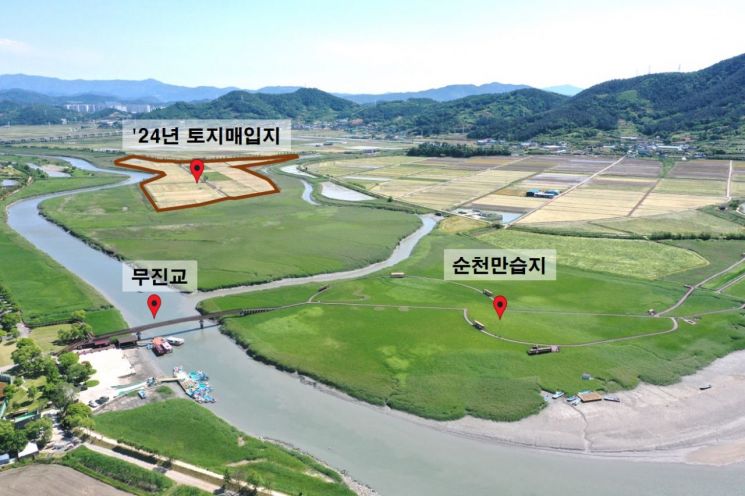
The Dongcheon Estuary in Suncheon is registered as a Ramsar wetland, recognized internationally for its ecological importance. However, conventional farming activities on farmland within the river area have intensified pollution of the river ecosystem and caused ecological damage leading to the loss of wetland functions. To prevent this, Suncheon City plans to restore the farmland to wetlands in accordance with the 'Suncheon Dongcheon River Basic Plan.'
This wetland restoration is expected to contribute not only to flood prevention and water quality improvement of Dongcheon but also to expanding habitats for endangered species such as the black-faced spoonbill, the city bird of Suncheon and Natural Monument No. 228, thereby broadening spaces where humans and nature coexist.
As a result, Suncheon City is being recognized for laying an important foundation to build a resilient ecological city that responds to the climate crisis and species extinction through ecological restoration connecting Suncheon Bay and the urban area.
Earlier, in November last year, the city established a wetland restoration team and secured 12 billion KRW out of the total 23.8 billion KRW wetland land acquisition fund from the Ministry of Environment.
A city official stated, “The wetland restoration of the Dongcheon Estuary will be carried out in phases through land acquisition and restoration projects until next year, connecting ecological corridors from Suncheon Bay toward the city center. This restoration project reflects the contemporary trend of addressing climate change and ecosystem protection.”
He added, “We will strive to further enhance the natural primitiveness and lead the local economy through high-quality ecological tourism.”
© The Asia Business Daily(www.asiae.co.kr). All rights reserved.

















