The Cheongnyangni commercial district in Seoul, undergoing a complete transformation, is ready for a new leap forward. Especially in the northeastern area, where there has been no significant 'landmark commercial district' since the decline of Dutamall, it is expected to be reborn as the central commercial district of northeastern Seoul, fueled by transportation benefits, increasing hinterland demand, and the completion of large-scale commercial facilities.
The Cheongnyangni commercial district consisted only of Lotte Department Store at Cheongnyangni Station and traditional markets such as Gyeongdong Market and the Agricultural and Marine Products Market across the street. The area around the station saw stagnation in commercial expansion since the early 2000s due to redevelopment projects, and for decades, it lacked a 'big draw' to attract visitors, causing some disappointment.
Cheongnyangni, which had been sluggish, is now experiencing the most rapid changes in Seoul. Since last year, the arrival of ultra-high-rise residential-commercial complexes has signaled the district's resurgence.
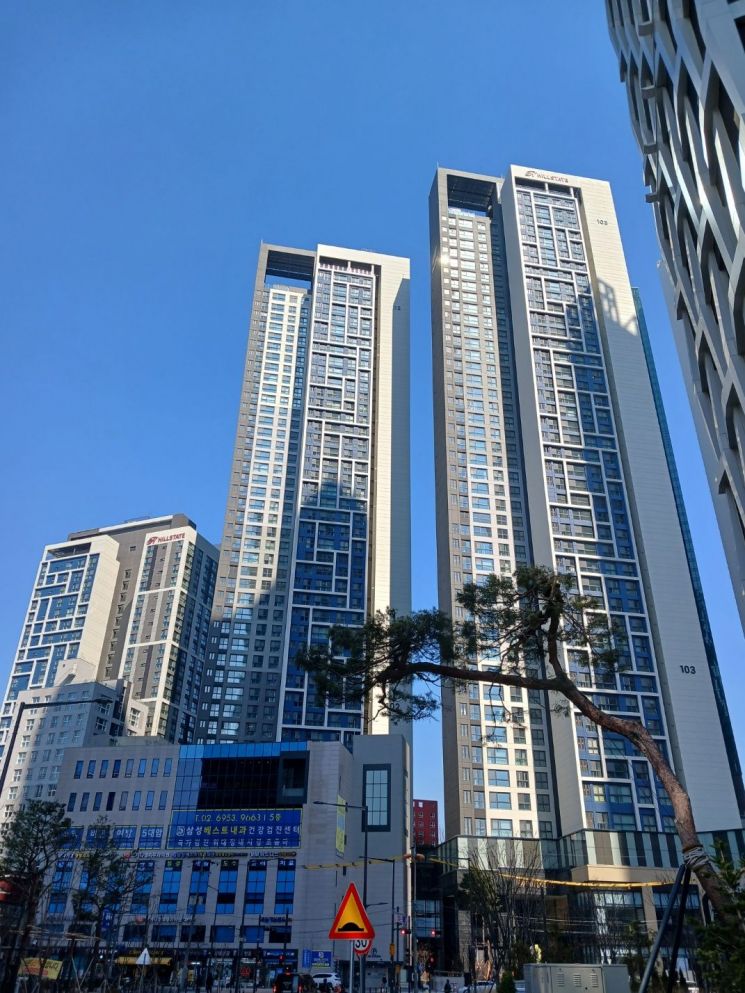
The first to move in was 'Cheongnyangni Station Harrington Place (220 households),' followed by 'Cheongnyangni Station Hanyang Susian Graciel (1,152 households),' 'Cheongnyangni Station Lotte Castle SKY-L65 (1,425 households),' and recently 'Hillstate Cheongnyangni The First (486 units),' all ultra-high-rise residential-commercial complexes representing the area, bringing renewed expectations for commercial revitalization.
In particular, 'Hillstate Cheongnyangni The First,' which began moving in at the end of December last year, is receiving praise for completing occupancy in a short period, an unusual feat. Despite the sluggish officetel market, this reflects the high interest in ultra-high-rise residential-commercial complexes near Cheongnyangni Station.
A real estate expert said, “Cheongnyangni is still a work in progress with the completion of residential-commercial complexes, ongoing redevelopment projects, and additional transportation benefits such as GTX. Since major transportation facilities are concentrated here, future development will inevitably focus on Cheongnyangni, so interest is expected to continue steadily.”
Several major transportation benefits are awaiting at Cheongnyangni Station. A metropolitan transfer center linking these lines is also planned, which is expected to cause a surge in foot traffic.
Currently, Cheongnyangni Station serves six lines in operation: Line 1, Suin-Bundang Line, Gyeongui-Jungang Line, Gyeongchun Line, KTX Gangneung Line, and Jungang Line. Additionally, four new lines are planned: GTX-B Line (Songdo~Maseok), GTX-C Line (Deokjeong~Suwon), Myeonmok Line (Cheongnyangni~Sinnae-dong), and Gangbuk Transversal Line (Cheongnyangni~Mok-dong). In the future, it will become a 'transportation hub' with 10 lines (including planned ones) stopping there. Only three places in Seoul, including Seoul Station and Samsung Station, have two GTX lines stopping.
The commercial indicators around Cheongnyangni are also positive. With the COVID-19 endemic phase leading to increased external consumption, the atmosphere is expected to improve further. According to the Korea Real Estate Board, the vacancy rate for small-scale commercial properties in Cheongnyangni was 3.6% in the first quarter, significantly lower than the Seoul average of 6.3%.
© The Asia Business Daily(www.asiae.co.kr). All rights reserved.

















