Gyeonggi Province Terminates K-Culture Valley Agreement with CJ LiveCity
CJ LiveCity: "Difficult to Proceed Due to Lack of Institutional and Administrative Support"
Expressed Willingness to Pay Delay Penalty but Failed to Reach Agreement with Gyeonggi Province
On the 1st, Gyeonggi Province terminated its agreement with CJ LiveCity regarding the Goyang K-Culture Valley project. In response, CJ LiveCity expressed regret and sorrow over the current situation, stating that "institutional and administrative support has not been adequately provided."
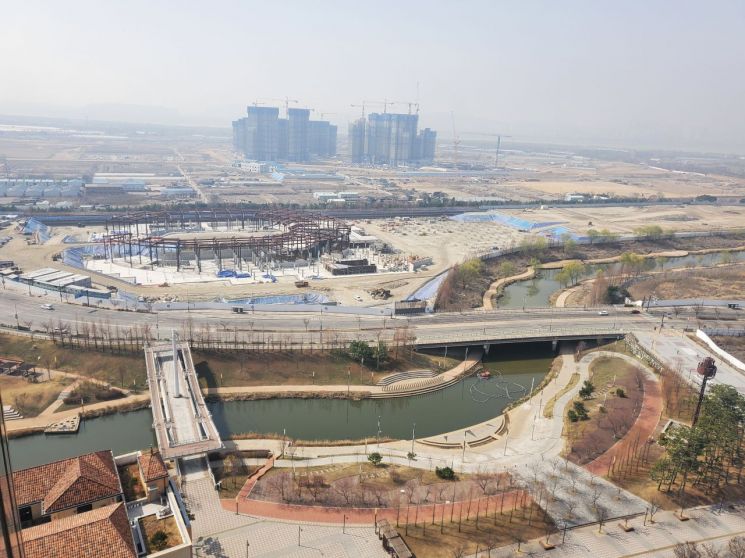
In a statement, CJ LiveCity explained, "We received a notice of agreement termination as we failed to reach a consensus on changing the project agreement," adding, "The project was planned to be developed as a cultural infrastructure befitting the global status of K-content, but it became difficult to proceed due to notifications of power supply unavailability and delays in public projects for improving the water quality of Hallyu Stream."
They further noted that the termination of the agreement with Gyeonggi Province was a decision made due to deteriorating conditions for project advancement. Previously, the Ministry of Land, Infrastructure and Transport's 'Public-Private Joint Construction Investment Project (PF) Adjustment Committee' had recommended 'resetting the completion deadline' and 'reducing delay penalties' considering power supply disruptions and other factors.
CJ LiveCity stated, "We expressed willingness to accept the adjustment plan, including the payment of delay penalties, and made efforts to establish various cooperative systems for project promotion," but criticized, "However, Gyeonggi Province reviewed the adjustment plan and did not accept it, only requesting the resumption of arena construction."
The city of Goyang also expressed regret over Gyeonggi Province's termination of the agreement, stating, "There is great disappointment as CJ LiveCity, a long-cherished project for the 1.08 million residents of Goyang, has been canceled," and added, "We will do our best to work closely with Gyeonggi Province to establish the area as a hub for Hallyu content."
Earlier, Kim Hyun-gon, Deputy Governor for Economy of Gyeonggi Province, explained the reason for the termination, saying, "Since the basic agreement was signed in 2016, we agreed to four plan changes, but it became difficult to accept the implementer's demands, leading to the termination of the agreement."
The CJ LiveCity project, initiated in 2016, involves constructing a K-pop specialized arena (a large-scale performance hall optimized for music concerts) on a 326,400㎡ site (equivalent to 46 soccer fields) in Janghang-dong, Goyang Special City, Gyeonggi Province, with a total project cost of 1.8 trillion KRW. The indoor seating capacity alone is 20,000, and including outdoor areas, it can accommodate up to 60,000 spectators. The original completion was scheduled for 2020. However, the project faced difficulties including three plan changes and delays in permits and approvals from Gyeonggi Province. Construction began in October 2021 but was halted in April at around 17% progress.
With the project effectively canceled, the anticipated '30 trillion KRW economic effect' is expected to vanish. According to a 2019 survey by EY Hanyoung Accounting Corporation, if the project were to operate, the economic ripple effect over 10 years would reach 29.8676 trillion KRW, with employment inducement effects of 200,000 jobs. It would generate an annual consumption effect of 1.7453 trillion KRW, and the local consumption tax revenue for Goyang Special City is projected to reach 15.2 billion KRW annually.
The entertainment industry had been eagerly awaiting the normalization of the CJ LiveCity project. In South Korea, venues capable of accommodating 60,000 people are limited to places like the Jamsil Olympic Main Stadium and Seoul World Cup Stadium. Soccer stadiums are virtually unavailable for rental, and the Olympic Main Stadium is undergoing remodeling until 2026. This means that even when BTS as a complete group resumes activities in 2025, there will be no large-scale concert halls suitable for proper performances. The largest current venue, KSPO Dome (with a maximum capacity of around 15,000 seats), is experiencing fierce competition for bookings, with instances of premium payments being made to secure rentals.
© The Asia Business Daily(www.asiae.co.kr). All rights reserved.

















