Introduction of Double Materiality Assessment, Eight Key Issues Including Ethical Management System and Internal Control
Korea Sustainability Standards Board (KSSB) Disclosure Standards Pilot Application
BNK Financial Group (Chairman Bin Daein) announced on the 1st that it has published its 2023 Sustainability Management Report, which includes the latest trends in ESG (Environmental, Social, and Governance) and stakeholder requirements.
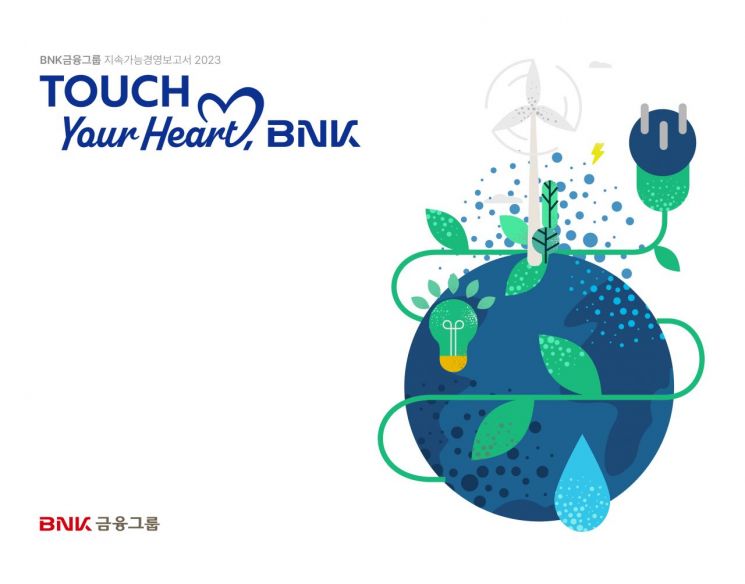
BNK Financial Group, which has published a sustainability management report every year since 2012, has released its twelfth report this year, disclosing the current status of the group’s ESG management in line with the latest trends to stakeholders.
This report complies with major ESG disclosure standards such as the GRI (Global Reporting Initiative), SASB (Sustainability Accounting Standards Board), and TCFD (Task Force on Climate-related Financial Disclosures), and for the first time, has pilot-applied the disclosure standards of the Korea Sustainability Standards Board (KSSB) to enhance objectivity and reliability.
In particular, by introducing the Double Materiality assessment proposed by the GRI and European Sustainability Reporting Standards (ESRS), the group identified eight key issues: ethical management system and internal control, protection of financial consumers, digital financial transformation, employee diversity and equal opportunity, inclusive finance for financially vulnerable groups, response and management of climate change risks, prevention of financial accidents and digital security, and revitalization of the local economy.
Double Materiality assessment is a method that considers both the impact of ESG issues on a company’s financial status and the impact of corporate activities on the sustainability of the environment and society.
The main contents of the report focus on the group’s key agendas such as climate change response, ESG finance, and human rights management in the Focus Area section at the beginning. “Finance Responding to Climate Change” highlights major achievements such as the roadmap for reducing carbon emissions, current status and reduction targets of internal and financed emissions. “Finance Considering Sustainability” details key ESG finance results based on the group’s newly established sustainable finance system. “Finance for People” discloses human rights management policies, human rights risk management processes, and the results of human rights impact assessments.
Another feature of the report is the emphasis on ESG achievements according to the newly established ESG strategic directions in April: “Green Finance,” “Mutual Growth Finance,” and “Right Finance.” “Green Finance” covers eco-friendly financial products and the advancement of eco-friendly management. “Mutual Growth Finance” includes the establishment of the Southeast region ESG ecosystem, inclusive and mutual growth financial products, protection of financial consumer rights, digital finance, creation of social value in the local community, and major achievements in local social contribution. “Right Finance” focuses on the ESG management system, ESG risk management, talent development, ESG organizational culture, safety and health management, ethical and compliance management, and autonomous financial security systems.
Kang Jonghoon, Head of Group Management Strategy at BNK Financial Group, stated, “Based on the group’s newly established ESG strategy in April, BNK Financial Group is striving to internalize ESG management company-wide,” and added, “As the leading financial group in the Southeast region, we will continue to expand mutual growth finance with a sense of responsibility, working together with the local community.”
© The Asia Business Daily(www.asiae.co.kr). All rights reserved.

















