"Employee Work Authority Infringement"
Hashimoto General Trading Files Lawsuit Against Client Husomulsan
Demands Apology After Improvement Request
As "Kasuhara (カスハラ·customer harassment)," referring to excessive customer abuse, emerges as a social issue in Japan, voices are gaining strength to view abuse between client companies and corporate sales departments as a new form of Kasuhara. While Japanese society has so far focused only on B2C (business-to-consumer) abuse between customers and employees, the atmosphere is shifting to also examine "B2B (business-to-business) abuse" that had to be endured under the name of "business."
On the 1st, Nihon Keizai Shimbun (Nikkei) reported that Hashimoto Sogyo, a Tokyo-based housing equipment wholesale company, filed a civil lawsuit at the Sapporo District Court in April, demanding 11 million yen (94.4 million KRW) in damages from its client company Fusomonsan located in Hokkaido. Hashimoto Sogyo claims that the abusive behavior of the client company infringed on its employees' right to perform their duties.
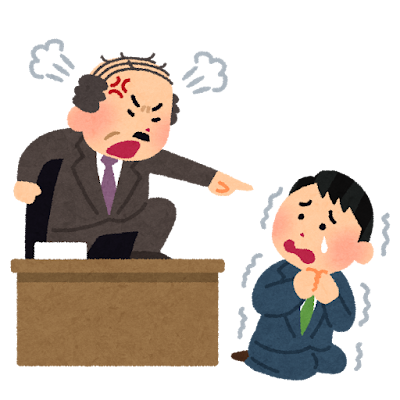
According to the complaint, two employees of Hashimoto Sogyo visited the event venue in March last year to celebrate the 50th anniversary of the client company’s founding. At this event, the president of Fusomonsan reportedly verbally abused the Hashimoto Sogyo employees for two hours, saying things like "I never made an appointment with you," and "Do you think you are so great?" The employees submitted leave requests starting the next day and were later diagnosed with depression.
Investigations revealed that the president of Fusomonsan had long demanded tasks from Hashimoto Sogyo employees that were not part of their contract, such as airport pickups and maintenance of the company’s indoor screen golf facilities. Additionally, the president’s verbal abuse caused such disruption that the employees could not perform other duties.
Hashimoto Sogyo requested improvements in writing, but Fusomonsan did not respond and instead demanded that Hashimoto Sogyo retract its claims and apologize. Hashimoto Sogyo alleges that Fusomonsan maliciously spread false information to other clients afterward, damaging trust with other companies and causing confusion.
Nikkei pointed out, "Following the recent rise in B2C-type Kasuhara caused by consumer abuse, B2B-type Kasuhara is also on the rise. Compared to the malicious complaints of problematic customers, corporate-to-corporate abuse has been difficult to surface. This is because business negotiations involving prices, delivery dates, and other transaction conditions tend to bury the issues." It also noted, "It is common for supervisors to urge employees to endure excessive verbal abuse, worrying about future business relationships."
Although rare, there are cases where courts recognize B2B Kasuhara and side with the victimized companies even after litigation between client companies. In 2022, the Nagano District Court ruled that a hospital employee’s act of threatening a medical device sales representative with a box cutter to force a price discount constituted "assault and intimidation corresponding to Kasuhara," recognizing the hospital employee’s illegal act and the hospital’s employer liability, ordering payment of 600,000 yen (5.15 million KRW) in damages.
Calls for institutional measures against B2B abuse are also growing. In Tokyo, where an ordinance to prevent customer abuse is being drafted, there are proposals to add the statement that "Kasuhara can occur with clients, large corporations, and small and medium-sized enterprises alike." If this passes as a formal agenda, B2B abusive acts can be explicitly included in the ordinance.
Nikkei added, "There appears to be a shift in the tendency to dismiss such behavior as part of negotiation processes in business relationships. Companies that neglect to respond may face legal liability in the future."
© The Asia Business Daily(www.asiae.co.kr). All rights reserved.
![Clutching a Stolen Dior Bag, Saying "I Hate Being Poor but Real"... The Grotesque Con of a "Human Knockoff" [Slate]](https://cwcontent.asiae.co.kr/asiaresize/183/2026021902243444107_1771435474.jpg)











