Japan Issues Three New Currency Notes
10,000 Yen Note Features Shibusawa Eiichi
Japan is set to circulate three new banknotes next month for the first time in 20 years, but controversy has arisen over the inclusion of a portrait of Shibusawa Eiichi, a key figure in Japan's economic exploitation during its colonial rule, on the 10,000 yen note.
According to Japan's ANN News and others on the 30th of last month, Japan will reissue three denominations of currency?1,000 yen, 5,000 yen, and 10,000 yen?from next month. The last time Japan changed the figures on its banknotes was in 2004. At that time, only the 1,000 yen and 5,000 yen notes were changed, making the replacement of the 10,000 yen note's figure the first in 40 years since 1984.
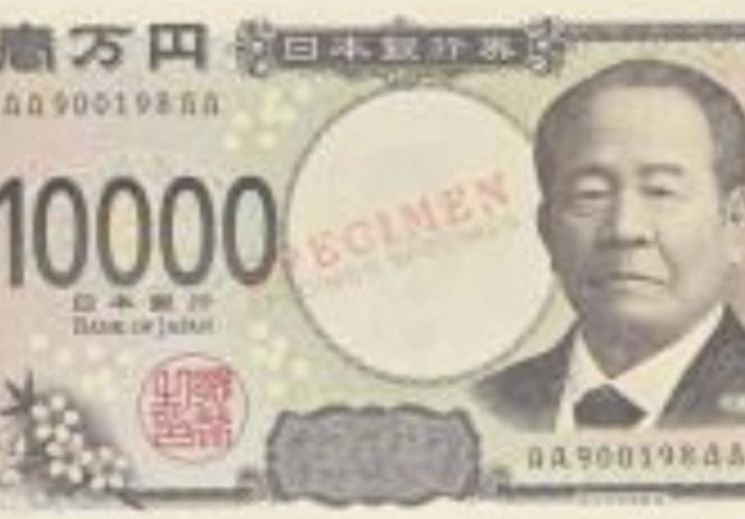
Among these, the figure chosen for the 10,000 yen note, Japan's highest denomination, is Shibusawa Eiichi. Shibusawa was an economic official during Japan's Meiji era and was involved in founding numerous companies, earning him the title "Father of Japanese Capitalism." He was involved in the establishment and development of over 500 companies, including the First National Bank and Tokyo Gas.
However, in Korea, he is criticized as a figure who led economic exploitation during the Japanese colonial period, having overseen the construction of railways in the Korean Peninsula during the late Joseon Dynasty and served as president of Keijo Electric (the predecessor of Korea Electric Power Corporation). Notably, during the Korean Empire period, he spearheaded the issuance of the first modern banknotes in Korea to facilitate Japanese interests and appeared himself as the main figure on the banknotes, bringing humiliation to Korea.
Upon learning of this news, Professor Seo Kyung-duk of Sungshin Women's University voiced criticism on his Facebook page. Professor Seo stated, "The appearance of Shibusawa Eiichi on the new 10,000 yen note is causing anger among Koreans," and pointed out, "Between 1902 and 1904, the Bank of Japan issued 1 won, 5 won, and 10 won banknotes in the Korean Empire, and the person depicted on these three types of banknotes was none other than Shibusawa Eiichi, the owner of the Bank of Japan at the time."
He continued, "The choice of this figure for the 10,000 yen note was decided by the Abe administration in 2019, and the Kishida administration's failure to correct this and proceed with issuance is a serious problem," adding, "This shows not only a lack of consideration for Korea, which suffered under Japanese colonial rule, but also represents a typical sneaky strategy to revise history." He concluded by questioning, "When will these actions finally end?"
Meanwhile, the Japanese government cited counterfeit prevention as the reason for issuing the new banknotes but is also quietly expecting secondary economic effects. First, the demand to replace existing vending machines and automated teller machines (ATMs) is expected to stimulate the economy. Nomura Research Institute estimates the cost of replacing ATMs and related equipment at about 1.6 trillion yen (approximately 13.9 trillion won), projecting an economic effect that could raise Japan's annual nominal gross domestic product (GDP) by about 0.27%.
© The Asia Business Daily(www.asiae.co.kr). All rights reserved.
!["The Woman Who Threw Herself into the Water Clutching a Stolen Dior Bag"...A Grotesque Success Story That Shakes the Korean Psyche [Slate]](https://cwcontent.asiae.co.kr/asiaresize/183/2026021902243444107_1771435474.jpg)
















