Urea Fertilizer Made from Natural Gas
Natural Gas Prices Soar After Ukraine Invasion
EU Producers Hit by Cheap Russian Urea Imports
Following Russia's invasion of Ukraine, concerns have emerged within the industry that Europe's food security is at risk as cheap Russian fertilizers dominate the market, major foreign media reported on the 30th (local time).
According to Eurostat, the statistical office of the European Union (EU), Russia accounted for one-third of the EU's urea imports last year. In Poland, one of Russia's neighboring countries, the scale of urea imports surged from $84 million in 2021, before the invasion of Ukraine, to $120 million last year. Urea is an organic compound produced from ammonia derived from natural gas and contains a large amount of nitrogen, making it widely used as fertilizer.
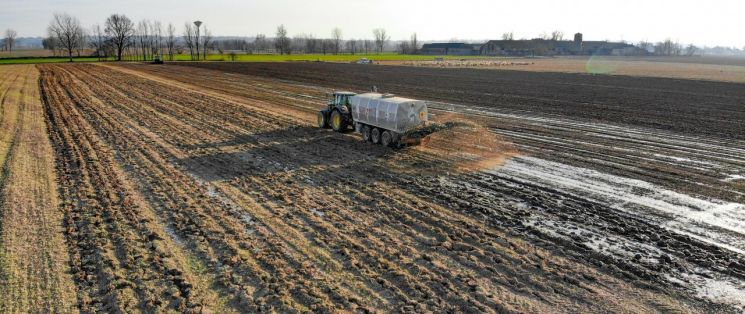
Within the European crop and nutrition industry, voices of concern are rising over the flood of cheap Russian fertilizers in the region. While it helps reduce production costs for European farmers in the short term, experts warn that if European fertilizer producers are driven out of business or withdraw from the region due to price competition, leading to excessive dependence on Russian fertilizers, it will pose a long-term threat to Europe's food security.
Petr Singer, CEO of SKW Piesteritz, Germany's largest ammonia producer, pointed out, "We are currently swept away by the flood of Russian fertilizers," adding, "Unlike European fertilizer producers, natural gas prices are peanuts for Russian fertilizer producers." As of February 2022, the price of natural gas in Europe was below 80 euros per megawatt-hour (MWh), but after Russia shut off gas pipelines to Europe following the invasion of Ukraine, prices soared to about 340 euros.
Tim Benton, a food security expert at the UK think tank Chatham House, noted, "As international competition and conflicts intensify, Europe may need to shift its focus from 'market efficiency' to 'secure supply'." Benjamin Lakatos, CEO of Swiss energy company MET Group, emphasized, "A crisis is approaching the European fertilizer industry," adding, "Since 70-80% of fertilizer companies' operating costs come from natural gas, the fertilizer sector will be affected more quickly and sensitively by rising gas and energy costs than other industries."
As experts feared, the exodus of major energy companies from Europe has already been confirmed. BASF, the world's largest chemical group, has reduced its operations in Europe, including the fertilizer sector, over the past few years and focused investments in the US and China, where business costs are lower. SKW Piesteritz, Germany's largest ammonia producer, is also pushing to establish ammonia production lines in the US to secure cheap natural gas and electricity supplies and obtain subsidies under the Inflation Reduction Act (IRA). CEO Singer warned, "Soon, all companies including us will follow suit," adding, "If European politicians do not take action, Europe's fertilizer production capacity will disappear."
© The Asia Business Daily(www.asiae.co.kr). All rights reserved.

















