Martial Arts 'Changes and Implications of Korea-China Trade Structure' Report
Last Year's Exports to China Down 19.9% from Previous Year
Korea-China Trade Balance at -$18.1 Billion
Impact of Trade Structure and Corporate Supply Chain Changes
Report: "Diversify Consumer Goods Exports"
Last year, South Korea's exports to China decreased by 19.9% compared to the previous year, marking the largest decline in 40 years. The trade balance with China also turned negative for the first time since 1992.
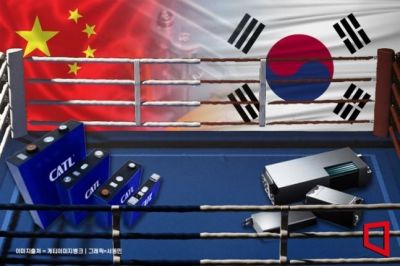
On the 1st, the Korea International Trade Association's International Trade and Commerce Research Institute revealed this in a report titled "Changes and Implications of Korea-China Trade Structure through Supply Chain Analysis."
According to the report, South Korea's exports to China last year amounted to $124.8 billion, down 19.9% from $155.8 billion the previous year. The trade balance with China also shifted to a deficit of -$18.1 billion last year, the first negative balance since 1992, and the largest scale ever recorded.
The report analyzed that this outcome resulted from recent changes in the Korea-China trade structure and the supply chain structure of Korean companies. First, it noted the impact of China's changing role in global trade. In the past, China merely processed foreign intermediate goods, but recently it has evolved to produce and export its own intermediate goods. Accordingly, the share of intermediate goods in China's imports from the world was 45.1% last year, down 8.4 percentage points from 2016. During the same period, China's imports from Korea also showed a slowdown in growth across all processing levels, including primary products, intermediate goods, and final goods. Additionally, over the past five years, Korea's industrial export structure has seen an increase in dependence on imported intermediate goods while its role as a supplier of overseas intermediate goods has diminished.
In particular, the proportion of intermediate goods that South Korea imports from China increased from 27.3% in 2016 to 31.3% in 2023. Among these, the import growth of raw material processed products related to secondary battery materials from China between 2017 and 2023 was remarkable. Imports of precursors, lithium hydroxide, cathode materials, and active cathode materials from China surged significantly from $100 million to $200 million in 2016 to $2.5 billion to $4.9 billion last year. The share of intermediate goods in South Korea's exports to China was 78.4% last year, up 5.5 percentage points from 2016. However, as China's imports of intermediate goods decline, the proportion of China in South Korea's intermediate goods exports is rapidly decreasing.
Despite these changes in the Korea-China trade structure, the proportion of Korean companies' production facilities located in China remains high. According to Bloomberg, as of the end of last year, 15-20% of the global production facilities of major Korean companies were located in China. In the case of secondary batteries, China ranks first both in terms of the location of suppliers' production facilities and headquarters, indicating a high dependence on the Chinese supply chain.
However, Korean companies have recently been reducing their dependence on China by withdrawing investments and cutting new investments. Rising overall costs of investing in China and geopolitical uncertainties have led some companies to adopt a "de-China strategy." This trend is confirmed by various indicators. From January to September last year, overseas direct investment in manufacturing in China decreased by 85% compared to the same period the previous year, with the United States taking the top spot for the first time since 2000. Moreover, since 2021, the amount of investment withdrawal from China has sharply increased, indicating capital outflows from investments in China. The amounts of investment withdrawal from China were $2.58 billion in 2021, $1.179 billion in 2022, and $621 million in 2023.
The report diagnosed that considering recent sanctions against China by the United States and the European Union (EU), as well as China's export controls on goods, risks affecting Korea's industrial base have become constant. Therefore, to strengthen the export base to China in the long term, it advised diversifying Korea's main export items to China into consumer products and expanding entry into China's domestic market.
The report emphasized, "In response to China's industrial structural changes, it is necessary to diversify the main export products into final goods targeting not only China's demand for intermediate goods but also its rapidly expanding consumer market." It added, "In addition to regions where domestic companies have already entered, the customer base should be expanded to consumer segments and domestic companies in China's second- and third-tier cities," stating that "this can strengthen the foundation of exports to China." Furthermore, it diagnosed that "support for research and development and facility construction is needed to localize raw material processing and smelting technologies currently monopolized by China, enabling the internalization of Korean companies' supply chains."
© The Asia Business Daily(www.asiae.co.kr). All rights reserved.

















