"More Southeast Asian Mountain Insects Suggested to Infiltrate the Korean Peninsula"
A Southeast Asian forest mosquito, previously unseen in Korea, has been discovered in the country for the first time. This is interpreted as a result of the Korean Peninsula shifting to a hot and humid subtropical climate. There is also a possibility that more Southeast Asian insects will enter Korea in the future.
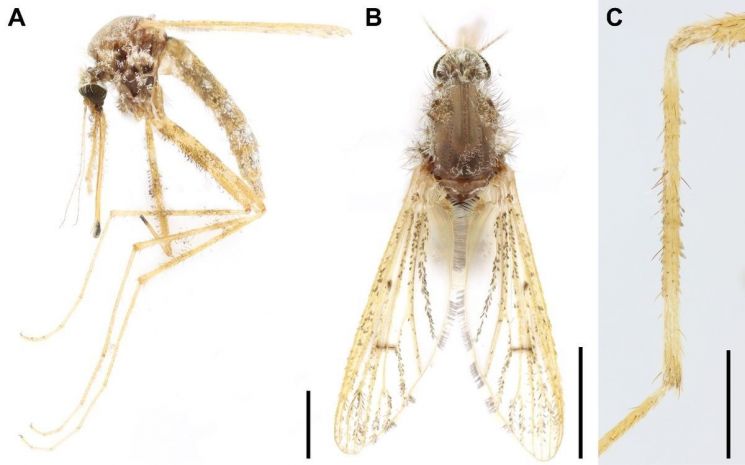 Forest mosquito discovered in the Dongbaek-dong wetland, Jeju, last August.
 [Photo by Evolutionary and Systematic Genomics Laboratory, Department of Life Sciences, Seoul National University]
On the 29th, the Evolutionary and Phylogenomic Laboratory of the Department of Biological Sciences at Seoul National University reported that they discovered the 'forest mosquito' in the Dongbaekdong wetland in Jeju last August, marking the first domestic discovery. This mosquito species is mainly found in hot and humid tropical regions such as Indonesia, the Philippines, and Thailand.
Researcher Bang Woo-jun, who authored the paper, said, "This discovery suggests that not only the forest mosquito found this time but also more insects from Southeast Asian mountainous regions could enter the Korean Peninsula due to climate change."
According to the Korea Meteorological Administration, the average annual temperature in Korea from 1990 to 2020 rose by 1.6℃ compared to 1910 to 1940. Summers have become longer, and winters shorter. Although there have been cases of insects entering from Southeast Asia in the past, most died because they could not withstand the harsh cold of the Korean Peninsula. Researcher Bang said, "However, as the weather gets warmer, the development period of insects is shortening, and their lifespan is tending to lengthen."
The research team also modeled mosquito distribution according to climate. The Egyptian forest mosquito, a species similar to the forest mosquito discovered this time, is estimated to possibly appear in coastal areas of Jeju Island starting from 2040. The Egyptian forest mosquito is known to transmit diseases such as dengue fever, Zika virus, and yellow fever.
The forest mosquito discovered this time is presumed to be not highly dangerous. It is not a species that transmits dengue fever or malaria, and it was found only in the Dongbaekdong wetland in Jeju. Researcher Bang said, "In academia, when considering disease transmission potential, how closely the species is associated with human living areas is important. Since this species was found in a unique environment away from residential areas, the risk of disease transmission is low." It has not yet been confirmed whether it was introduced from outside or has become indigenous.
The mosquito population within the Korean Peninsula is steadily increasing. Statistics from last year showed that the mosquito population increased by 98% compared to 2022. This year, Gwangju Metropolitan City announced that the number of mosquitoes nearly tripled compared to the same period last year. The collection period of the small red house mosquito, which transmits Japanese encephalitis, has advanced by two months over the past 20 years, and the number of malaria patients has doubled in the last three years.
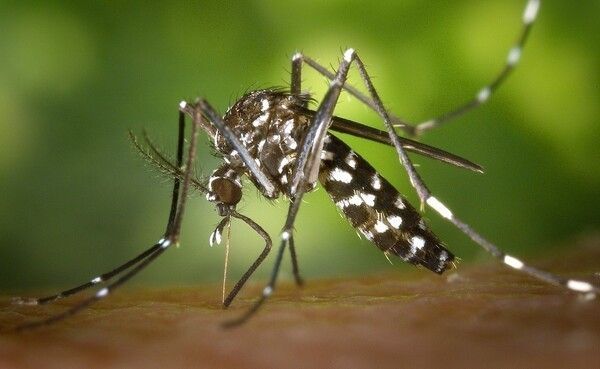
To avoid mosquito bites, it is advisable not to wear red-colored clothing during outdoor activities. A research team from the University of Washington in the United States attached dots of various colors to the bottom of a box and observed mosquito preferences. As a result, mosquitoes ignored green, blue, and purple dots and flew toward red, orange, and black dots.
It is also important to wash off sweat as quickly as possible. Mosquitoes have well-developed olfactory organs and can detect odors such as sweat, ammonia, and lactic acid. Avoiding areas near water is another method. Mosquitoes gather where water is stagnant to breed. The forest mosquito discovered this time was found in a wetland with many small puddles.
At home, using a fan and diffusing herbal oil scents can help prevent mosquito bites. Mosquitoes are lightweight and fly slowly, so they cannot maintain their flight against the fan's wind. The fan's breeze also disperses human body odors. Additionally, research from Johns Hopkins University found that mosquitoes avoid herbal scents such as eucalyptol.
© The Asia Business Daily(www.asiae.co.kr). All rights reserved.
![Clutching a Stolen Dior Bag, Saying "I Hate Being Poor but Real"... The Grotesque Con of a "Human Knockoff" [Slate]](https://cwcontent.asiae.co.kr/asiaresize/183/2026021902243444107_1771435474.jpg)

















