Family Customers Traveling Abroad Cause Market Share Drop
'No Kids' Strategy to Attract New 2030 Customers
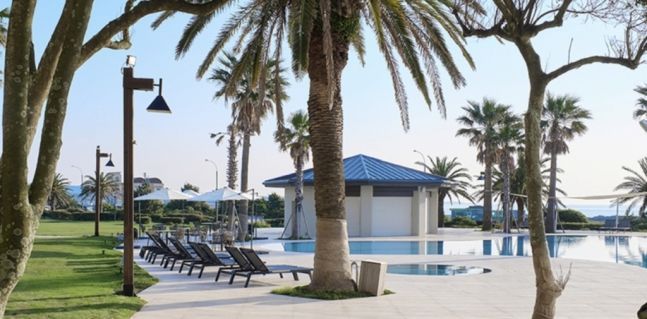
Jeju Haevichi Resort has decided to operate its outdoor swimming pool as a no-kids zone. As the number of 'no-kids zone pools' increases in resorts and hotels frequently visited by family travelers, concerns are rising that the culture of separating children and adults is spreading excessively.
According to industry sources on the 29th, Jeju Haevichi Resort will operate its outdoor swimming pool as a no-kids zone. This pool reopened last month after undergoing renovations for 10 months.
The industry views this as a strategy to attract a new customer base. With a decline in family visitors, the resort plans to expand services targeting adult customers. According to Yanolja Research, the room occupancy rate of domestic resorts in the first quarter of this year was 50.4%, down from 53.9% in the same period last year.
As demand for family overseas travel increases and room occupancy rates fall, this is interpreted as an attempt to attract customers in their 20s and 30s by emphasizing the swimming pool.
On the resort’s website, the outdoor swimming pool is described as "free for guests," but it also states that it is a "no-kids zone, available only to adults aged 19 and over." For guests with children who cannot use the pool, the connected Haevichi Hotel pool will be opened free of charge.
Park Roche Resort & Wellness in Jeongseon, Gangwon-do, also restricts the indoor swimming pool and sauna to those aged 16 and over. When visiting with children, they cannot enter the changing rooms together, so they must change clothes beforehand before going to the pool.
Incheon Paradise City’s Sea Mer allows pool entry only for those aged 7 and above. Busan L7 Haeundae operates an adult-only pool from 7 p.m. Lotte Hotel Busan also restricts its outdoor pool to adults only after 8 p.m.
Meanwhile, as no-kids pools spread, voices of dissatisfaction are emerging. One netizen pointed out, "Usually, resorts have many family visitors, so it is questionable why they operate as no-kids zones."
With the total fertility rate dropping to 0.72 last year, there are concerns that the culture of separating children and adults is spreading excessively, which is not beneficial. The no-kids zone culture that excludes children and parents is also a unique system seen only in Korea.
© The Asia Business Daily(www.asiae.co.kr). All rights reserved.

















