Walgreens, the largest drugstore chain in the United States, announced that it will close a significant number of its approximately 8,600 stores currently in operation. Coupled with a bleak earnings outlook, Walgreens' stock price plummeted more than 22% on the New York Stock Exchange.
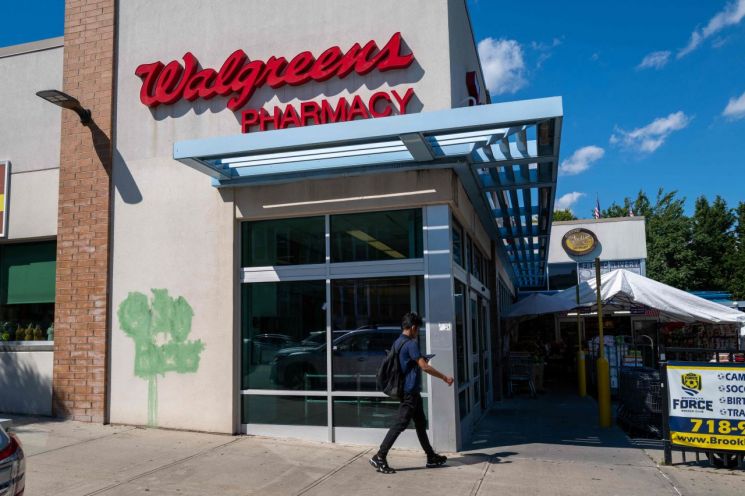
According to CNN and other outlets, Tim Wentworth, CEO of Walgreens, stated during an earnings conference call on the 27th (local time) that the company is considering closing about 25% of its unprofitable stores. He explained, "The current drugstore chain model is unsustainable," and that major store closures will take place over the next three years. Although the exact number has not been decided, he confirmed it will be a "substantial scale."
Earlier, in an interview with the Wall Street Journal (WSJ), CEO Wentworth also explained that these closures would target stores with low profitability, those located near other stores, and stores struggling with theft issues. Currently, Walgreens operates about 8,600 stores across the United States.
With a 123-year history, Walgreens is the largest drugstore chain in the U.S. However, it has faced difficulties due to sluggish sales of key revenue drivers such as prescription drugs, inflation, and reduced spending by low-income consumers, which has also led to a decline in other retail sales. CNN reported, "Reimbursement rates for prescription drugs are low, and Walgreens is facing new competition from Amazon (online pharmacy services)." It added, "During the pandemic, drugstore chains benefited from COVID-19 vaccinations and other factors, but now fewer consumers are visiting the stores."
Additionally, theft, a major headache for U.S. retailers, is also worsening profitability. To attract shoppers weary of high inflation and to compete with dollar stores, Walgreens cut prices on more than 1,000 items in May, but this has also negatively impacted earnings.
Since taking the helm in October last year, CEO Wentworth said, "(Consumers) are becoming increasingly discerning and price-sensitive in their choices," adding, "The operating environment will remain challenging and is not expected to improve." In his WSJ interview, he emphasized, "We recognize that we are at a turning point," and "We must focus on areas where we believe there is a future, some of which will require change."
Walgreens also lowered its adjusted EPS guidance for fiscal year 2024 from $3.20?$3.35 to $2.80?$2.95, reflecting expectations that consumer spending will not rebound as hoped in the second half of the year. The company reported fiscal third-quarter (March?May) revenue of $34.6 billion, up 2.6% year-over-year. However, adjusted earnings per share (EPS) were $0.63, below market expectations of $0.68. The company expressed particular concern over a 4% decline in retail sales.
Following the disappointing earnings guidance, Walgreens' stock price plunged. On the New York Stock Exchange, the stock fell more than 22% compared to the previous close, continuing to decline by over 1% in after-hours trading. Year-to-date, Walgreens' stock has dropped more than 50%. Previously, Walgreens was removed from the Dow Jones Industrial Average, a blue-chip index, for the first time in six years.
Meanwhile, concerns about the operating environment surrounding drugstores are also evident among competitors such as CVS. In recent years, CVS has closed about 900 locations. Rite Aid filed for bankruptcy in October last year.
© The Asia Business Daily(www.asiae.co.kr). All rights reserved.
![User Who Sold Erroneously Deposited Bitcoins to Repay Debt and Fund Entertainment... What Did the Supreme Court Decide in 2021? [Legal Issue Check]](https://cwcontent.asiae.co.kr/asiaresize/183/2026020910431234020_1770601391.png)