The National Museum's 'Jeongseon Pil Bukwonsu Hoe Dojeop'
"Includes Poetry, Enhancing Historical Value"
Doeun Seonsaengjip, Yeongsanhwesangdo Also Designated Treasures
A calligraphy and painting album that offers a glimpse into the early works of Gyeomjae (謙齋) Jeong Seon (1676?1759) is being preserved as a treasure. It is the Bukwonsuhoe Dojeop (鄭敾 筆 北園壽會圖帖) by Jeong Seon, housed at the National Museum of Korea. On the 28th, the Cultural Heritage Administration announced that it has been designated as a treasure along with Doeun Seonsaengjip (陶隱先生集) and Yeongdeok Jangnuksa Yeongsan Hoesangdo (靈山會上圖).
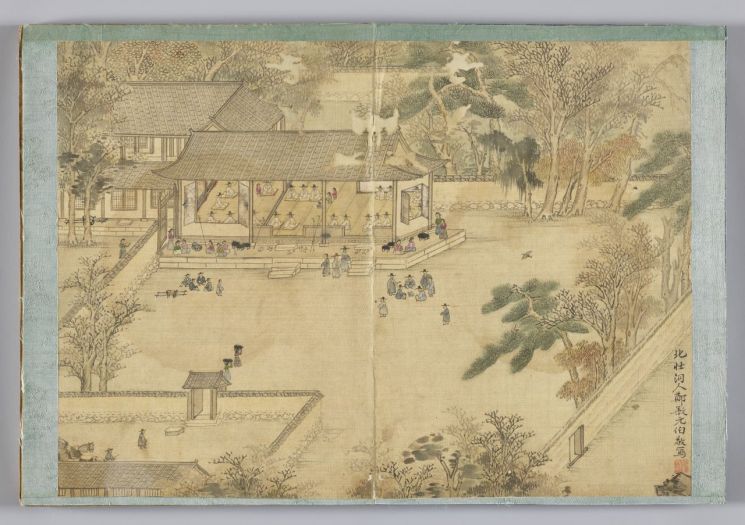
The work was donated by Seokpo (石圃) Son Segi (1903?1983), a businessman from Kaesong, and his son Son Chang-geun. It was created to commemorate the Girohoe (耆老會) held on October 22, 1716, by Lee Gwang-jeok (1628?1717), who celebrated his 60th anniversary of passing the state examination with a feast on September 16 of the same year. The Girohoe is a gathering of elderly people who have retired from official positions.
The album consists of twenty pages. The first page features 'Bukwonsuhoe Do,' an early work and documentary painting by Jeong Seon, a master of true-view landscape painting. It is considered important in art history. The Cultural Heritage Administration evaluated, "Since it contains poems and writings related to significant historical figures active in the latter part of King Sukjong's reign, it holds not only artistic value but also high historical value."
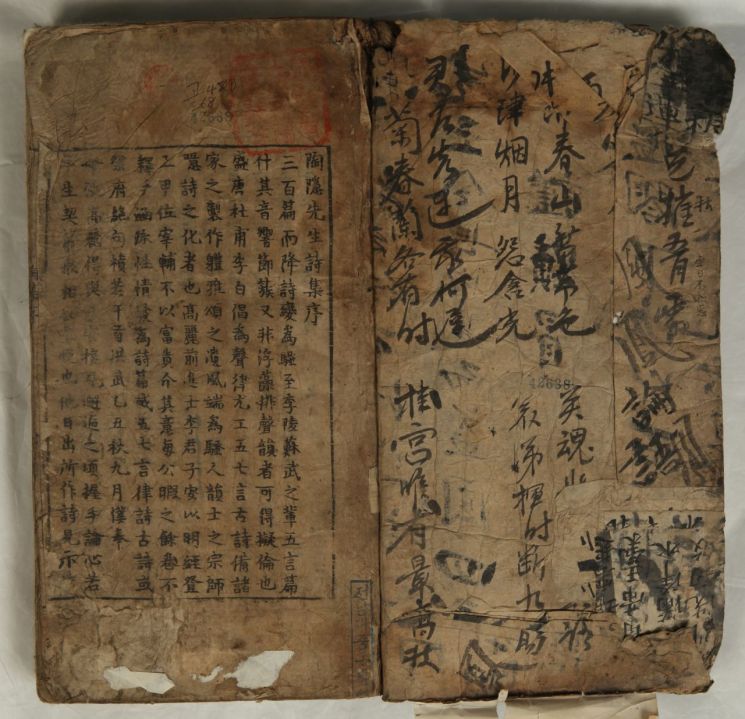
The Doeun Seonsaengjip, also designated as a treasure, is a collection of writings by Doeun Yi Sung-in (1347?1392), a scholar from the late Goryeo period, held at the Chonnam National University Library. Unlike other previously designated treasures with the same title, it fully preserves the prefaces written by Gwon Geun (1352?1409), Jeong Do-jeon (1342?1398), and the postscripts (balmun, 跋文) contributed by Yi Saek (1328?1396) and others. The postscripts refer to writings that describe the overall content and production background of the work. The Cultural Heritage Administration introduced, "It contains content not found in the 'Goryeosa,' 'Goryeosa Jeolyo,' 'Taejo Sillok,' or 'Taejong Sillok,' thus it has high academic value."
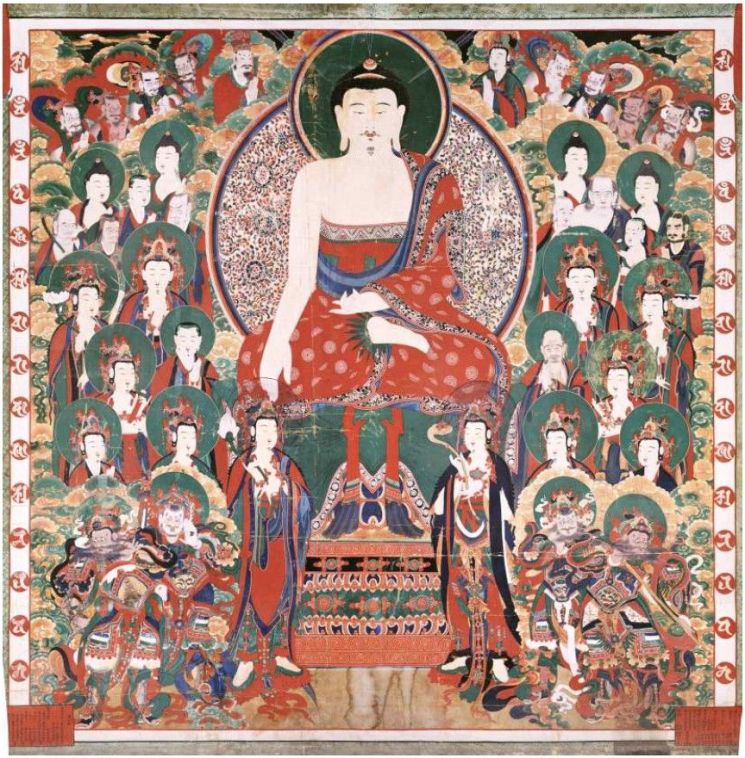
The Yeongsan Hoesangdo and Jijangsiwangdo (地藏十王圖) from Jangnuksa Temple in Yeongdeok, Gyeongbuk, were also designated as treasures. The former is a Buddhist painting depicting Shakyamuni preaching to his disciples, and the latter is a Buddhist painting portraying ten kings judging the deceased centered on Ksitigarbha Bodhisattva. According to the inscription (hwagi, 畵記) recording the motivation, period, and enshrinement location of the paintings, both were created in 1764. Several monk painters, including Duhun (枓訓), participated.
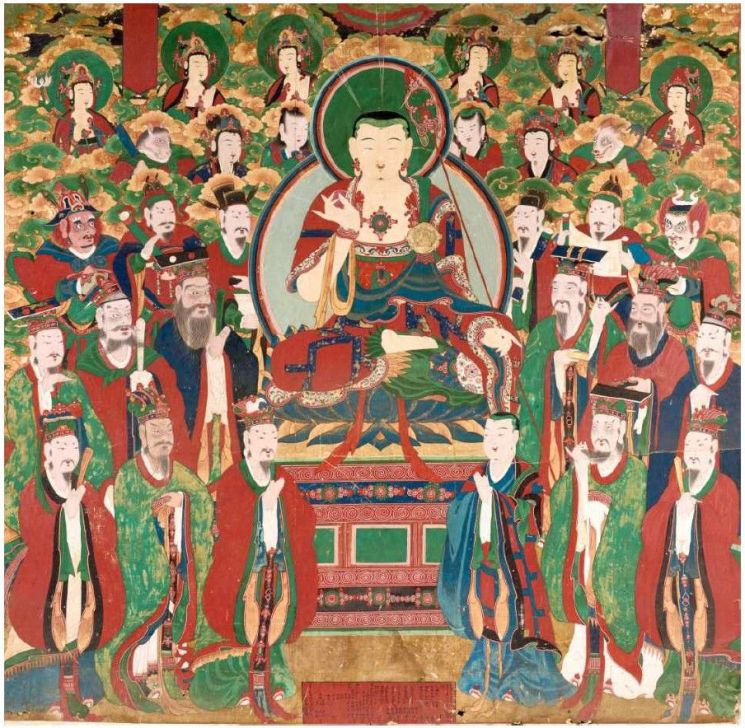
The Cultural Heritage Administration explained, "The Yeongsan Hoesangdo was led by Duhun, the head monk painter among the Buddhist painters, while the Jijangsiwangdo is significant as the only work in which Jeonsu (典秀) participated as a monk painter." It added, "It shows that the monk painters who participated in the Buddhist rites (bulsa, 佛事; activities such as creating Buddha statues to convey the Buddha's will) conducted simultaneously within one temple divided and collaborated their work."
The recent treasure designation also includes the Mokwoowam Wooden Amitabha Triad Statue (務安 牧牛庵 木造阿彌陀如來三尊像) from Mu-an. The statue consists of Amitabha Buddha, Avalokitesvara Bodhisattva, and Mahasthamaprapta Bodhisattva. Based on the inscription at the base of the principal Buddha (bonsunbul, 本尊佛; meaning the foremost Buddha, referring to Shakyamuni Buddha), it is estimated to have been made in 1614 during the reign of King Gwanghaegun.
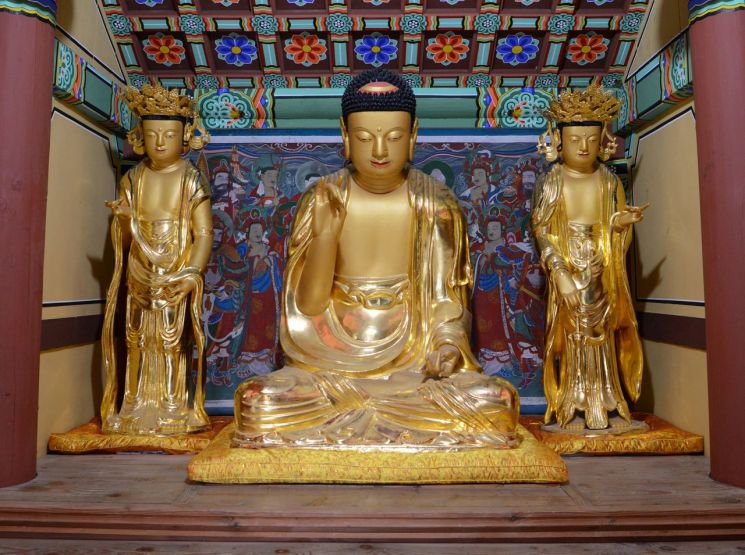
The triad statue is a large-scale Buddha statue with the principal Buddha measuring 186 cm in height. It is understood to have been created with the participation of monks such as Gakshim (覺心) and Eungwon (應元) to revive Buddhism after the Japanese invasions. The Cultural Heritage Administration stated, "Among the Amitabha Triad statues made in the early 17th century, this is a rare example," and added, "It provides insight into the activities of sculptor monks before the formation of distinct schools."
© The Asia Business Daily(www.asiae.co.kr). All rights reserved.
![User Who Sold Erroneously Deposited Bitcoins to Repay Debt and Fund Entertainment... What Did the Supreme Court Decide in 2021? [Legal Issue Check]](https://cwcontent.asiae.co.kr/asiaresize/183/2026020910431234020_1770601391.png)


















