Naju City in Jeollanam-do has carried out an organizational restructuring in the second half of the 8th local government term following the abolition of the upper limit on the number of administrative offices, departments, and headquarters in local government administrative organizations.
On the 27th, Naju City announced that the organizational restructuring plan for the 8th local government term, which includes the establishment of two new bureaus?‘Welfare and Environment Bureau’ and ‘Agriculture, Livestock and Food Bureau’?and one new division, passed the 1st regular session of the 260th Naju City Council.
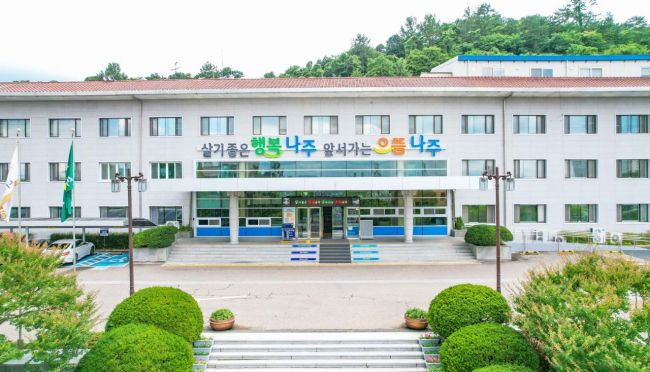
The organizational restructuring will take effect from July 1.
The main focus of this restructuring plan is the abolition of the upper limit on the number of bureaus, the establishment of new organizations in response to the increasing administrative demand in specialized fields, and the efficient redesign of the organization through the consolidation and integration of similar and overlapping functions.
In particular, opinions from welfare and agricultural-related organizations were widely collected, and the staffing levels were maintained in accordance with the current government’s policy of freezing personnel numbers.
According to the city, following the decentralization of local government organizational authority by the central government, the ‘Regulations on Administrative Organizations and Staffing Standards of Local Governments’ were revised and implemented on March 29, abolishing the upper limit on the number of offices, departments, and headquarters based on population size.
Accordingly, Naju City established two bureaus, one division, and three teams: the Welfare and Environment Bureau, Agriculture, Livestock and Food Bureau, Family and Child Division, Integrated Investigation and Management Team 2, Youth Vitality Team, and Smart Farm TF (Task Force).
The establishment of the Welfare and Environment Bureau was made to subdivide tasks in response to the increasing administrative demand for welfare and environment due to population growth and rapid changes in living conditions.
The new Family and Child Division was created within existing departments (divisions) such as Welfare Policy (currently Resident Life Support Division), Social Welfare, Environmental Management, and Urban Beautification. Considering the vast workload from determining basic livelihood security recipients to post-management, the existing Integrated Investigation Team was subdivided into Integrated Investigation and Management Teams 1 and 2.
The establishment of the Agriculture, Livestock and Food Bureau focused on separating agricultural and livestock tasks, which have high administrative demand, from rural promotion and guidance tasks to facilitate easier linkage with other departments.
The bureau is composed of the Agricultural Policy Division, Horticulture and Distribution Division, Agricultural Food Industry Division (currently Food Planning Division), and Livestock Division.
The existing Agricultural Technology Center operates two divisions (Agricultural Promotion Division and Technical Support Division) and newly established the temporary ‘Smart Farm TF’ team within the Technical Support Division to spread smart agricultural technology in response to future agricultural environments.
This allows the center to focus on rural promotion tasks such as research and development, rural guidance, education and training, and international cooperation.
Department transfers and name changes considering task expertise, connectivity, and scope also drew attention.
The Planning and Budget Office consolidated the Public Project Management Team into the Budget Team and subdivided the existing Population and Youth Policy Team into two teams: Population and Immigration Policy and the newly established Youth Vitality Team.
The Policy and Public Relations Office changed its name to the ‘Citizen Empathy Public Relations Office’ to reflect its main tasks, and the pilot Citizen Empathy Communication TF team under the office was officially converted into the Citizen Empathy Communication Team.
The Sports Promotion Division moved from the Future Strategic Industry Bureau to the Tourism, Culture and Greenery Bureau (currently Tourism, Culture and Environment Bureau) in line with its role in tourism activation through sports marketing and event hosting.
The Traffic Administration Division under the Safety City Construction Bureau moved to the ‘Citizen Administration and Traffic Bureau,’ renamed from the Administrative Welfare Bureau.
This is interpreted as reflecting the characteristics of the Traffic Administration Division’s tasks, which are more closely related to citizens’ convenience and civil complaints than development, facilities, and management.
Additionally, the Citizen Administration and Traffic Bureau was repositioned as a priority bureau with the addition of traffic civil complaint functions alongside the Administrative Support Division.
Furthermore, to clarify task assignments due to expanded departmental duties, the following name changes were made: Food Planning Division to Agricultural Food Industry Division, Food Policy Team to Agricultural Food Policy Team, Food Support Team to Local Food Team, Urban Agriculture Team to Urban Horticulture Team, Infectious Disease Management Division to Disease Management Division, Infectious Disease Management Team to Disease Management Team, and Infectious Disease Response Team to Disease Response Team.
The Food Culture Team, which handled the Naju Bapsang brand strategy, was moved to the Health Administration Division of the Public Health Center to promote food culture improvement tasks linked to public hygiene business licensing and sanitation management.
Yoon Byung-tae, Mayor of Naju City, explained the second half organizational restructuring of the 8th local government term, saying, “In response to the increasing administrative demand in welfare and environment, and after extensively collecting opinions from actual demanders and stakeholders, we established the Welfare and Environment Bureau and the Agriculture, Livestock and Food Bureau. We focused on consolidating overlapping functions by team, reorganizing personnel, and creating an organization that can promptly respond to major policies of the government and Jeollanam-do.”
He added, “We will do our best to ensure that citizens can feel the improved quality of administrative services as well as realize the pledges of the second half of the 8th local government term toward a happy and livable Naju and a leading, top-tier Naju.”
Naju = Asia Economy Honam Reporting Headquarters Reporter Kim Yukbong bless4ya@asiae.co.kr
© The Asia Business Daily(www.asiae.co.kr). All rights reserved.
![Clutching a Stolen Dior Bag, Saying "I Hate Being Poor but Real"... The Grotesque Con of a "Human Knockoff" [Slate]](https://cwcontent.asiae.co.kr/asiaresize/183/2026021902243444107_1771435474.jpg)
















