"Outpatient Visits Decrease by 5-10% Compared to Same Period Last Year"
Although professors at Severance Hospital have begun an indefinite strike, it has been confirmed that most departments are continuing normal medical services. The low participation rate in the strike appears to be due to leaving the decision to participate up to individual professors and the hospital's policy of not allowing collective action.
According to the medical community, the Emergency Response Committee of Yonsei University College of Medicine, which includes professors from Severance Hospital, decided on the 27th to indefinitely suspend outpatient care for general patients, as well as non-emergency surgeries and procedures. Participation in the strike is left to the autonomy of individual professors, and even if they strike, essential medical services such as inpatient wards, emergency rooms, intensive care units, dialysis rooms, and delivery rooms will be maintained.
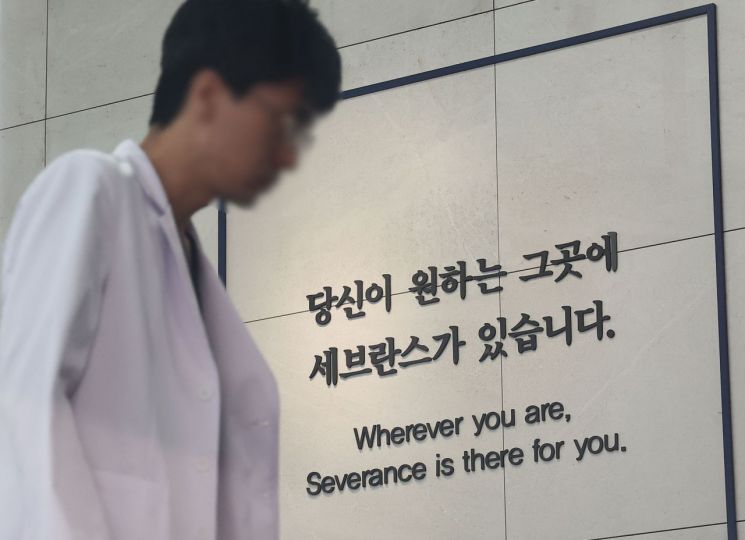 Professors affiliated with Severance Hospital, Gangnam Severance Hospital, and Yongin Severance Hospital under Yonsei Medical Center have announced that they will begin an indefinite strike starting on the 27th in protest against the government. On the afternoon of the 12th, a doctor is seen walking at Sinchon Severance Hospital in Seodaemun-gu, Seoul. Photo by Yonhap News
The exact scale of participation has not been revealed, but the hospital has confirmed that outpatient visits on that day decreased by about 5-10% compared to the same period last year. The hospital stated that most professors participating in the strike had taken annual leave for personal reasons, sick leave, or to attend academic conferences, making it difficult to confirm whether they joined under the pretext of collective action.
Currently, Severance Hospital Director Lee Kang-young and others are not approving professors’ strike participation due to collective action. On the 25th, the director sent a letter to professors asking them "not to stop patient care." With the hospital director discouraging the collective strike and no cooperation internally, professors supporting the Emergency Response Committee and participating in the strike have been adjusting their medical schedules themselves.
Although no major disruption has been detected immediately, patients continue to express anxiety due to concerns about not receiving timely medical care. The Korea Alliance for Patients with Severe Diseases, which includes six organizations such as the Korea Cancer Patient Rights Association, strongly condemned the Severance Hospital strike on the same day, calling it "an unacceptable inhumane collective action and a behavior that disregards the public." They demanded "strong sanctions against doctors who hold powerless and unrelated patients’ lives hostage to enforce their opinions." Civil society groups and hospital labor unions have also demanded the withdrawal of the strike, urging professors to consider patients.
Meanwhile, the Emergency Response Committee has stated that the strike will end when the government takes visible measures to resolve the current medical crisis and the medical school education issue. The committee claims that the root cause of the current situation lies in the government’s incorrect perception of healthcare and is urging the government to adopt a progressive attitude. In a statement released the day before, the committee said, "The current crisis is a problem that spans the entire medical field," and urged, "The government should not waste this last chance and must take responsibility to resolve this issue."
© The Asia Business Daily(www.asiae.co.kr). All rights reserved.

















