Anticipated Q2 Extreme Stock Volatility
High Freight Rates Persist
Excessive Concerns Over Resumed Supply Competition
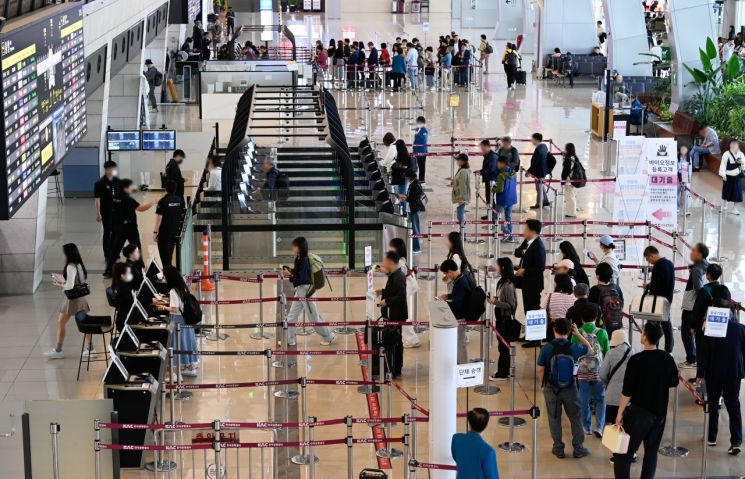
On the 27th, Korea Investment & Securities evaluated that it is unreasonable to view the second-quarter poor performance of low-cost carriers (LCCs) as a peak-out. They analyzed that fares only fluctuate seasonally and have not declined compared to the previous year. Accordingly, they maintained a 'Buy' rating for Korean Air (31,000 KRW), Jin Air (20,000 KRW), T'way Air (4,000 KRW), and Jeju Air (19,500 KRW), and kept their target prices unchanged.
Choi Go-woon, a researcher at Korea Investment & Securities, stated, "Although the operating profit of LCCs in the second quarter is expected to fall below consensus to the breakeven point (BEP), the recent stock price decline is considered excessive."
Researcher Choi explained, "The second quarter is traditionally the worst off-season of the year," adding, "Airlines also reduce aircraft utilization and focus more on maintenance in preparation for the summer peak season." He noted that the extreme quarterly volatility in the LCC industry was already experienced once last year, meaning it has been pre-reflected in stock prices and consensus.
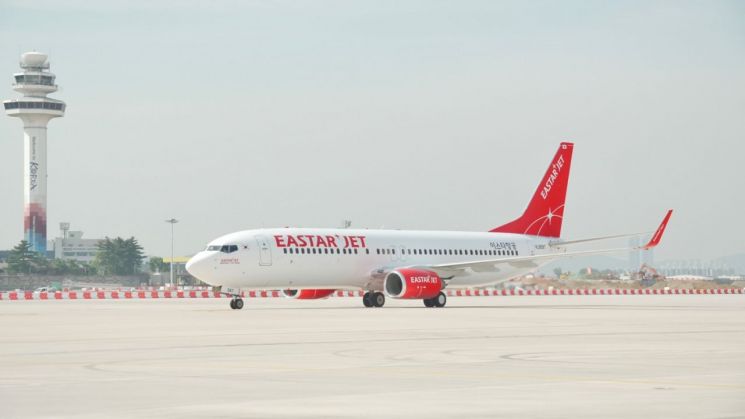
Researcher Choi evaluated, "The second quarter accounts for only 10% of the annual operating profit consensus this year," and "Even if second-quarter profits fall 50% below consensus, the impact on annual performance is only 5%."
Therefore, despite the second-quarter slump, LCC profit growth for this year remains unchanged. Researcher Choi explained, "In the second quarter, the impact of fuel surcharges, which fell along with oil prices, and route mix differences due to long-haul route expansion must be considered," adding, "Fares remain strong at 30% higher than pre-pandemic levels."
Additionally, Researcher Choi pointed out that concerns about the resumption of supply competition are exaggerated. He emphasized, "Although the number of airlines is the same as in 2019 on the surface, changes in shareholding structures over time inevitably reduce competition intensity," and "The international passenger share of the top four listed LCCs in the first quarter increased by 1-2% compared to 2019."
He further stated, "The other five LCCs planned to introduce a total of 18 aircraft this year but have only added two by the first half," and "Jeju Air and T'way Air, which have more than 30 aircraft, are also experiencing delays in their introduction schedules, putting new entrants at a greater disadvantage."
He added, "The two major national carriers have no need to compete aggressively in short-haul routes, and ultimately, international supply this year will fall below 2019 levels."
© The Asia Business Daily(www.asiae.co.kr). All rights reserved.


















