There are concerns that if former President Donald Trump wins the U.S. presidential election this November and returns to power, the U.S.-led extended deterrence efforts on the Korean Peninsula could regress, potentially leading to South Korea developing its own nuclear weapons.
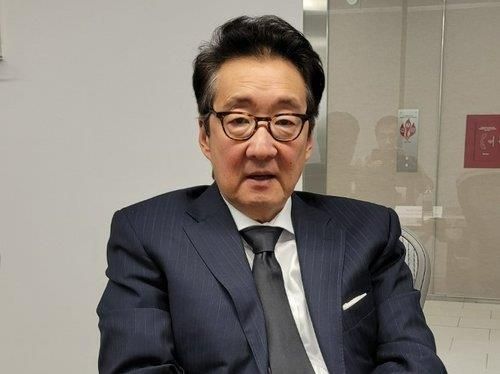
Victor Cha, Korea Chair at the U.S. think tank Center for Strategic and International Studies (CSIS), stated in a Foreign Affairs article on the 26th (local time) that "a second Trump administration would be even more disastrous for Asia policy than the first." He noted that although Asian leaders and experts currently appear relatively calm, "this is a misjudgment," and emphasized that "close U.S. allies in the Asia-Pacific region, including South Korea, Japan, and Australia, must wake up to the reality that a second Trump term presents a new challenge."
Chair Cha predicted, "Former President Trump will regard America's traditional allies not as partners but as ordinary adversaries," and that "he will strengthen ties with dictators such as North Korean Supreme Leader Kim Jong-un, Russian President Vladimir Putin, and Chinese President Xi Jinping." While this was evident during his first term, the changed circumstances now could result in an even worse situation for allied countries. He added, "Former President Trump will not shy away from the international attention brought by summits with Kim Jong-un, Putin, and Xi Jinping."
Accordingly, there are concerns that the extended deterrence commitments toward the Korean Peninsula pursued by the Joe Biden administration, as well as alliance strengthening measures such as the Korea-U.S.-Japan Camp David Declaration, could be rendered ineffective during a second Trump term. Chair Cha warned, "(Former President Trump) will almost certainly halt joint military exercises involving U.S. forces unless the allies bear the full (financial) cost," adding that "this could pose a risk of hollowing out the alliance structure."
Furthermore, Chair Cha identified the Korean Peninsula as the region most fundamentally affected if former President Trump returns to power, predicting that "instead of threatening North Korea's increasing provocations with 'fire and fury,' Trump is likely to extract a suspension of nuclear tests in exchange for easing U.S. sanctions." He explained that "North Korea may offer limited but visible proposals, such as giving up a small amount of fissile material or dismantling first-generation nuclear weapons, which are not significant, and Trump loves easy victories," adding that "Trump will claim victory over the North Korean nuclear threat without touching Kim Jong-un's arsenal."
This is expected to lead to steps such as the withdrawal of U.S. forces stationed in South Korea. Chair Cha warned, "This scenario will almost certainly lead to South Korea developing its own nuclear weapons," and "if South Korea pursues its own nuclear development, it would provide dangerous incentives for preemptive strikes to China and North Korea, and could trigger a chain reaction involving Myanmar, Japan, Taiwan, and others."
© The Asia Business Daily(www.asiae.co.kr). All rights reserved.


















